The European Union (EU) is currently debating the creation of migrant return centers in third countries and is open to intensifying its external borders through physical, technological, and human resources.
This debate is shaped by a complex decade, which includes the 2015 refugee crisis, the use of migratory flows by external countries, the questioning of the Schengen area, the rise of right-wing and far-right forces, and a gradual shift in European policy towards stricter control, accelerated returns, and greater collaboration with countries of origin and transit.
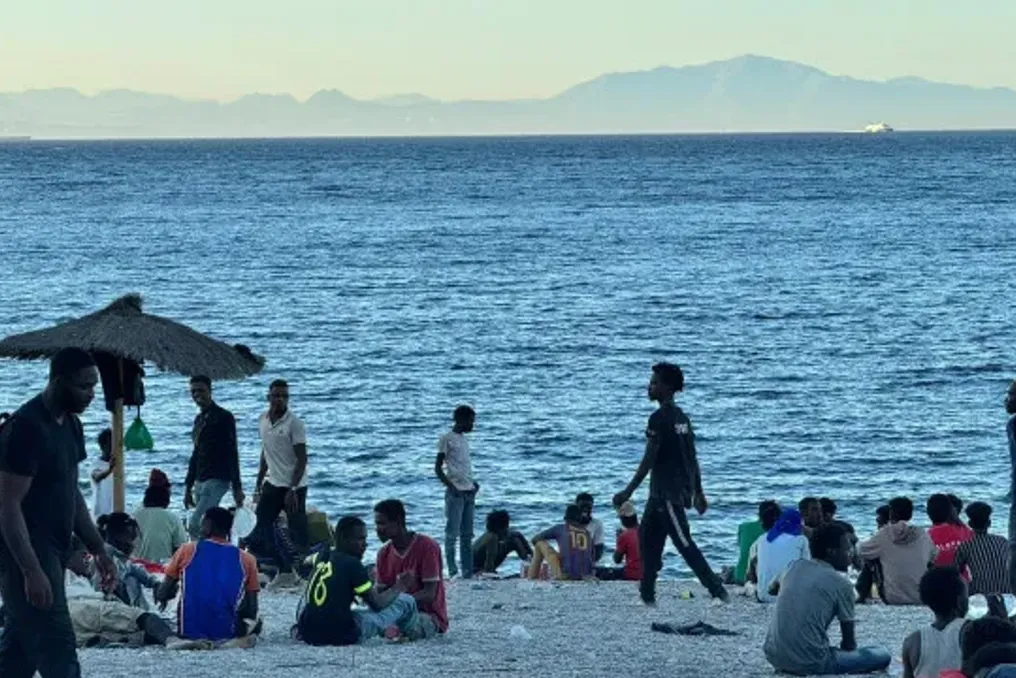
The incident that occurred in Ceuta, with the arrival of tens of thousands of individuals from Morocco, brought this issue back to the main focus. This led Brussels to demand the 'full' implementation of the new migration guidelines and to 'strengthen the common response' through increased surveillance and improved prevention systems.
The European Commissioner for Internal Affairs, Magnus Brunner, argued that 'Europe has never had so much control over irregular migration as it does now.' However, he warned that the images of the humanitarian tragedy, which resulted in at least 141 deaths, according to data from NGOs such as Caminando Fronteras and the Moroccan Association of Human Rights, require learning 'the correct lessons.'
For the executive body, these lessons involve speeding up deportations, strengthening the role of Frontex, and tightening partnerships with third countries, while reinforcing mechanisms to identify disinformation campaigns or coordinated migratory movements.
Carmen González, a researcher at the Elcano Royal Institute, explains that this change cannot be understood without considering the 'interstate conflicts' generated since 2015 by the management of asylum seekers. These conflicts revealed 'deep differences' between member states and have become an 'existential threat' to free movement due to the lack of common rules.
Added to this internal fissure are 'two major shocks' that, according to the researcher, changed how European societies viewed arrivals. She cites that in 2021, Morocco stimulated the entry of thousands of people into Ceuta during a diplomatic crisis with Spain, and Belarus facilitated the arrival of migrants in Poland, Lithuania, and Latvia, in retaliation for European sanctions.
These migratory movements added a layer of security to a debate that previously focused on reception policies. After almost ten years of negotiations, the EU finally approved the Migration and Asylum Pact in 2024, which comes into force this June and establishes, among other things, controls and accelerated procedures at external borders and a solidarity system.
The transformation is also visible in the debate about physical barriers. For many years, Brussels refused to finance walls or fences built by European countries on their external borders with community budget money, despite requests from various governments, although it provided European funds for surveillance, equipment, or complementary infrastructure.
The most notable change occurred in the field of returns. The new European legislation, approved by the European Parliament in June, allows sending people with a final expulsion decision to centers located in third countries, even if they have no ties to them, provided there is an agreement and certain guarantees are met.
The Spanish Green MEP, Mélissa Camara, told Europa Press that 'the legalization of these centers outside the EU makes our return policy more dehumanized than ever. There, people have no name: they are identified by numbers and suicide attempts are regularly reported. They have no idea of the day or time and also do not know when they can leave.'
On the other hand, Javier Zarzalejos, president of the European Parliament's Committee on Civil Liberties and MEP for the European People's Party (EPP), refutes that these devices allow talk of an externalization of European migration policy, considering them merely 'another instrument,' dependent on agreements with states that must respect Union law and fundamental rights.
This legislative evolution occurred parallel to a change in the European political landscape, where immigration began to influence public debate, government alliances, and political programs in an increasing number of member states.
González points to the European elections of June 2024 as another relevant milestone, due to the advance of conservative and far-right forces and the retreat of socialists, liberals, and greens, which resulted in a European Parliament 'much more favorable to prioritizing restrictive policies.'
The researcher emphasizes, however, that this phenomenon does not only affect conservative parties, as in the last decade, historical groups such as the social democrats of Germany, Sweden, or Denmark have also hardened their positions regarding the displacement of some of their voters towards anti-immigration stances.
González explains that 'immigration has ceased to be a relatively marginal issue in the political life of some European states to become a central theme,' framing the community's evolution within a 'steadily more restrictive spirit of the times' that 'extends beyond European borders.'
Camara, however, focuses her criticism on the EPP and part of the Renew liberals, accusing them of having chosen to 'build alternative majorities with the far-right' since the last European elections, to approve migration measures that would hardly have gained support before.
She emphasizes: 'During the negotiations on the Return Regulation, the far-right participated directly in negotiating the commitments. They were seated at the negotiation table and imposed some of their red lines. This would have been unthinkable a few years ago.'
Zarzalejos, for his part, denies that his political family has adopted the far-right agenda and argues that measures such as the new return system seek to respond to problems that 'exist and concern citizens,' in addition to avoiding the perception that governments are 'being overtaken' by migratory flows.
In parallel, the EU faces another paradox: while demanding greater control of its perimeter, countries like France, Germany, or Austria have reintroduced internal controls in a space designed to eliminate barriers between its members, despite the Schengen Borders Code considering them an 'exceptional and temporary measure' in the face of 'serious threats to public order or national security.'
In June, the Commission took an unprecedented formal step by requesting nine countries to 'progressively eliminate and gradually lift' these measures, asking that they be replaced by 'alternatives and mitigating measures,' such as increased police cooperation, non-systematic checks, or new technological tools.
Currently, the Ceuta crisis has once again tested these rules, after Italy decided to impose controls on travelers from Spain, despite Madrid stating that almost all migrants returned to Morocco and Brussels confirming that there were no displacements to the rest of the continent.