Videos from digital influencers demonstrating how to make 'pure' gasoline at home have gained popularity online following the recent increase in the percentage of ethanol in gasoline, which rose from 30% to 32%. However, this practice promoted in these contents presents significant risks, both to health and to the operation of the car engine, in addition to being illegal by law.
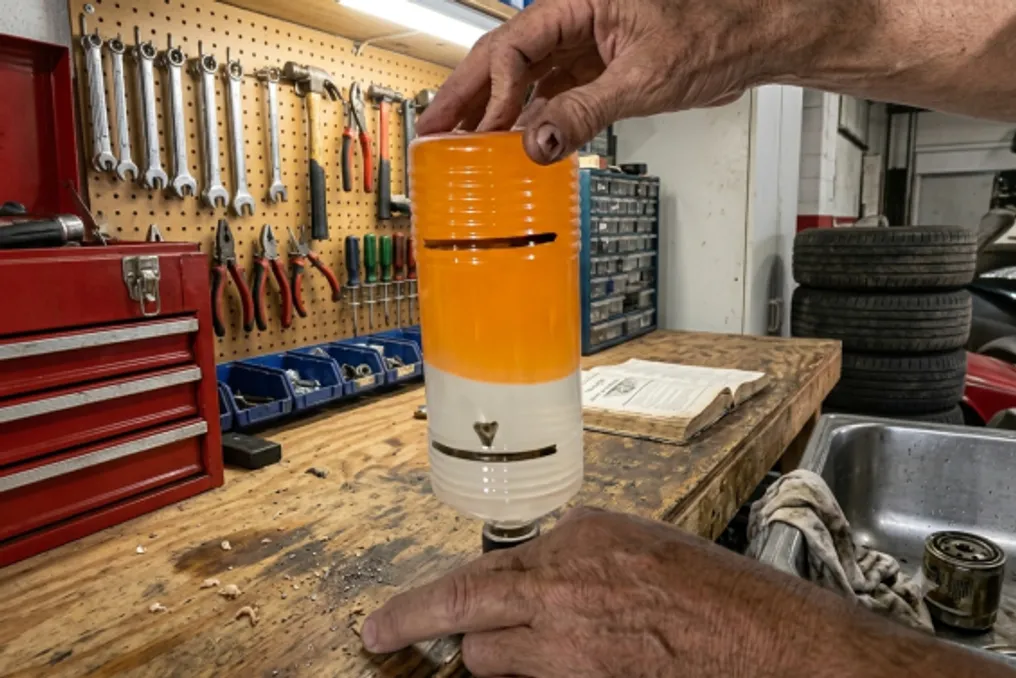
The method described in these videos consists of adding water to the fuel. This water mixes only with the alcohol, allowing the gasoline to remain separate and supposedly 'pure.'
Since 1982, gasoline sold in Brazil has included ethanol additive. This fuel was introduced to replace tetraethyl lead, which functioned as an anti-knocking agent, and also to raise the octane rating. Currently, gasoline intended for vehicles has ethanol added virtually everywhere in the world. Tetraethyl lead is classified as highly toxic to the environment and human health.
The composition of Brazilian gasoline is designed to accept the addition of anhydrous ethanol. By removing this component, the result is a fuel with a low octane rating. Rogério Gonçalves, Director of Fuels at the Brazilian Automotive Engineering Association (AEA), clarifies that 'pure gasoline or gasoline with lower ethanol content must be produced so that the final octane rating meets the specification. The processes to produce this gasoline are more costly and complex.'
Using this unleaded, low-octane gasoline in the car engine causes damage. The absence of the anti-knocking agent causes pre-ignition, which is combustion occurring before the appropriate time. Additionally, this fuel can cause the engine to 'knock' and lead to the piston head breaking.
Gonçalves details that ethanol plays the crucial role of being the anti-knocking agent in gasoline and that the vegetable fuel serves to increase the octane rating. The specialist emphasizes that vehicles sold in Brazil were specifically developed to operate with gasoline containing the ethanol mixture, even those models that are not flex-fuel.
The experiments of removing ethanol from gasoline pose dangers not only to the engine. Rogério Gonçalves warns about other associated risks: gasoline is flammable and toxic, releasing vapors that can cause explosions. There is also uncertainty about how the ethanol/water mixture generated during these 'artisan' procedures being publicized is disposed of.
As established by Law 9.605/98, it is illegal to store and distribute gasoline and other substances considered toxic. To carry out such activities legally, it is necessary to possess infrastructure that complies with the standards required by the National Petroleum Agency (ANP).