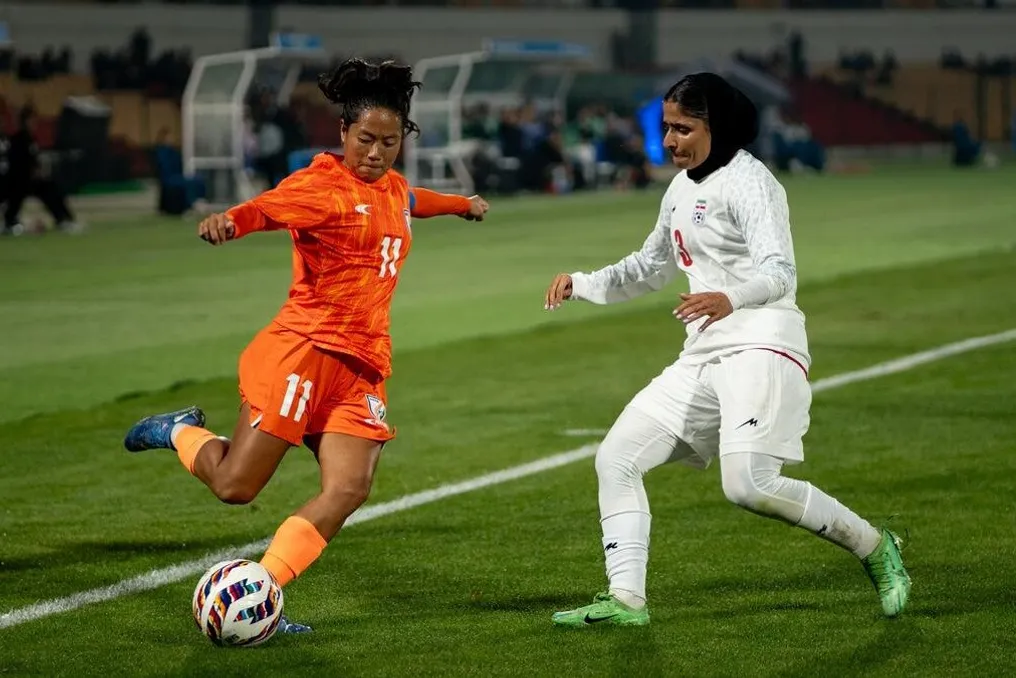
The Iranian women's national football team is experiencing a period of uncertainty ahead of the next FIFA international window, as the status of head coach Marzieh Jafari has yet to be resolved.
The Iranian women's national football team is experiencing a period of uncertainty ahead of the next FIFA international window, as the status of head coach Marzieh Jafari has yet to be resolved.
Jafari's contract with the national team expired after the AFC Women's Asian Cup, which was held in Australia earlier this year. Despite the contract ending, it is reported that the Iranian Football Federation is interested in continuing cooperation with the coach, but an official extension of her contract has not yet been reached.
This uncertainty arises at a critical moment for Iran, as the next FIFA window is scheduled for September 21st. The federation is working to organize two friendly matches during the international break, potential opponents including Russia, Belarus, Uzbekistan, and Tajikistan. Nevertheless, none of these matches have been confirmed yet.
Furthermore, the national team currently does not have a confirmed head coach for these games.
Jafari faces an additional problem as she also manages the club 'Hatun Bam'. Last season, the federation allowed her to work simultaneously with both the club and the national team, largely due to the importance of the Asian Cup. It is unclear whether the same agreement will be approved for the new season.
This decision may determine whether Jafari will continue as Iran's head coach, or if the federation will have to find a replacement. Time is particularly anxious: after the Asian Cup, the Iranian women's national team has not had significant official or friendly matches for a long time. Another delay in appointing a head coach could disrupt preparation and complicate the formation of a clear plan for upcoming international fixtures.
Thus, the federation faces an important choice. If Jafari remains the preferred option, her club commitments must be quickly settled. If both parties cannot agree on an extension, a new coach must be appointed without further delay.
As the September FIFA window approaches, the Iranian women's national team awaits not only opponents but also knows who will be leading them from the sidelines.
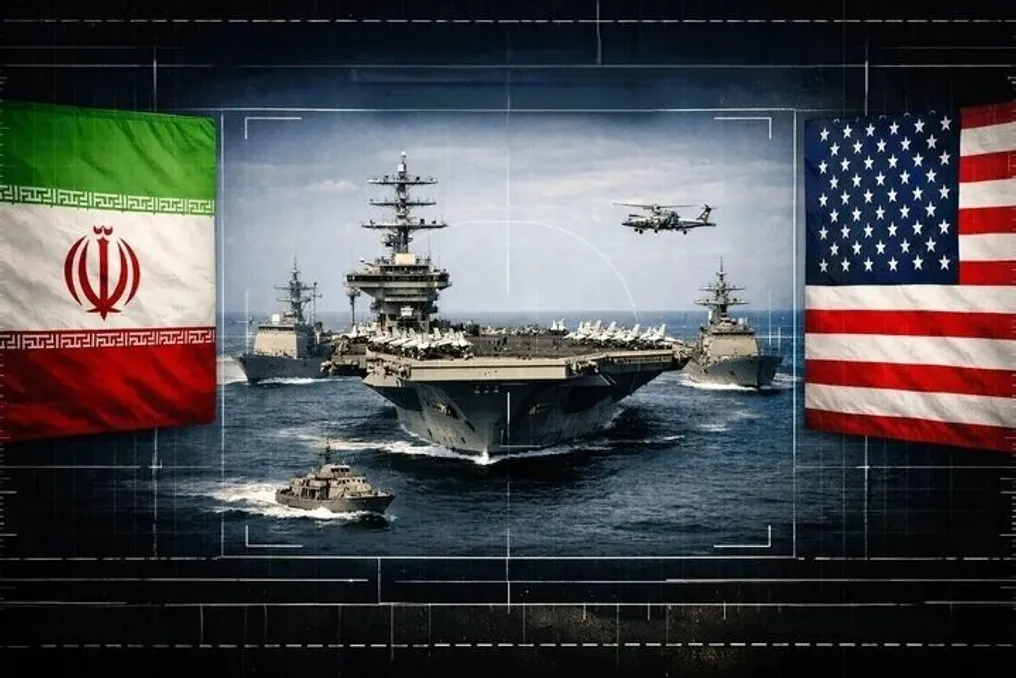
Over the past 48 hours, a series of statements from high-ranking military commanders and government officials in the Islamic Republic have underscored the republic's heightened military readiness and firm position in response to continued pressure from the United States, as tensions between Tehran and Washington show no signs of easing.
Mohsen Rezaei, a member of Iran's Dispute Resolution Council, issued a direct warning via his official X account regarding the consequences of the US continuing its hostile policy in the Persian Gulf. He stated: 'If the blockade continues, American ships and forces will face serious risks and losses.' Emphasizing the need for Washington to 'change its behavior,' he added: 'We will not tolerate this.' Concluding his remarks, Rezaei categorically rejected the possibility of opening a second maritime corridor in the Strait of Hormuz, stating: 'We will never allow the opening of a second corridor in the Strait of Hormuz.'
Warnings from the political establishment were quickly reinforced by statements from the leadership of the Iranian armed forces. Brigadier General Pilot Masoud Jafari, Deputy Coordinator of the Iranian Air Force, reported that the military has been continuously monitoring American military bases in the region over the past years and meticulously planning various operational scenarios. Speaking to domestic media, General Jafari noted that on the first day of any confrontation, the adversary did not expect the Iranian Air Force to demonstrate the courage to conduct air operations, and this factor contributed to the successful execution of the mission. He stated: 'Our pilots accepted this mission fully aware of the risks, extremely high stakes, and available intelligence. In fact, they made the impossible possible.'
Regarding the status of the pilots involved in recent operations, General Jafari clarified that, besides the deceased pilot Majid Kazemi, whose remains were later returned to the country, precise information about the other three pilots is currently unavailable.
Brigadier General Majid Ibn Reza, acting Minister of Defense of Iran, asserted that the Iranian Armed Forces are fully prepared to respond to any threat, emphasizing that their capabilities are based on the country's domestic defense industry. In a message published on his social network on Thursday, General Ibn Reza stated: 'Every day it becomes more apparent how the enemy's power is weakening; however, our Armed Forces, relying on the country's industry, are fully equipped to respond to any threat.' He also warned that countries seeking security and military superiority abroad 'will soon realize that Iran's local technology surpasses any system in the region.'
Brigadier General Mohammad Akramini, Army Press Secretary, confirmed that the Army remains at full combat readiness despite two wars imposed by enemies. According to an Army statement released on Thursday, General Akramini reported that damaged systems have been modernized, new equipment has been put into service, and efforts to strengthen combat capability continue without interruption. He stressed that maintaining combat readiness is not limited to acquiring equipment, adding that recent improvements are based on a combination of measures, including restoring and upgrading existing systems, introducing new equipment, expanding internal capabilities, and boosting personnel morale. General Akramini noted: 'A significant part of combat capability, especially under current conditions, depends on the modernization and restoration of damaged or worn-out systems.' He explained that the Army implements reconstruction and modernization programs using its own engineering and technical expertise. The press secretary described this process as 'not just a technical operation, but part of the country's broader defense strategy to maintain deterrence and enhance rapid response capability.' He also noted that the introduction of new equipment has allowed the Army to reorganize its weaponry and military systems in line with current operational needs. He defined air defense as one of the nation's highest defense priorities, stating that given complex regional conditions and diverse threats, it plays a crucial role in protecting the nation's airspace and ensuring the security of vital infrastructure. General Akramini also emphasized the importance of personnel morale and discipline, noting that the Army troops possess a 'Jihadi spirit and very high determination' to carry out their tasks. He added that some defense development efforts are carried out within the Army, while others are through cooperation with the defense industry and other specialized national institutions, which reduces external dependence and allows for faster modernization.
In a message on Thursday, Brigadier General Bahman Behmard, Chief of Staff of the Islamic Republic Air Force, pledged that the aviation will remain fully committed to defending the Iranian nation against any aggression from its 'sworn enemies' in pursuit of the Leader of the Islamic Revolution.