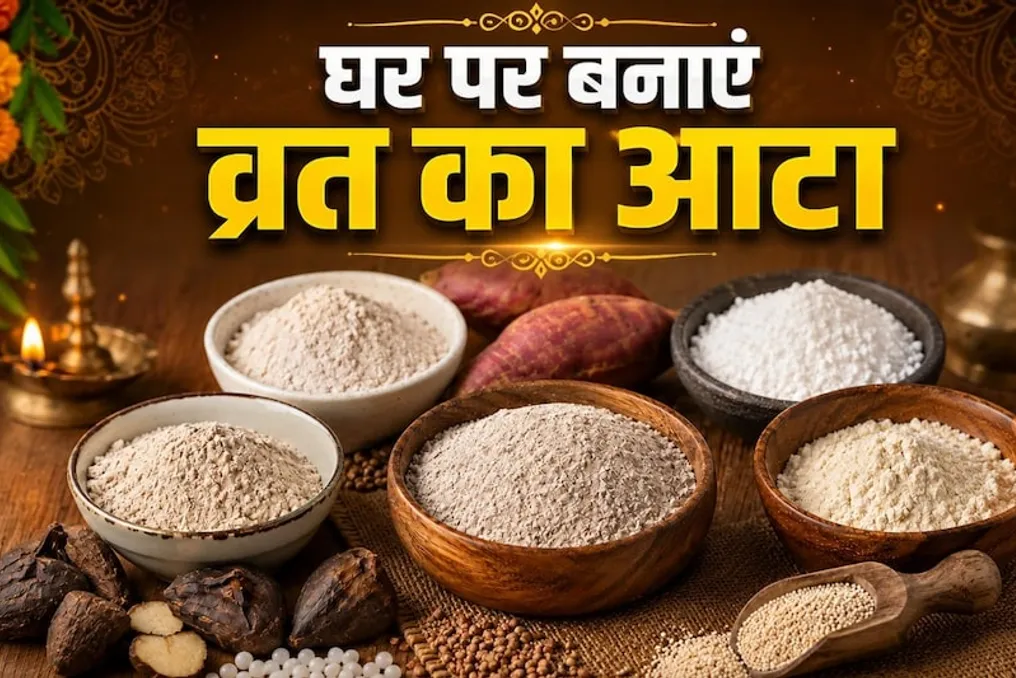
During fasting periods, such as Savan and Navratri, people often prefer dishes made from special fasting flours. Although such flour is easily available in stores, it can be prepared at home to avoid impurities. Preparing flour from kuttu, sabudana, sweet potato, rajgira, and singhada is quite simple, but several important rules must be followed.
Fasting Flour (Homemade Falahari Atta)
With these flours, various fasting dishes can be prepared, including puri, paratha, chila, pakoras, and many other snacks.
Making Kuttu Flour
To make kuttu flour, you will need 1 cup of whole kuttu grains. First, the grains must be thoroughly cleaned of any stones or other contaminants. If necessary, they should be washed with water and completely dried, as there should be no moisture left in the grains.
Next, the kuttu grains are lightly roasted in a dry pan over medium heat for 3–5 minutes; excessive roasting can make the taste bitter. This step can be skipped if you want raw flour. After the grains cool down, they must be ground in a blender and then sifted through a fine sieve. If a coarse part remains, it should be ground again and sifted. The finished flour should be stored in an airtight container. It can be used to make rotis, puris, parathas, and pakoras for fasting.
Making Sabudana Flour
Half a cup of sabudana is required for this flour. To prepare it, heat a pan over medium heat and add the sabudana, roasting it for 5–10 minutes while stirring constantly so that it does not burn. When the sabudana becomes light golden and well-dried, turn off the heat and let it cool completely. Then, grind it in a blender and sift it through a sieve. The finished sabudana powder should be stored in an airtight container, using it to make chila, halwa, or other fasting recipes during the fast.
Making Sweet Potato Flour
The required amount of sweet potato is needed for sweet potato flour. First, the sweet potato should be thoroughly washed and peeled, then cut into thin and small pieces. These pieces should be spread on a plate or baking sheet and dried in bright sunlight. If there is no sunlight, they can be dried in an oven at a low temperature. It is important to ensure that there is absolutely no moisture left in the sweet potato. After drying completely, the pieces are cooled, ground in a blender, and sifted through a sieve. The resulting powder is placed in an airtight container. This flour is suitable for making chila, rotis, or other fasting dishes.
Making Rajgira Flour
First, the rajgira grains must be cleaned of stones and other impurities. Then, a pan is heated, the rajgira grains are added, and they are lightly roasted over medium heat for 3–5 minutes; the grains must not be overroasted. After this, they are placed on a plate and allowed to cool completely. The cooled grains are ground in a blender in small batches. Next, the flour is sifted through a fine sieve, and any remaining coarse part is ground and sifted again. The finished flour is stored in an airtight container. Rajgira flour can be used to make rotis, parathas, chila, and puris for fasting.
Making Singhada Flour
Fresh raw singhada in the required quantity is needed for singhada flour. If fresh raw singhada is used, the skin must first be removed and the seeds thoroughly washed. Then, they are cut into small pieces. These pieces are spread on a clean cloth or plate and dried in the sun. The pieces must become completely dry and hard; if moisture remains, the flour may spoil quickly. When the singhada is completely dry, it is ground in a blender intermittently. The finished powder is sifted through a fine sieve, and any remaining coarse part is ground and sifted again. If dry singhada granules are purchased, they can be ground directly to obtain flour. The finished singhada flour should be stored in a clean and airtight container. It can be used to make puris, halwa, parathas, and chila for fasting.