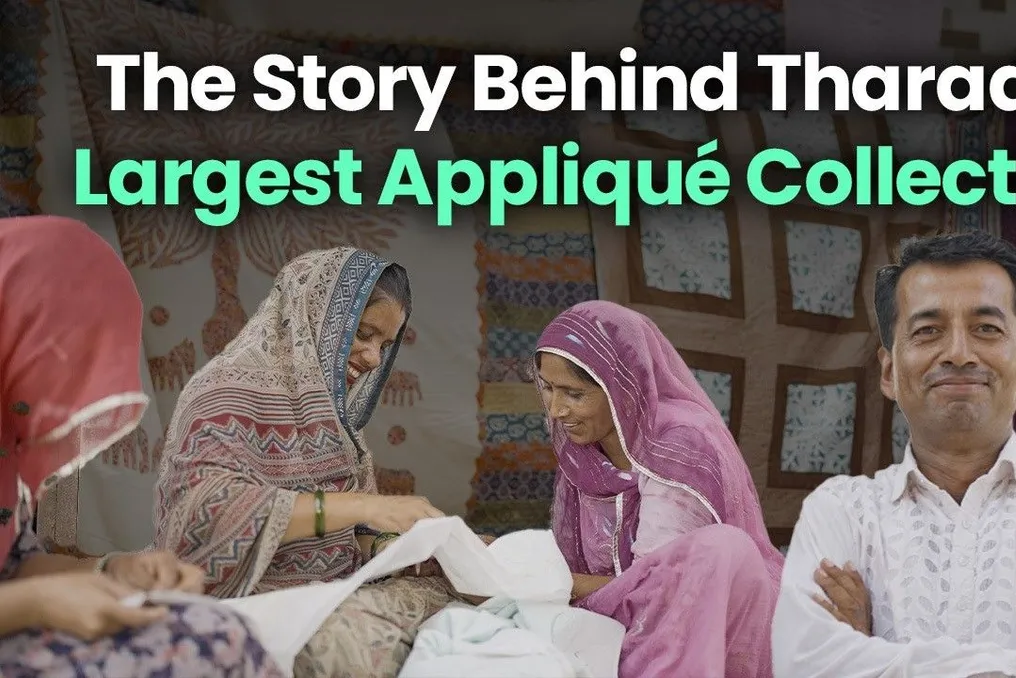
Taraz has never lacked artisans, but there was a shortage of buyers. Initially an initiative by one craftsman seeking customers outside his village, it transformed into one of the largest women's appliqué collectives in the region.
Taraz has never lacked artisans, but there was a shortage of buyers. Initially an initiative by one craftsman seeking customers outside his village, it transformed into one of the largest women's appliqué collectives in the region.
Today, this association has become a movement that provides livelihoods, preserves cultural traditions, and opens previously unavailable opportunities. Thanks to the support of Flipkart Foundation and AIACA, the collective has entered a new phase of development.
This support has allowed for expanded market access and the reimagining of traditional appliqué products for new consumer segments, ensuring that this age-old craft will thrive in future generations.
Some traditions are preserved because they are cherished, and others because someone refuses to let them disappear. For many years, the intricate appliqué technique in Tarada, Gujarat, was gradually fading away. Families that had practiced this craft for generations could no longer rely on it as a source of stable income.
However, the situation changed thanks to the efforts of one determined master. What initially started as a search for buyers turned into one of the largest women's appliqué collectives in the region. This collective has become a movement that provides livelihoods for hundreds of women, sustains a tradition, and opens up previously unavailable opportunities.
As the collective grew, so did its ambitions, leading to the need to improve market access, diversify products, and create systems for sustainable development. With the support of Flipkart Foundation and AIACA, the collective entered a new phase of growth.