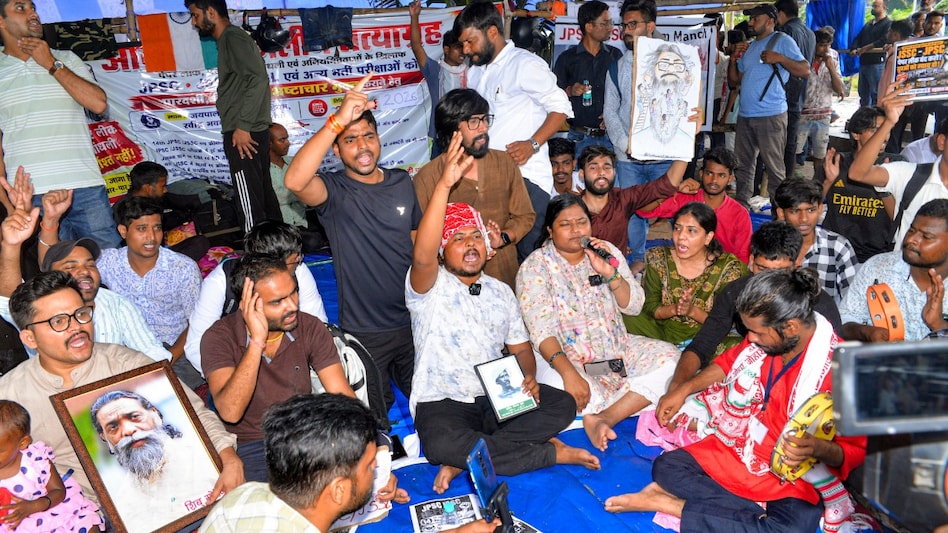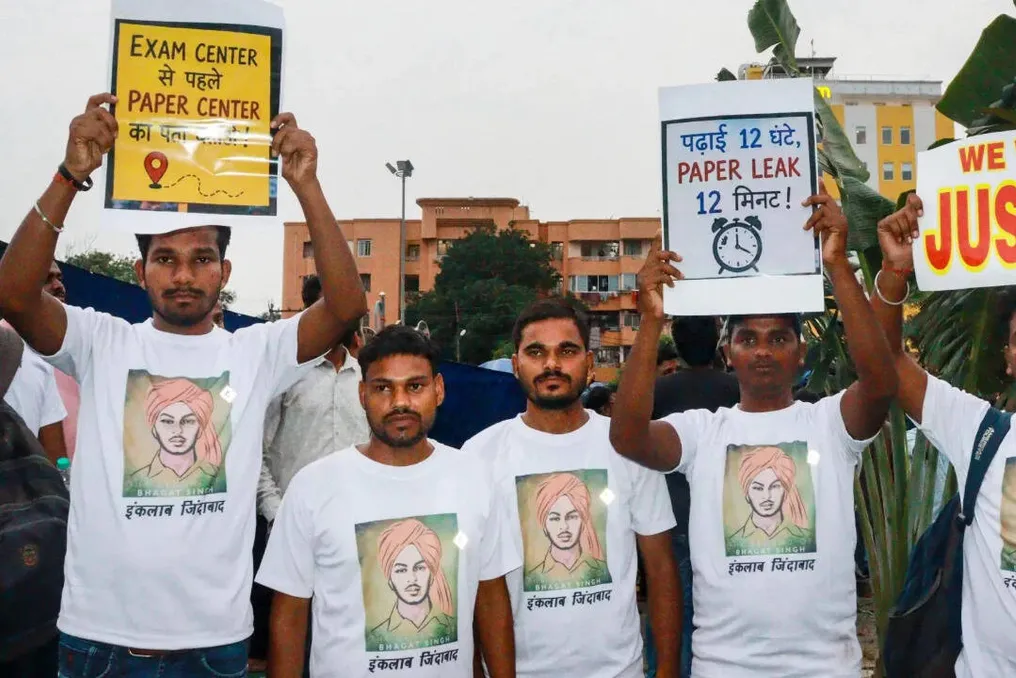
The Jharkhand government announced another round of negotiations with students protesting over exams on Sunday. This decision was made amid the ongoing sixteen-day protest and the deteriorating health of student leader Devendra Nath Mahto, who has been on an indefinite fast for nearly a week.
The decision for the sixth round of meetings followed the failure of discussions between the government and several student groups on Friday and Saturday to resolve the deadlock. Mahto's condition suddenly worsened around three in the morning on Sunday at the Jayaprakash Singh Stadium in Ranchi, where students began protesting on July 25th. Doctors recorded his blood glucose level at 53.
The government commission is scheduled to meet with student representatives at noon on Sunday. However, this move drew criticism from the JPSC-JSSC Reforms Manch, which leads the protest. Ravindra Paswan, the leader of this Manch, accused the government of trying to divide the protesting students and divert attention from their demands.
Paswan stated at a press conference at Jayaprakash Singh Stadium, Mund, that these were 'political maneuvers by the government. It is trying to create a rift among students and distract attention. But they must know that all students are united.' He also asserted that the Reforms Manch had already presented its demands to the five-member government committee during a detailed meeting on Friday evening. Paswan added that the government subsequently held separate talks with other student organizations not participating in the current protest.
The government of Hemant Soren held discussions with the JPSC-JSSC Reforms Manch on Friday evening and then organized four rounds of talks with various student groups on Saturday. These groups included the National Students' Union of India (NSUI), supported by the Congress, Jharkhand Chhatra Morcha (JCM), and Adibisi Chhatra Sangh (ACS).
The government reported that the discussions took place in a constructive atmosphere and that it is considering the issues raised by the protesting candidates. The decision to hold an additional round of meetings was made after the government commission met with Prime Minister Hemant Soren for about four hours on Saturday evening. Rural Development Minister Deepika Pandey Singh reported that the commission informed the Prime Minister about the demands put forward by different student delegations.
Minister Sanjay Prasad Yadav emphasized that the government will continue the dialogue with students demanding comprehensive reforms in the Jharkhand Public Service Commission (JPSC) and the Jharkhand Staff Selection Commission (JSSC).
Protesting students insist on reforms in the entrance examination system, as well as action regarding alleged irregularities in various JPSC and JSSC exams. JCM put forward five demands, including the cancellation of the 14th JPSC civil service exam. NSUI presented six demands, including a demand for the CID to investigate all suspicious JPSC and JSSC exams within 90 days. Furthermore, NSUI demanded the creation of a Jharkhand Testing Agency modeled after the National Testing Agency. ACS demanded the inclusion of tribal and regional languages as qualifying subjects in the exams, as well as the cancellation of exams where irregularities were found.
Higher and Technical Education Minister Sudivya Kumar stated that the government also provided an email address through which candidates could submit suggestions for reform in the selection process.
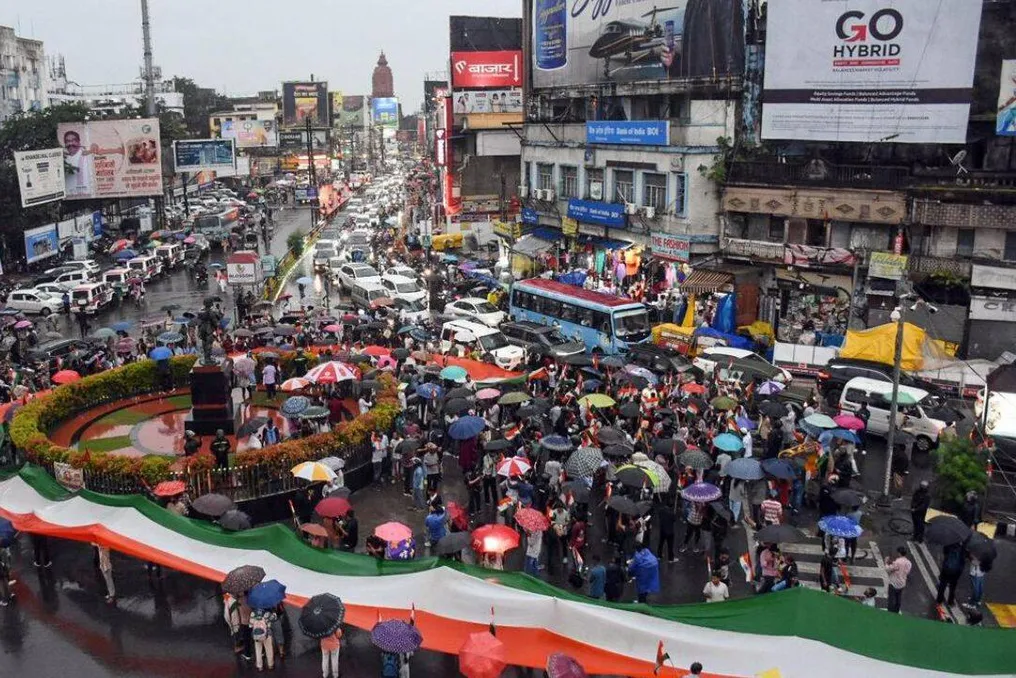
Despite the government's negotiations with various student groups, protesters stated that the agitation would continue until their demands are met. They announced a march to the Jharkhand Assembly on August 10th if the government does not resolve their issues by Sunday. The agitation has also attracted several student organizations, including the All India Students' Association (AISA) and Akhil Bharatiya Vidyarthi Parishad (ABVP).
AISA organized a separate venue at the stadium on Saturday, although its leaders stated this should not be considered a separate agitation. AISA's national president, Neha Bora, who was ink-attacked during the march to the Assembly on Friday near Birsa Chowk, briefly joined the protest and chanted slogans demanding the cancellation of the 14th JPSC and JSSC-CGL exams. The AISA unit head in Ranchi, Vijay Kumar, stated that the organization shares the same demands as the larger protest and that its members will participate in the August 10th march without displaying an AISA banner.
ABVP was also conducting protests on this issue. Its members were confronted by police on Friday while trying to cross barricades near the Prime Minister's residence. Deputy Police Inspector (HQ) Ajay Aryan reported that about eight to ten ABVP protesters were detained during the march but later released. ABVP announced a separate march to the Assembly on August 11th.
The agitation is taking place against the backdrop of an investigation into alleged irregularities in JPSC exams. Currently, nineteen people have been arrested in connection with this case, and former JPSC chairman L Khiangte has been questioned four times since July 28th. Given the deterioration of the student leader's health and the threat of protesters holding another march to the Assembly, Sunday's negotiations could be decisive in determining whether the sixteen-day agitation ends or enters a new phase of confrontation.