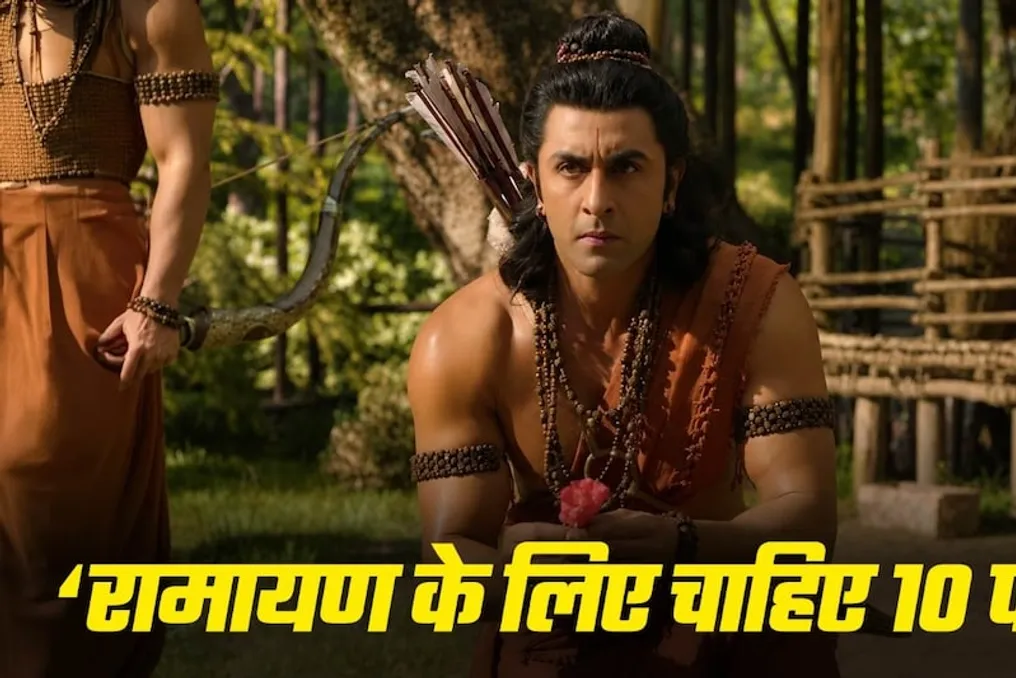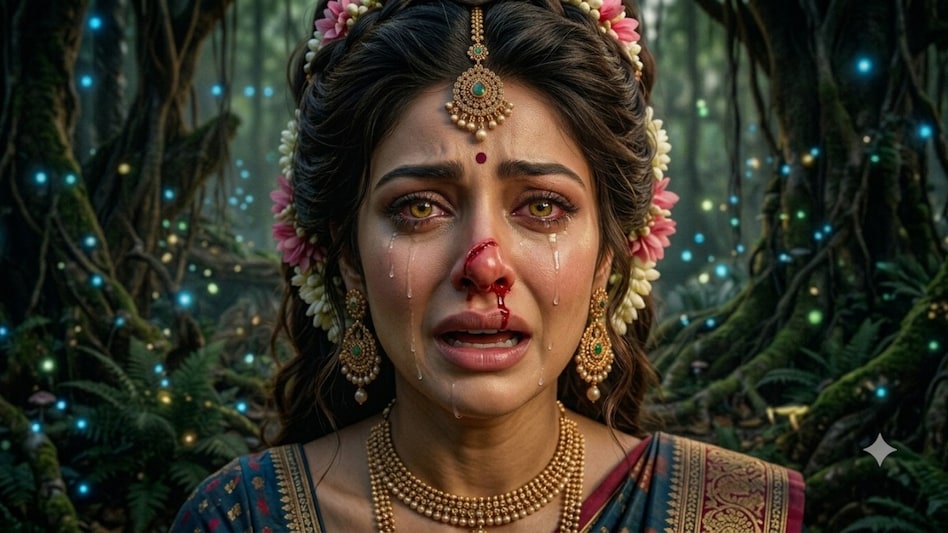
The name Shurpanakha brings to mind viewers, especially those who watched Ramanand Sagar's 'Ramayana,' the famous scene where an enraged Lakshmana cuts off her nose with one blow. For many centuries, the image of Shurpanakha remained tied specifically to this single event. We are accustomed to perceiving her as a woman whose story begins and ends with this loss of her nose.
However, was Shurpanakha's entire story truly so brief? Was her personality merely that of a villain or an object of ridicule? Among various interpretations of the story, folk tales, and the Ramayana itself, many aspects of her fate went unnoticed and were rarely discussed, leading to most of her life almost disappearing from collective memory.
In different sacred texts and traditions, Shurpanakha is depicted from various perspectives. Her oldest and original description is found in Valmiki's Ramayana, whereas in the Ramcharitmanas and subsequent Puranas, her character is interpreted from a more moral and religious viewpoint.
According to Valmiki's Ramayana, Shurpanakha was the younger daughter of Kaikasi, the daughter of the sage Vishrava and a demonic family. In folk legends, it is believed that she was named Minakshi or Suparnika at birth, and later became known as Shurpanakha. Some texts also call her Chandranka. She was the sister of Ravana, Kumbhakarna, and Vibhishana, making her an influential figure in the dynasty of Lanka.
Shurpanakha married Vidyutjivha from the demon clan Kalakaya, who is also called Dushtbuddi in some traditions. According to several accounts, this marriage was entered into by Shurpanakha's own will. Vidyutjivha was a powerful warrior but was later accused of plotting against Ravana. When Ravana learned of this, he ordered his death. After her husband's death, Shurpanakha's life changed drastically. It is said that after this, she left Lanka and spent most of her time in the dense forests of Dandakaranya. It was from this moment that the chapter of her life began, which subsequently changed the entire course of the Ramayana.
The earliest and most reliable description of Shurpanakha is found in the Aranyakanda of Valmiki. Valmiki describes her as a demoness capable of changing her appearance at will. When she saw Rama in Panchavati, she was captivated by his radiance, beauty, and personality and immediately proposed marriage to him. Rama, smiling, replied that he was married and devoted to his wife Sita. He then humorously sent her to Lakshmana. Lakshmana also joked, saying that he was merely a servant to his elder brother, so she should propose herself to Rama.
This dialogue between both brothers and Shurpanakha was filled with humor and sarcasm. However, the turning point came when the offended and enraged Shurpanakha tried to attack Sita. Then, by Rama's order, Lakshmana cut off her nose with one blow. This became the event that subsequently changed the entire course of the Ramayana.
The offended Shurpanakha first appealed to Harishchandra and Dasharatha to provoke a war against Rama. After the death of both, she went to Lanka and told Ravana about her humiliation. Furthermore, she praised Sita's incomparable beauty so highly that Ravana decided to obtain her at any cost. Many scholars believe that if Shurpanakha had not informed Ravana about Sita, the Sitaharana might not have happened, and the great war in Lanka would never have taken place. From this perspective, she becomes the main instigator of the most decisive events of the Ramayana.
In Tulsidas's Ramcharitmanas, Shurpanakha's character is presented in a concise and religious form. There, she acts as a symbol of lust, attachment, and injustice. Tulsidas's goal was not to study her psychology but to convey the idea that passion, pride, and anger lead to destruction; therefore, her role in the Ramcharitmanas is more didactic and moral in nature.
On the other hand, modern historians and feminist thinkers view Shurpanakha completely differently. In their opinion, she was one of the few women in the Ramayana who unhesitatingly expressed her will and proposed marriage herself. Rejecting her proposal is one thing, but considering her desire a crime is another. From this point of view, Shurpanakha is not just a demoness but a woman whose desire, humiliation, and sense of revenge changed the course of history.
Modern feminist researchers also view Shurpanakha as a victim. They argue that if Rama and Lakshmana had calmly explained the situation to her and returned her, perhaps the tragedy would not have occurred. In their view, cutting off a woman's nose in response to her love proposal does not align with the ideals of conduct for Kshatriyas of that era.
Some scholars also note that Shurpanakha lived her entire life in the shadow of her influential brother Ravana. According to folk legends, her personal decisions were not entirely her own.