The second edition of the national festival 'Namma Art Bengaluru' was held at Karnataka Chitrakala Parishat (KCP). This festival showcases the creativity of artists from all over India.
KCP, known for its annual event Chitra Santhe—the largest street art fair in India—is a popular cultural center. The President of KCP, B L Shankar, noted that this edition marks an important stage in creating a vibrant and comprehensive platform that highlights the depth, diversity, and evolving language of Indian art.
The exhibited works represent a wide spectrum of contemporary Indian creativity. Some artists specialize in figurative and narrative painting, while others explore local traditions and abstraction. The variety of approaches makes the exhibition appealing to collectors, students, scholars, and casual visitors.
For decades, KCP has supported artists through educational programs, museums, exhibitions, and cultural events, making it a suitable venue for a large-scale collective exhibition like 'Namma Art Bengaluru'. The General Secretary of KCP, Shashidhara Rao, added that the positive response to the first exhibition prompted organizers to continue this initiative, noting the growth of the fair into an outstanding platform for recognizing artistic excellence, innovation, and cultural exchange.
Unlike individual exhibitions that focus on one artist's vision, a group exhibition fosters dialogue. Each piece influences the interpretation of the next, and contrasting colors, techniques, and themes create a visual dialogue within the gallery space.
Among the featured artists is Rupa Kangovi, a contemporary artist from Karnataka, whose work is connected to exploring nature, memory, and the emotional response of daily life. Using layered textures and earthy palettes, her works often reflect sensitivity to changing relationships between people, animals, and the environment.
Shiva Hadimani is a realistic painter and portrait specialist. His works combine technical precision with wit and keen observation, showing how exaggeration can convey personality while remaining artistically refined.
Sunilkumar Matad is a contemporary artist from India whose work explores the visual and cultural landscape of rural Karnataka through painting and mixed media. His practice is based on daily life, local traditions, and the rhythms of agrarian communities.
Swapan Roy is a contemporary artist from Kolkata whose paintings are deeply imbued with philosophy, spirituality, and Bengali cultural traditions. He studied at the Rabindranath Tagore Institute of Art and developed a unique visual language combining imagination and symbolism.
Usharanjan Mandal is a self-taught artist from West Bengal, known for his intricate works. Over the years, he has held numerous solo and group exhibitions across India, gaining recognition for his distinctive artistic approach.
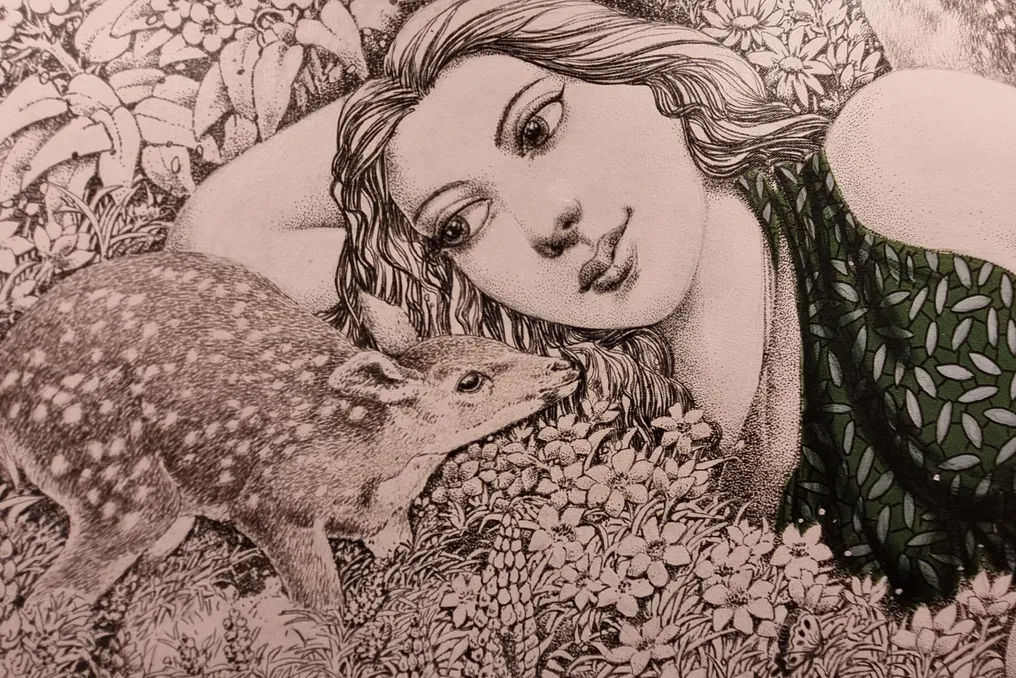
Yuvraj Patil is a contemporary artist from Kolhapur, Maharashtra, known for his vibrant charcoal drawings and monochrome visual language. His compositions emphasize light, shadow, and structure, celebrating culture, devotion, and architecture.
As shown in the photo essay, such group exhibitions encourage healthy comparison rather than competition. Artists and viewers observe different methods of composition, use of color, selection of materials, and conceptual development. Exposure to such diverse practices often inspires new directions in one's own work.
Festival curator S A Vimalanathan concludes that this art fair unites tradition and contemporary practice in an inspiring artistic environment. What began as an idea to create a significant platform for artists has transformed into a dynamic space for creative self-expression, dialogue, and connection.