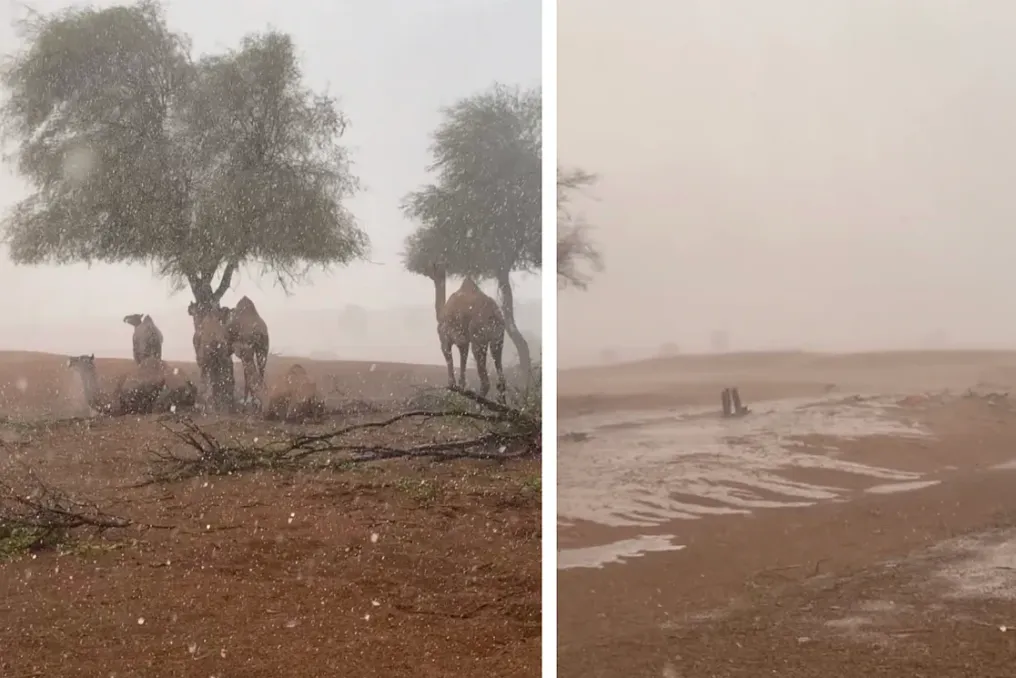
On Wednesday, August 5, parts of the United Arab Emirates (UAE) experienced heavy rainfall. The National Center of Meteorology (NCM) forecasts that precipitation will continue until August 7.
Despite Al Dhafra Abu Dhabi reaching a record high of 51.2°C, other areas of the country prepared for rain as the sky was overcast in the morning. Video footage published by the Storm Center shows rain in both Fujairah and the capital's Al Dhafra area.
Despite the downpour, temperatures are expected to remain high due to the passage of the El Niño wave. Previously, NCM issued orange and yellow warnings for these parts of the Emirates to alert residents to hazardous weather conditions and recommend caution when engaging in outdoor activities.
Rain is expected to continue until 22:00 today in the eastern and western regions, accompanied by strong winds that may cause dusty conditions. Another video from the Storm Center shows residents enjoying the rain in the same locations, with overflowing curbs observed as cars cautiously moved through the downpour.
Meanwhile, in the Al Dhafra region around 15:45 today, cloudy skies and moderate rain were observed. Under such weather conditions, the Abu Dhabi police urged drivers to exercise caution and adhere to variable speed limits indicated on signs and electronic displays.
Residents are also strongly advised to monitor weather forecasts through official channels and be prepared to follow instructions from relevant authorities, avoiding rumors and relying on official NCM reports.
Earlier, on August 3, some parts of the UAE saw rain and hail, which was attributed to atmospheric conditions conducive to the formation of convective clouds. A wider Persian Gulf region is also expecting unstable weather this week, with authorities in countries such as Saudi Arabia and Oman warning of ongoing thunderstorms in several locations.
Meteorological experts, including Ahmed Habib, an NCM meteorologist, explained in a recent interview with Khaleej Times that the current El Niño wave may be the cause of the country's rainfall. El Niño is a natural climatic pattern that occurs globally every two to seven years and lasts for almost a year. It causes a significant rise in sea surface temperature near the equator, shifting warm water masses, as well as global wind and rain patterns.
In the UAE, this phenomenon is believed to increase atmospheric humidity, which many may have noticed as increased humidity in recent days, especially at night. Although high humidity contributes to the formation of convective clouds and increases the likelihood of rain, it does not affect the overall temperature, which is likely to remain high due to the extreme heat brought by El Niño to this region.
NCM has repeatedly called on residents to take the following precautions in case of convective clouds and heavy rain: follow safety measures during convective clouds; take precautions while driving in the rain; stay away from flash flood zones and accumulated rainwater; avoid being in open or elevated areas during lightning and thunder; be vigilant about downdrafts, which can lead to falling objects and reduced horizontal visibility.
Authorities have reiterated the importance of staying away from dangerous places. Residents are advised to avoid valleys, low-lying areas, and flood-prone zones, and not to attempt crossing flooded wadis. It is also recommended to stay away from beaches, the sea, and mountainous areas during unstable weather and to avoid letting children play or walk in standing water.