The design team described the Nectar Oum Restaurant / Madarq studio as a place that uses a 'borrowed' garden and a unique point of origin to convert a secondary space within a food court into an environment with a distinct personality.
The design team described the Nectar Oum Restaurant / Madarq studio as a place that uses a 'borrowed' garden and a unique point of origin to convert a secondary space within a food court into an environment with a distinct personality.
The project was cited on the ArchDaily platform in Portuguese, with the reference 'Nectar Oum Restaurant / Madarq studio' dated August 08, 2026.
India is known worldwide not only for its beauty but also for its rich heritage of historical buildings and monuments. These attractions, located in different parts of the country, tell the story of its rich culture, architecture, and history. Here you can see both the grandeur of the Mughal era and the elegance of the Rajput style. Those interested in history and travel are recommended to add these ten historical sites to their itinerary.
Red Fort (Delhi)
The Red Fort in Delhi is one of the most famous historical structures in India. This massive fort, built from red sandstone, demonstrates the majesty of the Mughal era. Inside, there are palaces, gardens, and many beautiful structures. Today, it holds special significance for the country as the Prime Minister addresses the nation from here on Independence Day.
Qutub Minar (Delhi)
The Qutub Minar in Delhi is famous for its height and magnificent carving. This tower, reaching approximately 72.5 meters, consists of several tiers, and its walls are decorated with exquisite carvings and inscriptions. This place is particularly interesting for lovers of history and architecture.
Taj Mahal (Agra)
The Taj Mahal in Agra has become a symbol of India. This beautiful white marble structure was built by Emperor Shah Jahan in memory of his wife Mumtaz Mahal. Thanks to its large dome and surrounding minarets, the beauty of the Taj Mahal deserves admiration. It is also included in the UNESCO World Heritage list.
Gateway of India (Mumbai)
The Gateway of India, located by the sea in Mumbai, is one of the city's main calling cards. This majestic arched entrance was built in the early 20th century. The beautiful view of the surrounding sea and the vibrant atmosphere of Mumbai make this place ideal for visiting.
India Gate (Delhi)
India Gate, located in New Delhi, is a well-known war memorial. It was erected in memory of Indian soldiers who died in the First World War. The evening time here possesses a special atmosphere, and a large number of people gather nearby to walk and spend time.
Amber Fort (Jaipur)
Amber Fort, situated on a hill near Jaipur, is an outstanding example of Rajput architecture. Inside the fortress, one can see large courtyards, palaces, and beautifully mirrored rooms. The view of the surroundings from this hill is also very picturesque.
Hawa Mahal (Jaipur)
Hawa Mahal in Jaipur is known worldwide for its unique windows. This five-story building made of pink sandstone contains 953 small windows called jharokhas. Thanks to these windows, Hawa Mahal is also called the 'Palace of Winds.'
Mysore Palace (Mysore)
The magnificent Mysore Palace in Mysore is associated with the Wodeyar dynasty. The interior decoration of the palace, the domes, and the luxurious architecture deserve attention. Its beauty becomes even more impressive during special events when it is decorated with lights.
It appears that Taylor Swift has set a boundary regarding the use of her music by Donald Trump, as songs featured in several videos by the Trump team on TikTok were removed from those posts.
The latest incident began when the Trump team published a video showing the President and First Lady Melania Trump watching a fireworks display on US Independence Day. This clip was accompanied by Swift's song 'August' from her 2020 album 'Folklore.'
The Team Trump account apparently directly referenced Swift in the caption, stating that she would be 'thrilled' by the use of her composition, and tagged her account. This post quickly drew the attention of Swift fans, many of whom called on the singer to demand the removal of her music from the political video.
By Friday, the music had been removed from the TikTok post; instead of the Swift song, viewers saw a notification that the audio was no longer available. Swift herself did not publicly comment on this incident, nor did her representatives make public statements about how the removal was requested. However, the timing of the incident led fans and entertainment publications to speculate that the song was taken down due to copyright compliance.
The situation was not limited to the song 'August.' Later reports emerged that two other Swift songs, 'Father Figure' and 'Opalite,' were also removed from videos associated with the Trump team. The song 'Father Figure' is from Swift's 2025 album 'The Life of a Showgirl,' and 'Opalite' also belongs to that album.
These removals attracted significant attention, given that Swift and Trump have a long history of political disagreements. Swift publicly criticized Trump during his first presidency and became increasingly active in political matters in subsequent years. During the 2024 presidential election, she supported Kamala Harris, posting her endorsement shortly after the debate between Harris and Trump.
In response, Trump criticized Swift on social media, suggesting she would not gain any political or commercial advantage from opposing him. Their relationship grew more complicated when Trump posted AI-generated images in 2024 falsely depicting Swift and her fans as supporters of his presidential campaign. The singer later supported Harris, clearly stating her political stance.
Swift has also taken steps to strengthen control over her intellectual property. In April 2026, she filed trademark applications covering aspects of her voice and image, amid growing concerns about artificial intelligence and the unauthorized use of artists' likenesses. Her official website also clearly states that Swift and her affiliated companies control the rights to intellectual property related to her name, appearance, and other protected materials, and describes procedures for copyright infringement claims.
Thus, the recent dispute on TikTok appears to be less about a public confrontation and more about control over how Swift's music is used. The Trump team seemingly intentionally drew attention to the singer by tagging her in the 'August' post, but the subsequent removal of the song meant the political video remained online without the soundtrack that originally accompanied it.
For Swift's massive fanbase, the removal was quickly perceived as a victory. Online reactions described the move as a direct response to Trump's attempt to link her music to his political message. Nevertheless, there is no evidence that Swift personally issued a cease and desist order or publicly demanded that Trump remove the songs. It is clear, however, that many songs from her catalog have since been muted or removed from Team Trump's TikTok posts, leaving the political videos without the music that originally accompanied them.
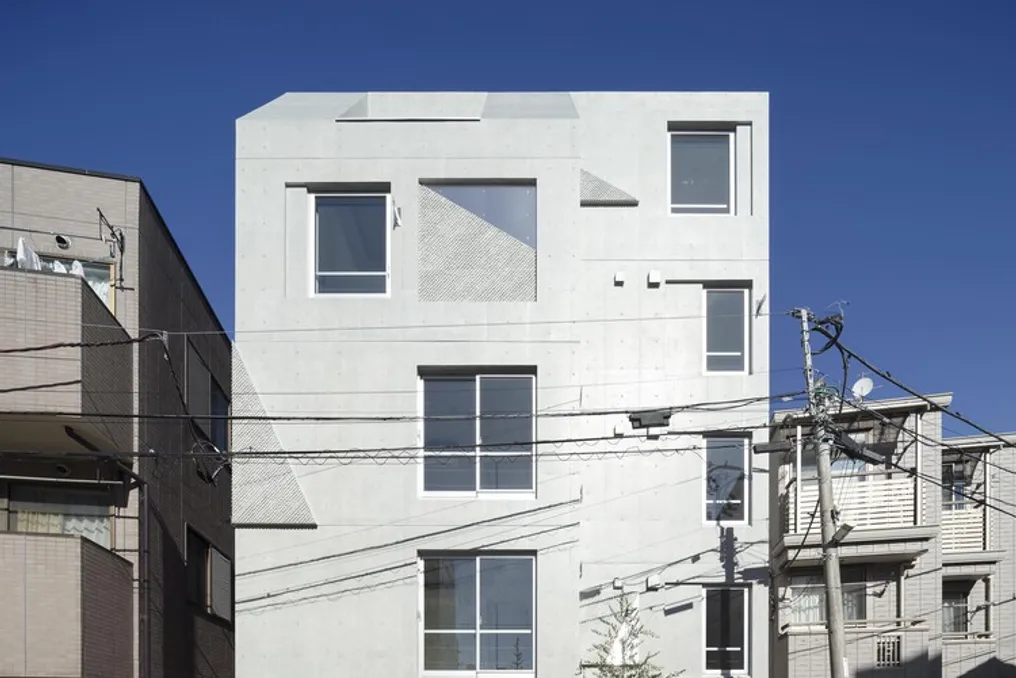
The Shin Nakano Residence, developed by Ryuichi Sasaki and Sasaki Architecture, was built as Grantage Shin Nakano in the Chuo district, located in Nakano, Tokyo. This reinforced concrete residential building has five floors above a basement level and accommodates eleven units, totaling a constructed area of 416.68 square meters. The project concept aimed to give an architectural expression to the geography that has shaped life in western Tokyo over millennia.
The building is situated in the center of the Musashino Plateau, a geographical formation spanning 700 square kilometers in the western part of Tokyo. This plateau, delimited by three rivers and abundant in groundwater, has supported human settlement since ancient times. The developer, Real Partners, requested a compact urban condominium on a limited plot of 152.27 square meters, and the architecture team responded by translating the deep local geography onto the surface, using the light and movement inherent to the building itself.
Ryuichi Sasaki, CEO and Principal Architect, explained that 'The Musashino Plateau is one of those landscapes people live on without ever truly seeing it.' He added that the project's challenge was to transform something as abstract as its position within a plateau into a tangible element that residents encounter daily, whether in the facade, the shadows of the stairs, or the light entering the rooms.
The trapezoidal motif, which gives the development its name, originates from the central location of the plot within the plateau. On the street-facing facade, this pattern is created with custom shapes, stainless steel, and exposed concrete surfaces, engraved as a relief directly into the cast-in-place concrete structure rather than being applied externally. The combination of the matte finish of the stainless steel, the reflections from the window glass, and the texture of the concrete allows the facade's appearance to change depending on the time of day and weather conditions.
Inside the entrance, rhythmic trapezoidal pillars and a pattern of trapezoidal tiles extend this geometry into three dimensions, defining the access and casting soft, dotted shadows reminiscent of a tree canopy. The common staircase follows the same theme with grid steps illuminated by the trapezoidal motif, generating a luminous effect similar to sunlight filtered through leaves. The lighting design, executed by Natsuha Kameoka of Lighting Sou, applies this same geometry at night.
With a site area of only 84.86 square meters, every solar direction is crucial. The building faces a wide street on one side and a plaza on the other, and the design utilizes both spaces to ensure natural light and cross-ventilation. The openings facing the plaza offer the interiors a view that is part of the neighborhood, not just the street, capturing the greenery of the trees and the daily activities of the neighboring nursery school children.
The interiors, characterized by their white and tranquil nature, use trapezoidal wall openings and a decorative glass railing—both visible from the street—to establish a rhythmic cadence that reconnects the interior to the facade. In the duplex units, a gently sloped atrium allows filtered light to pass through openings on the upper floor, creating a peaceful communal space that gradually reveals itself throughout the day. Light reaches these areas from the atrium, a skylight, and openings on both facades, continuously altering the character of each space with the movement of the sun.
To conclude, Ryuichi Sasaki stated that 'A residential building of this scale is experienced in fragments—an entrance, a staircase, a window—so the guiding motif needed to function in each of those moments.' He concluded by expressing pride in providing the residents of Nakano with a building that connects them, subtly and daily, to the ground on which it is situated.
Konark Sun Temple (Odisha)
The Konark Sun Temple in Odisha is known for its unique architecture. Built in the 13th century, this temple is dedicated to the Sun God. It is designed in the shape of a giant stone chariot, adorned with magnificent carved wheels and horses.
Charminar (Hyderabad)
Charminar, located in the center of Hyderabad, is the most significant historical landmark of the city. This monument, built in 1591, is known for its four tall minarets and arches located in four directions. The market and old city around it add extra appeal to this place.