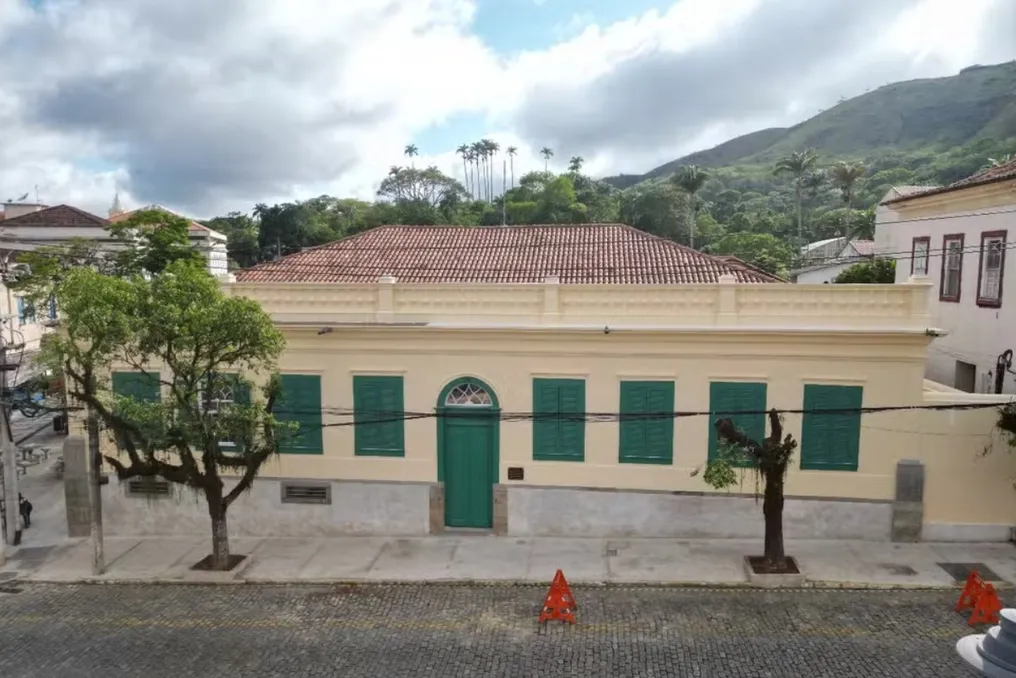
Casa do Barão de Vassouras, one of the most relevant historical assets of the Coffee Valley, located in the south of the state of Rio de Janeiro, will be integrated into the Fluminense cultural circuit starting at the end of May, transferring to the management of Sesc RJ.
Those responsible for the project plan to transform the location into a unit focused on culture, education, training, and creative economy. The transfer to Sesc RJ occurs after an extensive restoration process, as the house had been closed since 2020 to undergo renovations that cost R$ 19 million.
After the recovery of architectural and decorative elements using techniques from the construction period, the property was reopened to the public only at the end of 2025. The restoration works covered Portuguese tiles, floors, walls, frames, facades, roofs, and ceilings.
Although the location was inaccessible for fifty years before the renovation, a central objective of the recovery project was to ensure more frequent participation of Casa do Barão de Vassouras in the local community's cultural calendar. Currently, Sesc RJ holds primacy over the space through a free concession with an initial term of 25 years, renewable by the Municipal Prefecture of Vassouras.
With the new administration, Sesc RJ plans to host exhibitions, both permanent and temporary, in addition to promoting shows and audiovisual screenings. The space will also be used for workshops, events related to heritage education and cultural tourism, including programming aimed at children and families.
Built sometime in the 19th century, with estimates pointing to the 1830s, the residence served as the home of Francisco José Teixeira Leite. The property symbolized the prosperity and wealth of a prominent farmer during the coffee period in the city. Although Teixeira Leite originated from São João del-Rei, Minas Gerais, he established his roots in Vassouras and obtained the title of local baron granted by the Empire in 1871.
The house witnessed important milestones in Brazilian history, such as the signing of the agreement for the construction of the D. Pedro II Railway, which is now known as Central do Brasil, an event recorded on a plaque on the facade. Despite being listed by Iphan in 1958 as part of the city's urban architectural complex, the residence remained unoccupied and inadequately conserved during the last decades of the 20th century. This was due to a succession of legal disputes and financial issues, keeping the property unused from the 1970s until the start of the renovation works in 2020.
Currently, the property is located in Praça Eufrásia Teixeira Leite, in the center of Vassouras.