The website uses a security service to protect against cyberattacks. The action you performed triggered this protective system.
The website uses a security service to protect against cyberattacks. The action you performed triggered this protective system.
There are several actions that can lead to such a block, including entering a specific word or phrase, executing an SQL command, or submitting incorrect data.
Users are advised to contact the website owner to report the block. When contacting them, they should specify what actions were being performed when this page appeared, and also provide the Cloudflare Ray ID, which is located at the bottom of the page.
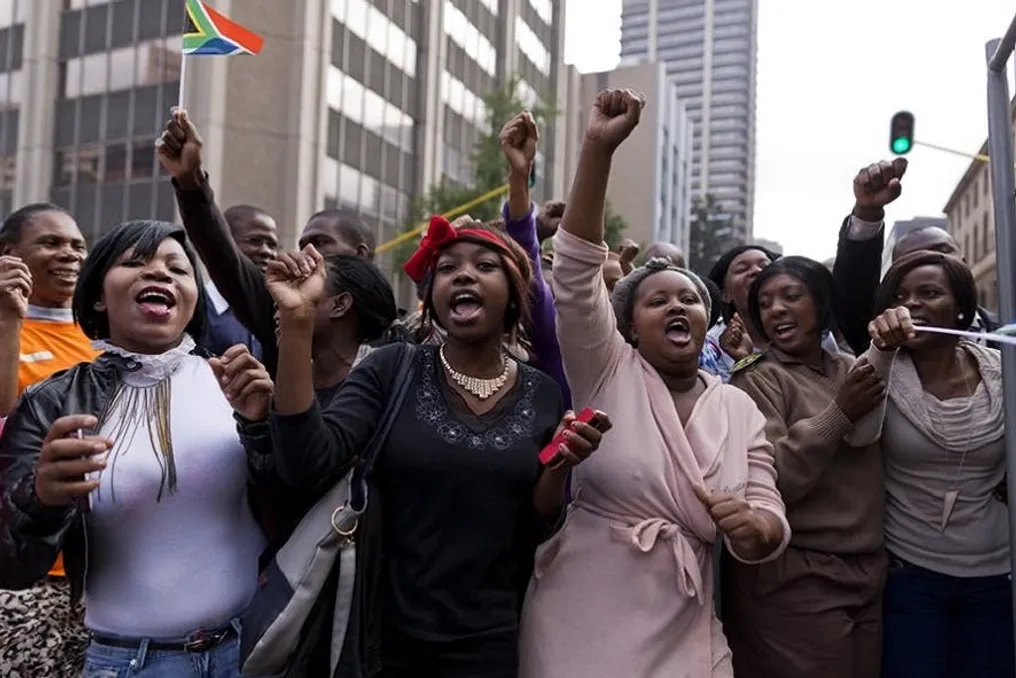
Seventy years ago, on August 9, 1956, over 20,000 brave women marched to the Union Buildings in Pretoria, peacefully protesting against the repressive laws of the apartheid regime. They protested not only against unjust legislation but also against a system that stripped women of their dignity, autonomy, and rightful place in society.
This historic act became one of the defining moments in the struggle for the liberation of South Africa and inspired generations with the slogan: 'Wathint' Abafazi, Wathint' Imbokodo' — 'If you beat a woman, you beat a rock.'
On the anniversary of the Women's March, tribute is paid to these remarkable women, reaffirming commitment to the constitutional vision they helped create—a democratic South Africa based on human dignity, equality, non-racial and non-sexist principles, the promotion of human rights and freedoms, and the rule of law.
The Constitution is viewed not merely as a legal document but as a national contract reflecting the aspirations of millions who fought for justice, demanding a society where every person has equal protection, equal opportunities, and equal value.
Although the women who participated in the 1956 march may not have marched under the current Constitution, they fought for the very values that define constitutional democracy today. Their courage laid the moral foundation upon which the democratic state is built.
The Preamble to the Constitution calls on all South Africans to heal past divisions, build a society founded on democratic values, social justice, and fundamental human rights, and improve the quality of life for citizens by unlocking each person's potential. These constitutional obligations remain particularly relevant for women, whose full participation in economic and social life is critical for South Africa's development.
As a developing and constitutional country, South Africa recognizes that equality cannot exist only in laws; it must be realized in people's daily lives. However, for many women, constitutional rights are constrained by poverty, unemployment, unequal access to economic opportunities, gender-based violence, femicide, and systemic discrimination.
Despite significant progress in democracy in expanding women's representation in leadership and decision-making, structural barriers continue to limit the economic freedom necessary for true equality.
The Constitution demands more than formal equality. Section 9, or the Equality Clause, recognizes that achieving substantive equality requires targeted measures to protect and advance those who have suffered from unfair discrimination. This constitutional principle serves as the legal and moral basis for policies aimed at empowering women, gender-responsive planning and budgeting, fair access to opportunities, and inclusive economic participation. This is not privileged aid, but constitutional justice.
South Africa's evolving agenda also acknowledges that sustainable economic growth depends on broad participation. A developing nation must ensure that women are not just recipients of development but active drivers of economic transformation.
Women continue to support families, communities, and the economy. They own businesses, cultivate land, innovate in science and technology, raise children, provide healthcare, strengthen social cohesion, and contribute significantly to national productivity. Nevertheless, women disproportionately suffer from unemployment, income inequality, and unpaid care work.
These issues are not just social problems but constitutional and developmental ones. When women cannot fully participate in the economy, South Africa cannot fully realize its constitutional promise of equality or achieve the inclusive growth outlined in the National Development Plan 2030. Therefore, economic justice is inseparable from constitutional democracy; it is one of its practical expressions.
The Government of National Unity has affirmed its commitment to building an inclusive economy, creating jobs, reducing poverty, and strengthening state capacity. These priorities cannot be achieved without accelerating the economic empowerment of women, especially young women, women with disabilities, and women from rural communities who continue to face intersecting forms of disadvantage.
The Department of Women, Youth, and Persons with Disabilities continues to promote gender mainstreaming across government to ensure that every policy, program, and budget contributes to substantive equality. Their work supports the state's constitutional obligation to respect, protect, promote, and fulfill the rights contained in the Bill of Rights.
Economic justice requires targeted investments in women-owned enterprises, expanded access to finance and markets, digital integration, quality education and skills development, and greater participation of women in high-growth sectors such as science, technology, engineering, renewable energy, and advanced manufacturing.
It also requires recognizing the economic value of unpaid care and creating conditions that allow women to participate equally in the labor market through affordable childcare, social protection, and family workplaces. Equally important is the eradication of gender-based violence and femicide, which remain one of the greatest threats to women's constitutional rights. Violence undermines dignity, restricts freedom, constrains economic participation, and weakens social cohesion. Thus, building a safer South Africa is central to achieving both constitutional justice and sustainable development.
Our constitutional democracy calls on all sectors of society to contribute to the transformation. Government, business, labor, academia, civil society, traditional leaders, religious communities, and ordinary citizens share responsibility for building a society based on justice, equality, and social justice.
By marking seventy years since the Women's March, we honor not only the women who challenged apartheid but also the millions of South African women who build our democracy every day—as entrepreneurs, workers, farmers, teachers, healthcare workers, scientists, public servants, artists, caregivers, and community leaders.
Their contribution reminds us that constitutional democracy is strengthened every time women are given the opportunity to realize their full potential. The greatest tribute to the women of 1956 is not merely remembrance, but the continuous fulfillment of the constitutional values they fought for.
Their courage gave birth to hope. Our Constitution gave this hope a legal expression. Our duty seventy years later is to turn this promise into reality by advancing economic justice, substantive equality, and opportunities for every woman and girl. Only then will we truly fulfill the constitutional vision of a South Africa that belongs to all who live in it, united in diversity, dedicated to social justice, and striving to improve the quality of life for every citizen. This is the South Africa the women of 1956 marched for. This is the South Africa we must continue to build.
In South Africa, women are showing increasing financial autonomy, which is reflected in significant progress in the ownership of both housing and vehicles. In August, recognized as Women's Month, new data reveals a noticeable transformation in ownership dynamics.
These changes highlight a new level of dominance in real estate investments, which were previously predominantly held by men, according to Hayley Irvine-Downs from Lightstone Property. She noted a steady shift in ownership patterns as more South African women acquire property, indicating their growing financial confidence and belief in real estate as a long-term investment.
The historically male-dominated real estate sector is undergoing a paradigm shift. According to the latest reports, women now surpass men in the housing market. The share of homes owned by women as sole buyers has sharply increased from 30% in 2014 to an impressive 39% by 2025. Meanwhile, the share of joint ownership by couples has decreased from 39% to 30%.
It is important to note that 'female sole buyers' are defined as women who are the sole registered owners of the property, regardless of their marital or partnership status. The overall trend of rising ownership has far-reaching implications: properties owned exclusively by women or jointly with men account for a substantial 69% of total ownership, while male ownership remains stable at 31%.
Lightstone's analysis showed that out of approximately 200,000 residential property transactions made by individuals over the past year, 140,000 involved sole buyers, of which 75,000 were female sole buyers. Furthermore, about 60,000 transactions were joint purchases where women collaborated with male buyers.
The rise in female buyers is notable, especially between July 2024 and June 2025, largely driven by a surge in low-cost property transfers. This shift is also visible in the price ranges of affordable housing, where female sole buyers significantly outperform their male counterparts, particularly in categories below R250,000, from R250,000 to R500,000, from R500,000 to R750,000, and from R750,000 to R1 million.
Government housing support programs also play a significant role in this trend: 26% of transfers to women as exclusive owners are subsidized, compared to 21% for male sole buyers and 17% for male/female joint purchases. When these subsidized properties are excluded from the analysis, it becomes clear that female buyers prefer secure living conditions: 12% chose Estate Freehold, 4% preferred Estate Sectional Schemes, and a significant 37% opted for Sectional Scheme properties.
Over 47% of female sole buyers entered the Freehold market. Financially, female buyers generally spend less on average than men: women pay nearly R2.2 million for Estate Freehold properties and just over R1.5 million for Estate Sectional Scheme properties, excluding subsidies. Moreover, female buyers show a clear trend toward ownership with age: at age 30, women constituted 50% of buyers, and by age 74, this figure rises to 73%, indicating a preference for sectional titles.
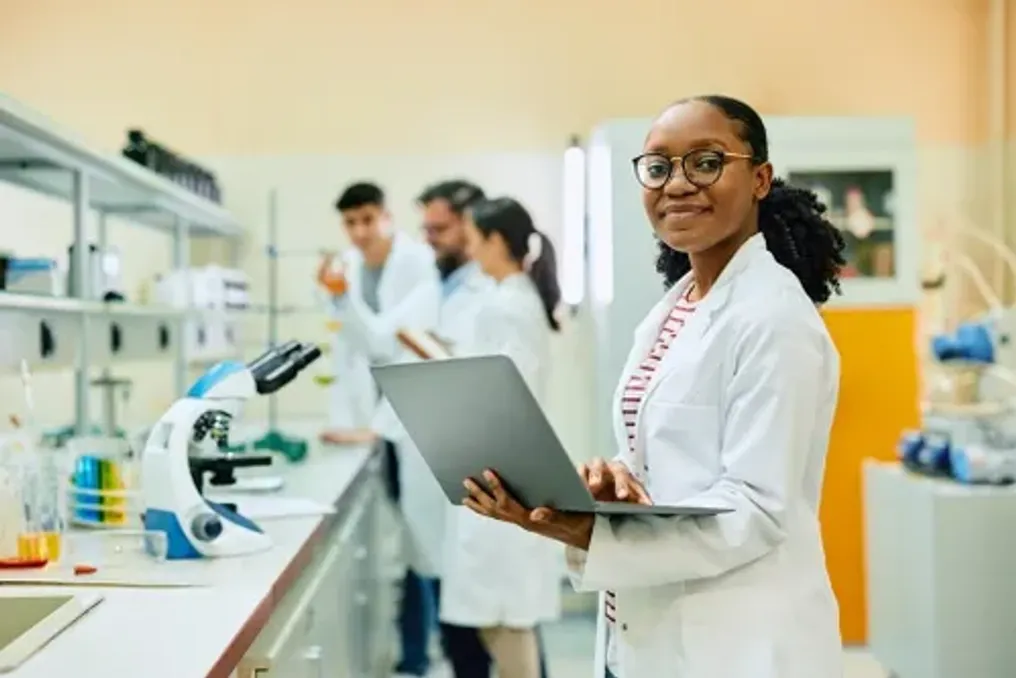
According to Cassius Selala, when South African women hold leadership positions in science, they contribute not only to the transformation of laboratories but also to the transformation of industries, strengthening the economy, inspiring future generations, and building the inclusive, capable, and prosperous South Africa envisioned by the Constitution.
South Africa is at a crucial stage of its democratic journey. In the process of creating an inclusive economy, ensuring sustainable employment, reducing poverty and inequality, and strengthening the potential of a developing state, it has become clear that the country's progress depends on unlocking the full potential of all its citizens, especially women and girls.
During Women's Month, under the national theme 'Empowering women empowers the nation,' it is reminded that supporting women is not just a constitutional requirement or a matter of social justice, but a central element of South Africa's development plan. This is most evident in the fields of Science, Technology, Engineering, and Mathematics (STEM).
The future of the South African economy will be determined by innovation, research, and technological progress. The industries that will shape tomorrow's economy—such as artificial intelligence, biotechnology, renewable energy, advanced manufacturing, digital technologies, medical sciences, and climate innovations—require a skilled workforce capable of solving increasingly complex challenges. Women and girls must be at the center of this transformation.
The National Development Plan until 2030 recognizes the need to expand the country's skills base, invest in innovation, and strengthen research capacity to achieve inclusive economic growth. Similarly, the Medium-Term Strategic Framework (2024–2029) emphasizes inclusive growth, job creation, poverty reduction, and combating the high cost of living, as well as building a capable, ethical, and developed state. None of these goals can be fully achieved without a significant increase in the participation and leadership of women in science and innovation.
Science extends far beyond laboratories and research institutions; it is the foundation upon which nations build competitive economies. Every medical breakthrough, agricultural innovation, clean energy solution, engineering achievement, and digital technology begins with scientific inquiry. When women participate fully in these fields, they contribute not only to scientific excellence but also to economic expansion, industrial development, and improved public service delivery.
South African women scientists continue to demonstrate outstanding leadership in critical sectors. They advance vaccine research, enhance food security through agricultural science, develop technologies to address water scarcity, drive innovation in mining and manufacturing, and lead research helping communities adapt to climate change. Their work directly contributes to achieving national priorities and improving the daily lives of millions of South Africans.
Despite these successes, women remain underrepresented in many STEM disciplines, particularly in leadership roles, research funding, and commercial innovation. Many girls still face obstacles that prevent them from building careers in science and technology. Gender stereotypes, unequal access to quality education, limited mentorship opportunities, workplace discrimination, and uneven burdens of unpaid care continue to limit their potential.
For a country facing persistent unemployment, especially among women and youth, this represents a missed economic opportunity. Therefore, empowering women in science must become a strategic investment in South Africa's economic recovery and development. Every girl who succeeds in mathematics, coding, engineering, or scientific research strengthens the country's ability to compete in the rapidly changing global economy. Every woman who starts a tech enterprise, leads scientific research, or develops innovative solutions contributes to job creation, productivity, and inclusive growth.
This requires targeted investment across the entire education and innovation ecosystem. Girls must have equal access to quality STEM education from an early age. Universities and Technical and Vocational Education and Training (TVET) colleges must expand opportunities for women in research and innovation. The public and private sectors must invest in scholarships, mentorship, research funding, entrepreneurial support, and leadership development to enable women scientists to thrive.
The Department of Women, Youth, and Persons with Disabilities continues to advocate for gender-oriented policies aimed at dismantling structural barriers and promoting equal participation in all spheres of society. By collaborating with government departments, academic circles, scientific councils, industry, and civil society, it is essential to ensure that women are not merely participants in South Africa's innovation ecosystem, but its leaders, shaping its future.
Empowering women in science also advances South Africa's international commitments, including the African Union's Agenda 2063, the United Nations Sustainable Development Goals, particularly SDG 5 (Gender Equality), SDG 8 (Decent Work and Economic Growth), and SDG 9 (Industry, Innovation, and Infrastructure), as well as commitments under the Beijing Declaration and Platform for Action.
The country's development plan cannot succeed if innovation excludes half its population. Inclusive growth requires inclusive innovation. A capable developing state needs the talents of female researchers, engineers, data scientists, inventors, and entrepreneurs. Our industrialization requires women to design the technologies of the future. Our response to climate change depends on women developing sustainable agricultural systems and clean energy solutions. Our healthcare system relies on women to advance vital research.
By investing in women in science, the country strengthens institutions, makes industries more competitive, improves community health, and enhances economic resilience. Opportunities are created not only for individual women but also for families, communities, and future generations.
On the occasion of Women's Month, South Africa must renew its commitment to creating an environment where every girl can dream without limits, every young woman can build a scientific career without discrimination, and every female scientist can lead, innovate, and contribute fully to national development. The success of South Africa's development plan will ultimately depend on whether we can harness the talents of all our people. Thus, empowering women in science is not just a matter of representation; it is an acceleration of economic transformation, the advancement of innovation, the strengthening of our developing state, and the building of a prosperous nation for all.