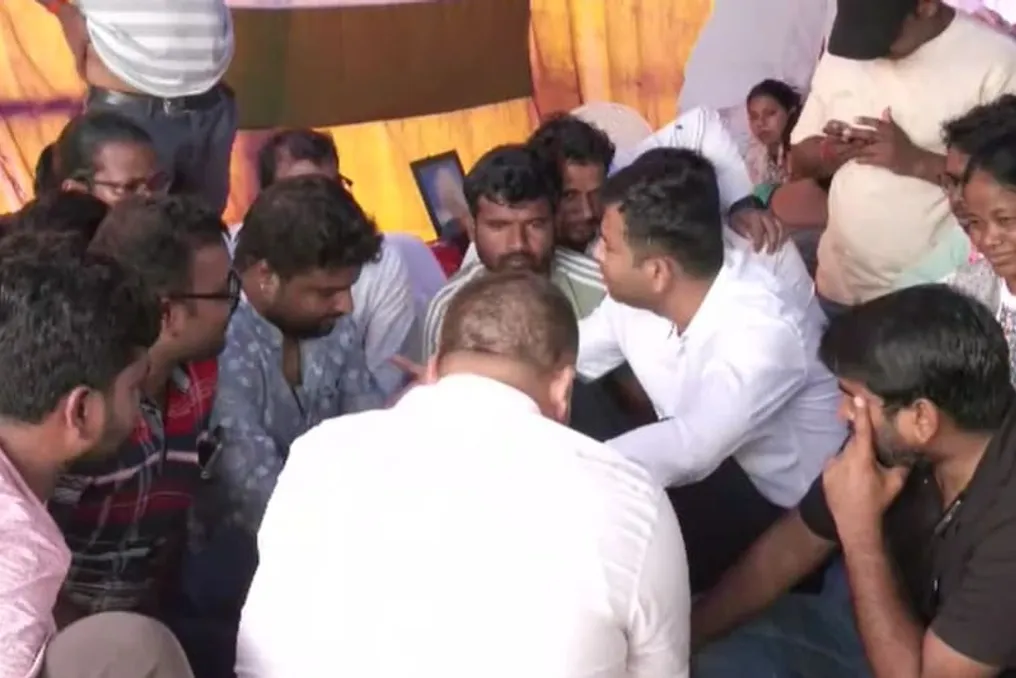
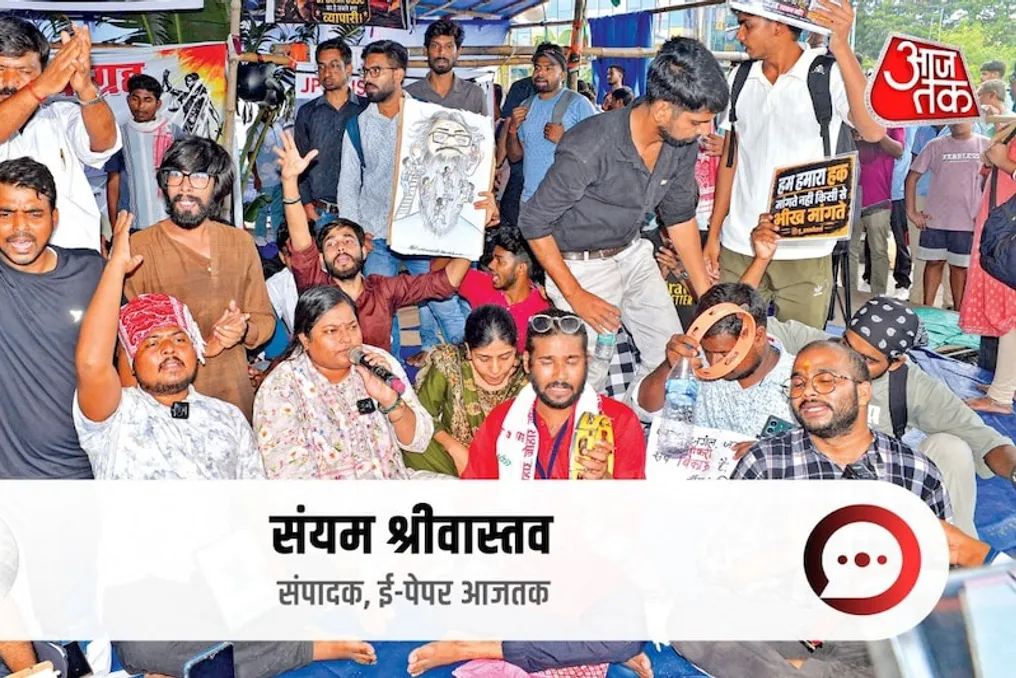
The student movement in Ranchi has been ongoing for about two weeks, with students from the state of Jharkhand constantly protesting in the capital's streets. However, this movement is not receiving the national recognition and support that the student movement in Delhi received some time ago. Although the issues of both movements may differ, their core essence is the same—discontent among the youth regarding their future, opportunities, and the system.
A question arises: why does the movement in Delhi become a subject of national discussion, while movements in cities like Ranchi remain confined to the state? This question pertains not only to Jharkhand but also to the structure of Indian democracy, whose center remains Delhi. As the country's capital, it houses the parliament, the Supreme Court, the central government, and the headquarters of almost all major national media outlets. Consequently, any protest on the streets of Delhi naturally falls into the view of national cameras.
At the same time, movements taking place in Ranchi, Bhopal, Jaipur, Patna, or Guwahati do not receive the same visibility. This central trend in the media also affects democratic discourse. A movement whose photographs constantly appear on national channels and in social networks becomes a matter of national concern. Conversely, movements that receive limited coverage, regardless of their duration or seriousness, do not become part of the national consciousness. This creates the perception that movements outside of Delhi are less important.
The stance of political parties is also similar. When a movement occurs in Delhi, almost all national parties define their political position either in support or against it. Politicians start appearing, statements are made, and the movement becomes part of national politics. But when the same voice rises from the state capital, national politics often remains silent. This happens because many parties first assess their political gains and losses before deciding to support any movement.
Celebrity culture also distances itself from these movements. Actors, athletes, writers, and social media influencers who are willing to speak out anywhere avoid Ranchi. However, there is another side: the success of any movement is not determined solely by national support. History holds numerous movements that began in small towns or remote areas and led to national change. Therefore, the strength of a movement cannot be judged solely by the number of cameras or social media trends.
Today's student is more informed than ever. They raise issues concerning their rights, employment, education, and transparency. If the demands of students from Delhi have national significance, then the voices of students from Ranchi, Patna, Bhopal, or Imphal must be heard with equal seriousness. In democracy, the significance of citizens is determined not by their address, but by their rights.
It is also true that the circumstances, demands, and public support for each movement are different, so direct comparisons between the two movements are always somewhat inappropriate. But if the core issues of one movement are the same, and it is given less importance simply because it is happening outside of Delhi, this calls into question the principle of democratic equality.
In this situation, there is also a political aspect that is natural to discuss. The Indian coalition currently rules Jharkhand. The question arises: is this the reason why opposition parties and many prominent public figures stay away from this movement? This question is important because support for movements in Indian politics often seems to change depending on the political context.
There is a political opinion that if a similar student movement had occurred in a state governed by the Bharatiya Janata Party (BJP), the Congress, Aam Aadmi Party, and other opposition parties would appear more active. On the other hand, if the movement takes place in a state governed by the opposition, national political activity appears relatively low. Opinions on whether this assumption is correct may vary, but political behavior has certainly raised such questions.
Some opposition leaders have explained their absence in Jharkhand due to health problems. In some media circles, reports have emerged that the stated reasons are not accurate. To speak up or remain silent about any movement is the right of a political party, but when reactions to the same issues in different states differ, the question of impartiality arises.
In democracy, the evaluation of movements should not be based on who is in power. If the students' demands are fair, their support should not depend on the convenience of the ruling party and the opposition. Otherwise, it sends a signal that movements also have a political 'caste'. To keep democratic politics reliable, it is necessary to stop applying this double standard. The future of the student belongs not to the Bharatiya Janata Party, nor to the Congress, nor to any other party; it belongs to the nation. Therefore, sensitivity to any student movement should not depend on relationships.
}))