More than 500 million years ago, the event known as the Cambrian Explosion marked a crucial advance in species evolution, being responsible for the emergence of numerous organisms that constitute modern life.
This phenomenon is attributed to several factors, including the increase in oxygen levels in both the atmosphere and water, the appearance of a protective ozone layer, and the arrival of nutrients in the oceans. A new study additionally points to the role of a feces explosion.
The research suggests that the proliferation of excrement by early animals would have been vital for the diversification of life. From microscopic zooplankton to blue whales, most living beings produce feces, and in the oceans, these residues are essential for recycling nutrients such as carbon, iron, nitrogen, and phosphorus, moving them from surface waters to the depths.
Scientists believe this recycling cycle occurred during the Cambrian period, which spurred the emergence of new life forms. Russell Bicknell, an evolutionary biologist and author of the study, told Science Alert that they considered primitive diets, more elaborate digestive systems, and trophic interactions as part of a broader framework to understand how more organic matter and nutrients reached the ancient oceans, accelerating ecosystem development in the early Cambrian.
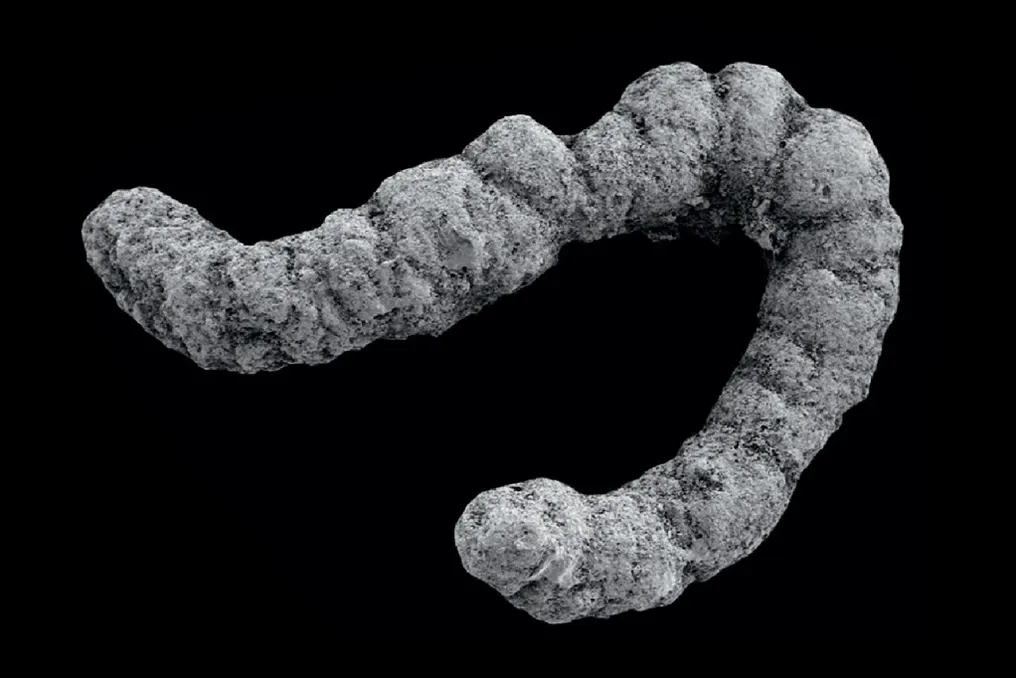
According to Bicknell, as new species emerged, they began to vary the methods of disposing of their waste. The authors analyzed evidence collected from over 35 fossil sites globally, dating back to the early Cambrian. They examined coprolites, which are fossilized feces, ranging from tiny granules to specimens several centimeters in size.
The oldest findings generally consist of small granules, found isolated or grouped before fossilization. Some are elongated, resembling those of a goldfish, while others form films in abandoned holes. The results of this investigation were published in the journal Trends in Ecology & Evolution.
Although the origin of life remains a complex mystery, science has advanced in discovering details. 4.5 billion years ago, when Earth is estimated to have formed, the planet was a molten rocky sphere, filled with active volcanoes, without plant or animal life.
The first life forms were also simple, limited to cells. The sudden expansion in species diversity, termed the Cambrian Explosion by specialists, occurred over approximately 25 million years. It was during this interval that the first animals with digestive systems appeared, which in turn led to the production of fecal matter. Some of these residues, which survived for ages, preserve shells and animal fragments, indicating an increasingly varied diet at that time.
Bicknell added that with this transformation, the development of progressively more complex digestive systems was observed, especially in early arthropods, which developed specialized foregut intestines and digestive glands capable of processing a wider range of food.