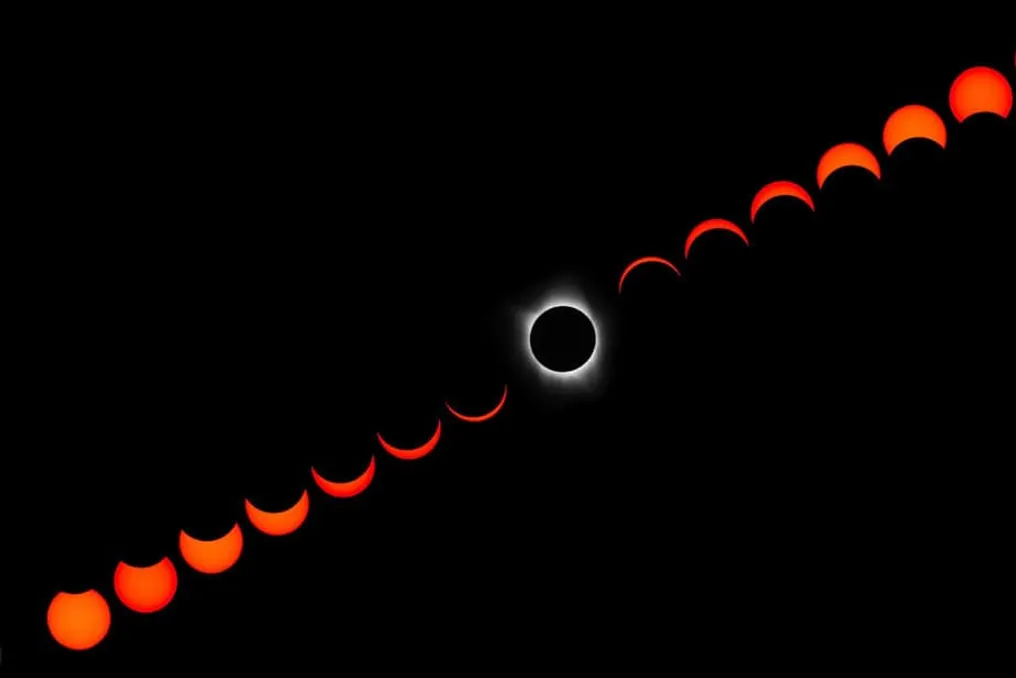
The total solar eclipse scheduled for August 12 will trigger a temporary drop in solar energy generation across Europe. According to ENTSO-E, the association that brings together continental electricity grid operators, the reduction could reach 9.7 GW under clear sky conditions.
Although this phenomenon will be a spectacle for the public, it presents a serious challenge for specialists responsible for the operation of the power system. Operators must constantly balance supply and demand to ensure stable energy supply.
The decrease in photovoltaic energy production is expected between 19:15 and 21:30 Central European Summer Time (CEST). Although the change will be rapid, it is predictable because the trajectory of the eclipse can be calculated in advance.
The largest drop in solar energy generation is forecast for Spain, followed by Germany. On Spanish territory, the Moon will completely cover the Sun during the eclipse.
Preparation for the Event
To ensure readiness, ENTSO-E has activated a dedicated working group responsible for coordinating all preparatory measures, monitoring the event, and exchanging information before and after the eclipse. Measures taken include providing local operators with updated forecasts of photovoltaic energy generation from meteorological services. This allows teams to make real-time decisions based on changing conditions.
This preparation also reflects the growing importance of solar energy in Europe. According to ENTSO-E, this source already accounts for about 13% of the continent's total energy balance. Furthermore, according to SolarPower Europe, approximately 406 GW of solar capacity was installed in the European Union by the end of 2025. Given this contribution, natural phenomena capable of rapidly altering generation require close attention from operators.
ENTSO-E represents 40 transmission system operators from 36 countries. The association notes that its members are increasingly facing meteorological and natural phenomena that can affect generation schemes over short periods.
This eclipse will be the first total one visible on the European continent since 2006. The so-called 'path of totality' will pass through northern Russia, Greenland, Iceland, northern Spain, and the northeastern tip of Portugal. While spectators watch the rare celestial event, European operators are performing a parallel task: managing the temporary dip in solar generation and maintaining the stability of the entire electrical system.