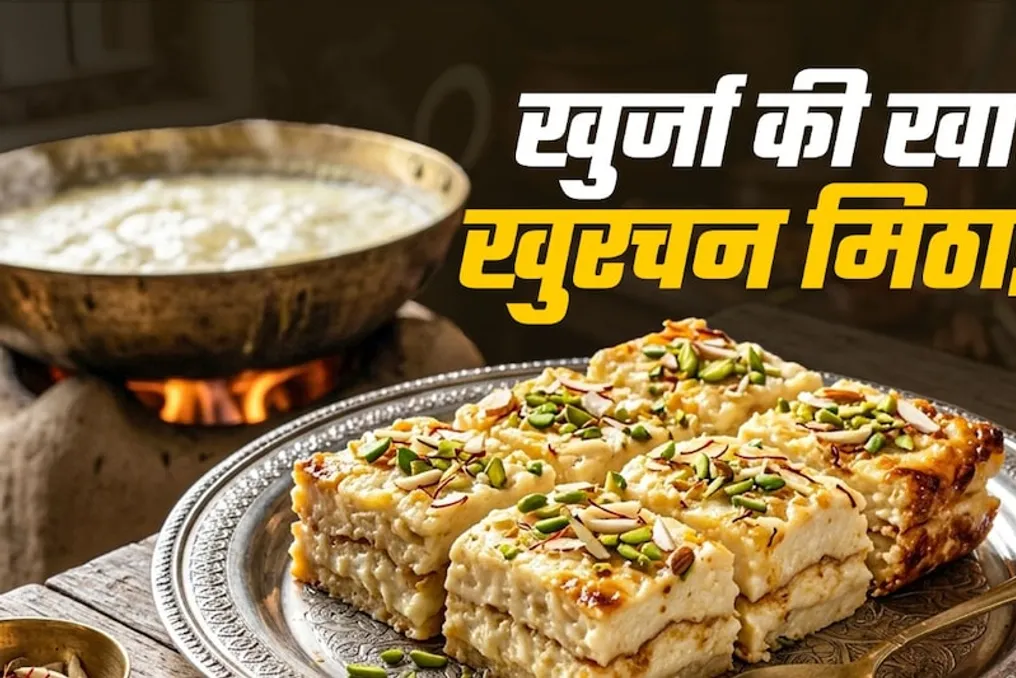
India has many types of sweets, and each one often hides an interesting story—whether it's a preference of a certain monarch or the calling card of a small town. Hurchan is one such sweet that captivates with its thick layer of cream and the delicate aroma of milk. Previously, it was prepared for very important guests in royal houses.
Over time, the taste of this sweet became so well-known that today it is a distinctive feature of both Satna city in Madhya Pradesh and Khurja city in Uttar Pradesh. Hurchan is made entirely from milk, without the use of artificial colors, flavorings, or chemical additives, and maintains its popularity thanks to the traditional method of preparation.
To make hurchan, fresh milk is slowly simmered on the stove for a long time. During the cooking process, thick layers of cream form on the sides of the pot. These layers are carefully removed and stacked on top of each other, after which the hurchan is finished with a light sweetness.
History Related to Hurchan
According to folk tales, in the royal house of Nagaud, located in Madhya Pradesh, a court physician named Vaidyanath prepared this sweet from homemade milk. When the king tasted it, he was enchanted, and over time, this sweet from Satna became widely known. At the same time, in Khurja, Uttar Pradesh, hurchan is prepared according to a tradition dating back about 115 years. Many old families still prepare it using the same traditional method, preserving its true taste.
What Makes Hurchan Special?
Preparing hurchan requires a significant amount of time and a large volume of milk. Approximately 5 liters of milk yield about 1 kilogram of hurchan. This is why its cost usually ranges from 400 to 600 rupees per kilogram.
The main feature of hurchan lies in its simplicity: the genuine aroma of milk, the soft layers of cream, and the light sweetness make every piece special. If you like the taste of traditional Indian desserts, you should try homemade hurchan; it will remind you of the pure sweets of yesteryear.