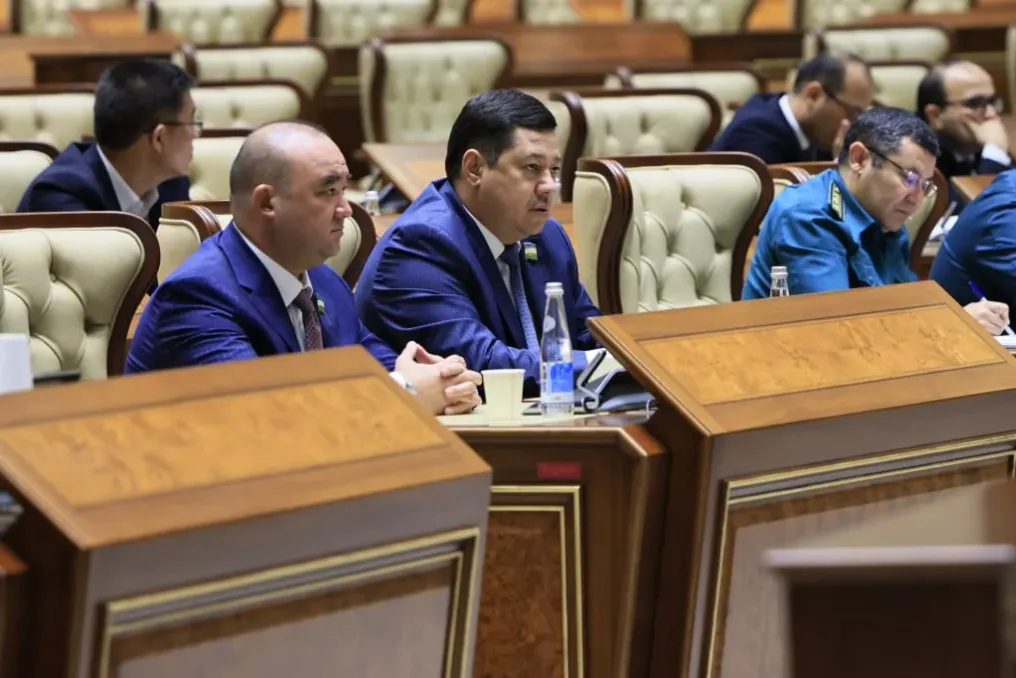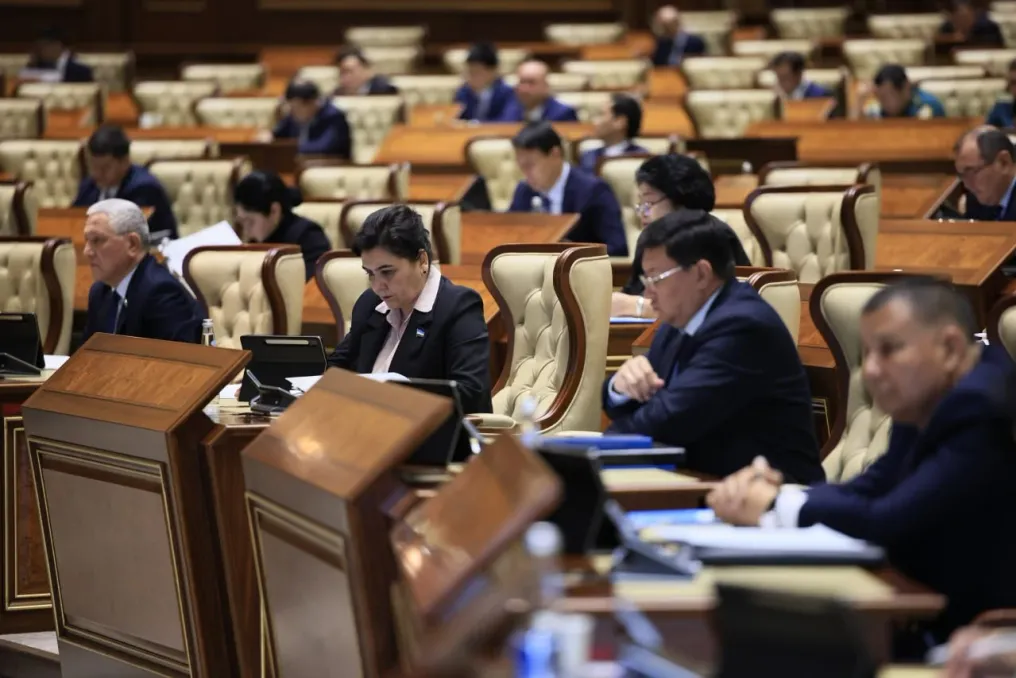
The Senate of the Oliy Majlis of Uzbekistan approved a law during its eighteenth plenary session that introduces amendments and additions to a number of legislative acts with the aim of reducing the administrative burden on enterprises.
The Senate of the Oliy Majlis of Uzbekistan approved a law during its eighteenth plenary session that introduces amendments and additions to a number of legislative acts with the aim of reducing the administrative burden on enterprises.
The new legislation affects the procedure for suspending operations on company bank accounts. The Senate of the Oliy Majlis of Uzbekistan announced this decision.
The amendments concern both the Economic Procedural Code and the Tax Code. According to the adopted law, if a taxpayer does not appeal the decision of the tax authority, operations on their bank accounts may be suspended based solely on the tax authority's decision.
However, if the taxpayer files an objection, the issue of suspending operations will be reviewed by the court. The law also clarifies the procedure by which the tax authority can apply to the court; such an application must contain evidence of law violation, confirmation of notifying the taxpayer, and their objection.
Furthermore, the legislation introduces a mechanism for the prompt lifting of restrictions if the circumstances leading to the violation are rectified, or if the court denies the suspension of bank account operations.
Senators noted that this law will help reduce unjustified temporary and financial costs for businesses, increase the efficiency of state institutions, and decrease the load on the judicial system.
The Senate of the Oliy Majlis of Uzbekistan has approved a law that introduces amendments and additions to a number of legislative acts. The goal of these changes is to strengthen guarantees for the freedom of entrepreneurial activity and improve mechanisms for supporting enterprises.
The new legislation expands entrepreneurs' rights to participate in the development of regulatory legal acts and also improves state assistance systems for businesses. This was reported by the Senate of the Oliy Majlis of Uzbekistan.
In particular, the Law 'On Guarantees of Entrepreneurial Freedom' has been supplemented with a provision that guarantees the participation of entrepreneurs in the process of drafting regulatory legal acts. According to this provision, draft documents and reports on regulatory impact assessment that introduce new requirements, obligations, prohibitions, liability measures, or other restrictions for companies must be discussed directly with entrepreneurs and their associations.
Furthermore, the law optimizes the legal framework for providing subsidies intended for the development of areas such as tourism, education, healthcare, social entrepreneurship, and green technologies. Procedures for supporting connection to engineering and utility networks, as well as mechanisms for financing socially significant, innovative, and economically important projects through state grants, have also been clarified.
Senators noted that the adopted law is aimed at further improving the business climate, expanding guarantees for entrepreneurial freedom, and strengthening the legal basis for state support of business. This law was approved by the senators after careful consideration.
The Senate of the Oliy Majlis of Uzbekistan has approved a law that introduces amendments and additions to a number of legislative acts with the aim of increasing the effectiveness of efforts to counter extremism.
Specifically, they mitigate liability for creating, storing, and distributing materials containing ideas of separatism, fanaticism, and extremism. For the first time, direct criminal liability will be abolished for such actions, which will be replaced by administrative liability. Criminal liability will apply in case of repeat offenses.
Furthermore, the anti-extremism law will be amended to establish a clear definition of the concept of 'extremism.' The legislative framework provides for a specific list of crimes related to extremism, the implementation of state programs for prevention and counteraction, as well as the creation of an electronic register of extremist organizations and materials.
The legal basis for risk assessment and monitoring will be strengthened. In the legislation, the term 'religious extremism' will be replaced by the more general term 'extremism' to ensure a uniform approach by law enforcement agencies. The law also includes additional tools to support scientific research in the field of countering extremism, as well as to protect and encourage individuals who report on the activities of extremists. Some provisions are aimed at preventing the spread of extremist ideas on the internet and in mass media.
The draft law also improves the procedures for recognizing organizations as extremist and the mechanisms for resocialization of persons who have committed crimes related to extremism. Senators noted that the goal of the law is to strengthen the legal balance between protecting human rights and ensuring public safety, as well as improving preventive measures to maintain peace and stability in the country.
The Senate of the Oliy Majlis of Uzbekistan approved the 'Law on General Product Safety' during its eighteenth plenary session. According to the Senate of the Oliy Majlis of the Republic of Uzbekistan, the goal of this law is to reform the technical regulation system, increase the safety level of goods, and strengthen consumer rights protection.
During the meeting, senators noted that the growth of e-commerce, the expansion of cross-border trade, and the increase in product assortment necessitate the introduction of new methods for ensuring product safety.
The development of the law took into account the requirements of the World Trade Organization Agreement on Technical Barriers to Trade, as well as international practices.
Under the new legislation, all products entering the domestic market must comply with established safety requirements. Manufacturers, importers, and other economic operators bear direct responsibility for adhering to these standards.
Furthermore, economic operators will be required to conduct product risk assessments, maintain technical documentation, identify goods, record consumer complaints, and withdraw dangerous products from the market.
The law also provides for a market supervision mechanism based on risk assessment and establishes a national information exchange system for the accelerated detection and withdrawal of dangerous goods from circulation.
In the opinion of the senators, the adoption of this law will help protect the lives and health of citizens, increase the competitiveness and export potential of domestic products, bring the technical regulation system in line with global standards, and strengthen consumer trust in the market.