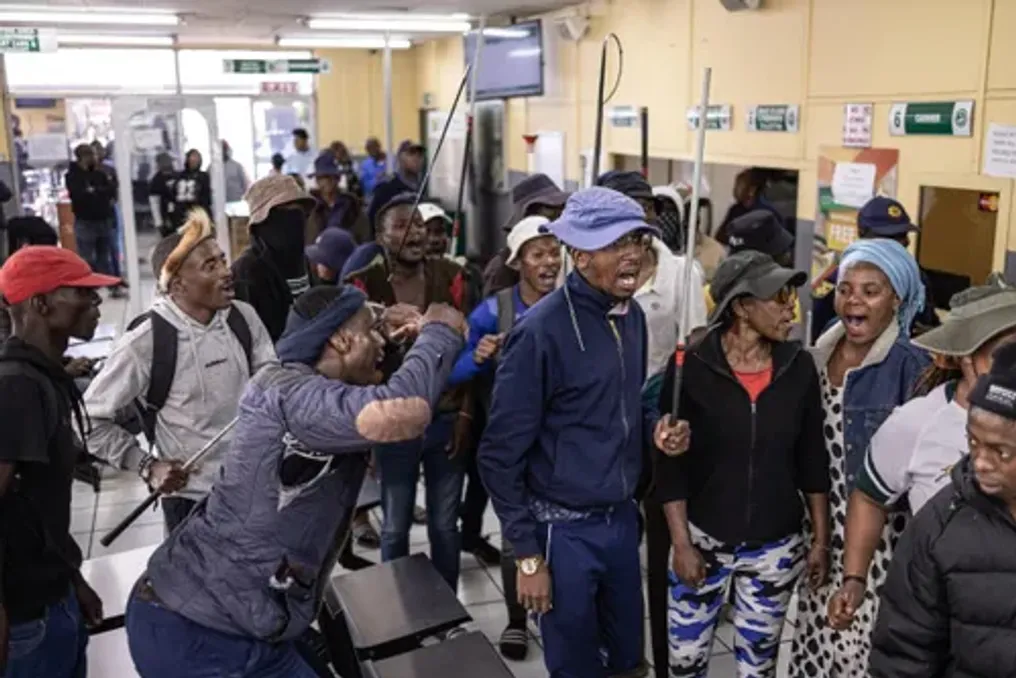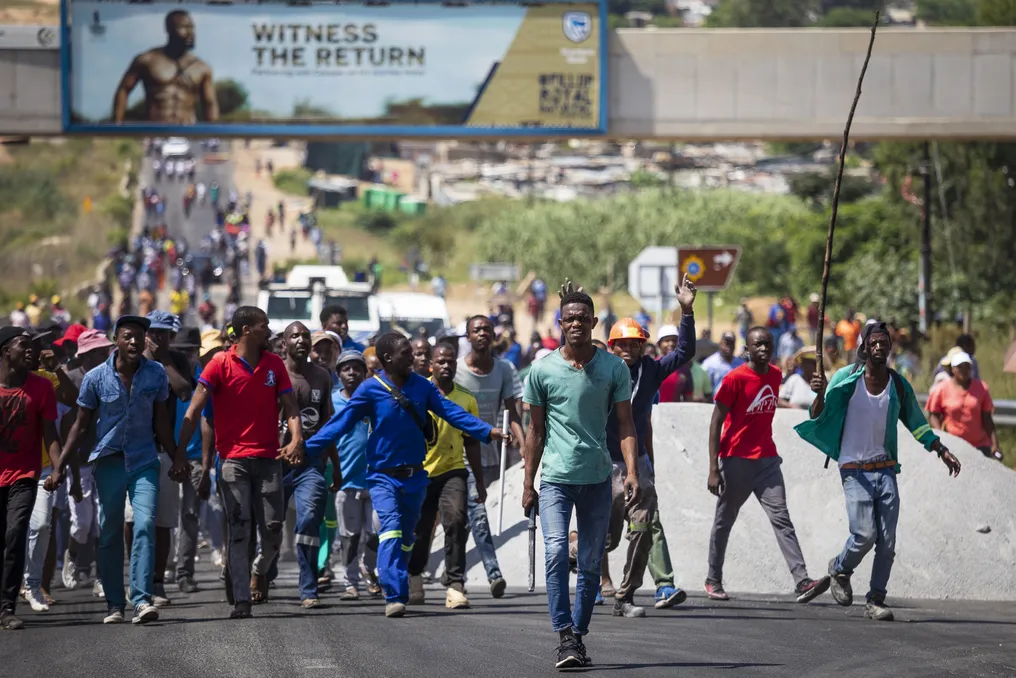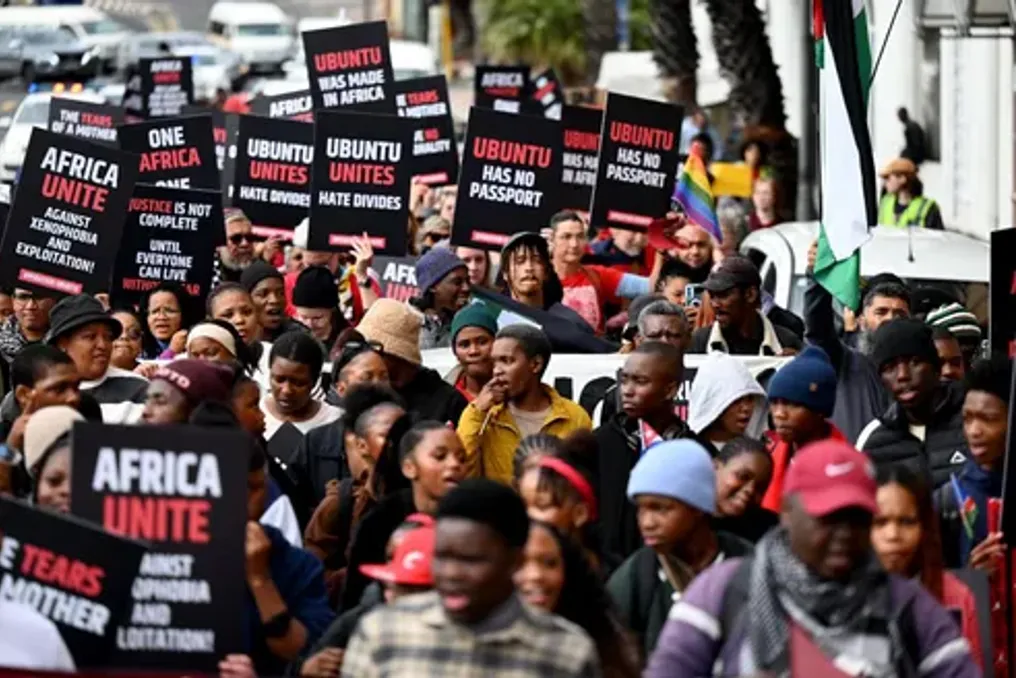
As part of the national and continental day of action against xenophobia, organized by 'Operation Ubuntu' under the slogan 'Africa United', a list of demands was submitted to police representatives in Cape Town and Johannesburg on Saturday.
Organizers stated that the goal of this day of action was to hold the state accountable for its actions, including supporting the formation of vigilante groups. Protests took place in Johannesburg near the Durban City Council, as well as on Hanover Street in Cape Town.
'Operation Ubuntu' explained in the demands memorandum that it unites social organizations, campaigns, and movements from various levels of the struggle. They also presented a list of demands to departments such as the Department of Human Settlements, the Department of Cooperative Governance and Traditional Affairs (Cogta), the Department of Home Affairs, the Department of Education, and SAPS.
The memorandum emphasized: 'We are united in demanding an end to the crisis of xenophobia and broader conditions of deprivation affecting both migrants and South African citizens. Lack of housing, lack of jobs, and limited access to basic services such as healthcare and education are failures in the provision of public services, not the fault of migrant communities.'
The mass action was also a statement of solidarity, rejecting xenophobia and Afrophobia, and a call to protect the most vulnerable segments of society. The main points raised by 'Operation Ubuntu' concerned justice in land and housing issues, as well as preventing the looting of Africa's mineral resources.
The memorandum demanded that the state cease the persecution and deportation of people due to a dysfunctional documentation system that leaves millions without identification. Immediate reintegration of all displaced migrants and an end to inhumane conditions at the Lindela Repatriation Centre were also required.
More than 60 organizations representing communities across and outside South Africa joined under the banner of 'Operation Ubuntu'. A group in Durban held protests in front of the Durban City Council.
'Operation Ubuntu' believes that the creation of a structured high-level oversight system is necessary, one that connects decision-makers with the people they serve. Other topics included health and social rights, climate justice, local government elections in 2026, and international and pan-African solidarity.
In its memorandum addressed to SAPS, 'Operation Ubuntu' demanded the arrest and prosecution of individuals inciting violence and hatred against foreigners. Arrests should include those responsible for incitement on social media in Ekurhuleni, where viral threats using gasoline and torches were spread against the refugee community.
The memorandum also called for the 'investigation and elimination of abuse of intimidation and harassment, including by informal or patrol groups mentioned in Gauteng submissions as amapanyaza against migrant communities and urban dwellers.' Furthermore, they called on the police to arrest drug barons and take measures to stop the trend of mass shootings in communities.
In Johannesburg, at Beyer's Naude Square, 'Operation Ubuntu' demanded that the Department of Human Settlements immediately impose a moratorium on evictions until all South Africans have access to decent housing. Moreover, the adoption of an 'improvement, not eviction' adaptive approach—improving informal settlements and occupied buildings instead of evicting them—was requested.
'Operation Ubuntu' also demanded an immediate two-year moratorium on deportations (voluntary repatriations) to allow African migrants time to process their documents. It was called upon for the Department of Home Affairs to stop penalizing employers and households for hiring undocumented workers, given that the documentation system is flawed and cannot process applications promptly.