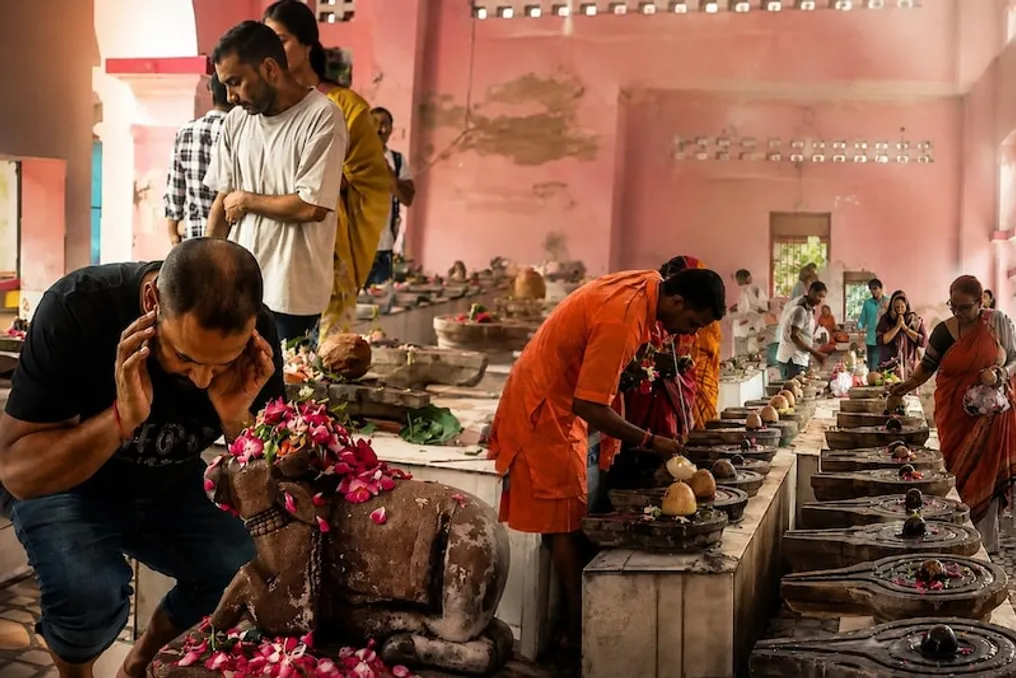
With the start of the sacred month of Sawan, faith in the God Bholenath reaches its peak, and the temple fills with chants of 'Har Har Mahadeva' and 'Om Namah Shivaya'. During this time, an ancient shrine in the Nanta area of Kota city, which is about 500 years old, has become the main pilgrimage center for devotees.
Due to its unique architecture, rare carvings, mythological representations, and centuries-old traditions, this shrine attracts pilgrims from all over the country. Throughout the entire month of Sawan, long queues of devotees form here to perform the ritual of jalabhishek (water pouring) and visit the temple from morning till late at night.
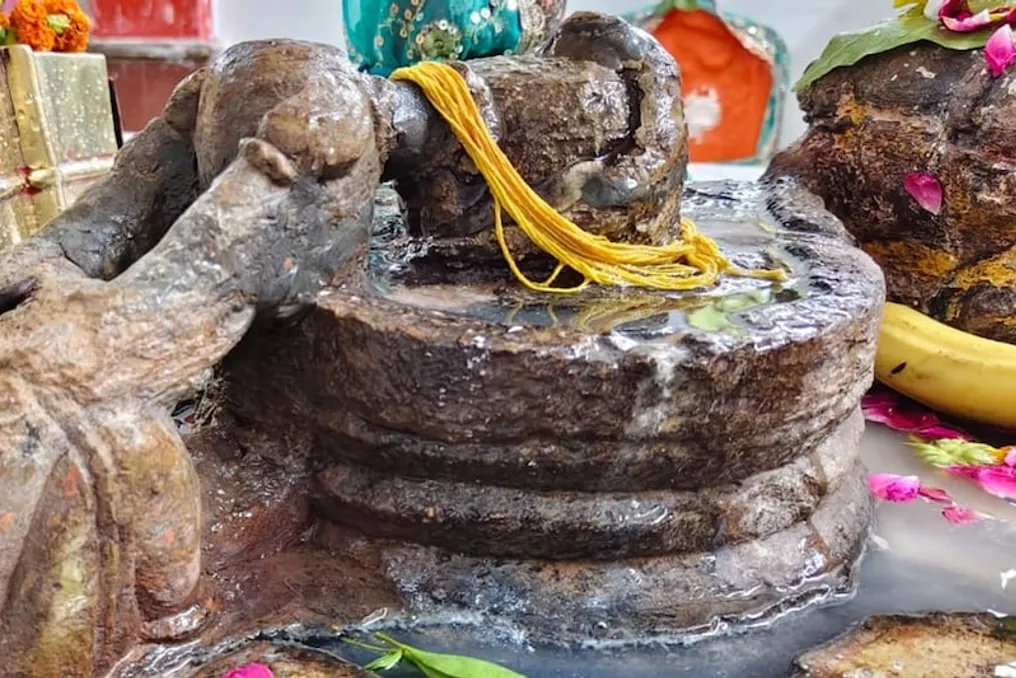
The most unusual feature of this ancient shrine is a rare work of art that distinguishes it from other Shiva temples. A statue of Lankapati Ravana, who brings the head to Lord Shiva, is carved here using a huge stone block. Such a statue is considered extremely rare. The sculpture depicts Ravana, who has reached the limit of his devotion to Shiva, and who offers his head to dedicate to Lord Shiva.
This image is not only an outstanding example of carving mastery but also a living symbol of Ravana's unceasing asceticism and his exceptional devotion to Bholenath.
According to the mythological beliefs associated with the temple, Lankapati Ravana practiced severe asceticism on Mount Kailash for years to appease Lord Shiva. When his practices failed to convince Shiva, he decided to test his devotion by starting to offer his heads one by one. The joyful God Bholenath, moved by this unique asceticism and self-sacrifice, granted him an audience, a blessing, and gave him the divine sword Chandrakhasa. This mythological episode has been preserved in a living form thanks to the rare carving of this shrine over centuries.
In this shrine, which has served as a center of faith for almost five centuries, there is also a very peculiar tradition of water pouring. To prevent the erosion of the ancient Shivling due to constant watering, on the first Monday of Sawan and during special festivals and events, the Shivling is covered with a special brass vessel. Pilgrims perform the water pouring ritual specifically over this vessel. Thus, the Shivling remains protected, and the age-old tradition of worship is preserved.
Every Monday of the month of Sawan, a huge number of pilgrims flock here, starting from the early morning Mangala Aarti until late at night. Pilgrims arriving from afar perform jalabhishek and rudrabhishek, bringing leaves of belpatra, datura, flowers, and other objects of worship. The entire temple premises are immersed in an atmosphere of reverence under the chants of 'Har Har Mahadeva' and 'Om Namah Shivaya'.
This 500-year-old temple in Kota is not just a place of worship, but a living heritage of faith, history, mythological traditions, and amazing Indian art. The rare sculpture of Ravana offering his head to Shiva on a single stone gives it a special significance. Every pilgrim who visits this place during the sacred month of Sawan receives not only the blessings of Bholenath but also experiences spiritual peace and divinity while observing this centuries-old heritage.