Majid Karimov, Director of the Agency for Knowledge and Qualifications Assessment of Uzbekistan, held a meeting with Alberto Biancoli, Head of the Education Department at the UNICEF Office in Uzbekistan.
Majid Karimov, Director of the Agency for Knowledge and Qualifications Assessment of Uzbekistan, held a meeting with Alberto Biancoli, Head of the Education Department at the UNICEF Office in Uzbekistan.
During the negotiations, the parties discussed ways to develop the system for assessing the quality of national education, as well as prospects for further cooperation. Information about the meeting was provided by the Agency for Knowledge and Qualifications Assessment.
The topics discussed included efforts to improve the quality of education assessment in line with international standards, the introduction of a unified state exam for graduates of general secondary schools, and the development and conduct of an international audit of the national certification system for general education subjects and foreign languages.
Participants also exchanged views on priority areas of interaction. These include raising the professional level of assessment specialists, attracting international experts, improving assessment tools, and further strengthening the reliability, objectivity, and transparency of the national certification system.
The parties emphasized the critical importance of continuing joint work, integrating international experience into the national assessment system, and implementing joint projects aimed at improving the quality of education.
The Committee for Competition Development and Consumer Rights Protection of Uzbekistan has proposed developing new regulations and introducing voluntary certification for private educational institutions in the country.
This initiative was taken against the backdrop of an increase in complaints against private educational organizations. Over the past three years, the Committee received 103.5 thousand appeals, more than two thousand of which concerned the field of educational services. Furthermore, about 96% of all complaints were related specifically to the activities of non-state educational organizations.
As a result of reviewing these appeals, consumers managed to obtain refunds and recalculations totaling nearly one billion soums. The most frequent complaints from citizens concern low quality of teaching, payment for services that were not rendered, as well as the lack of transparency in contractual terms and difficulties in obtaining refunds. Additionally, cases are recorded where advertising promises do not match reality.
Despite the existence of general state control over the quality of education, there are no clear norms regulating paid services in the private sector, which contributes to the violation of client rights. During the preparation of proposals, an analysis of international experience was conducted; specifically, systems of voluntary certification and independent assessment of the quality of private educational services operating in France, the Netherlands, and Switzerland were studied.
Based on the analysis, it was proposed to introduce voluntary certification for private educational centers, create unified rules for providing paid services, and establish minimum standards for customer interaction. The Committee has submitted its proposals to the relevant authorized bodies and stated its readiness to work jointly on reforms with relevant departments.
It is also known that the authorities of Uzbekistan plan to significantly increase the role of the private sector in vocational education. It is projected that the number of educational centers will increase fourfold in the coming years, allowing thousands of people to gain access to various professions.
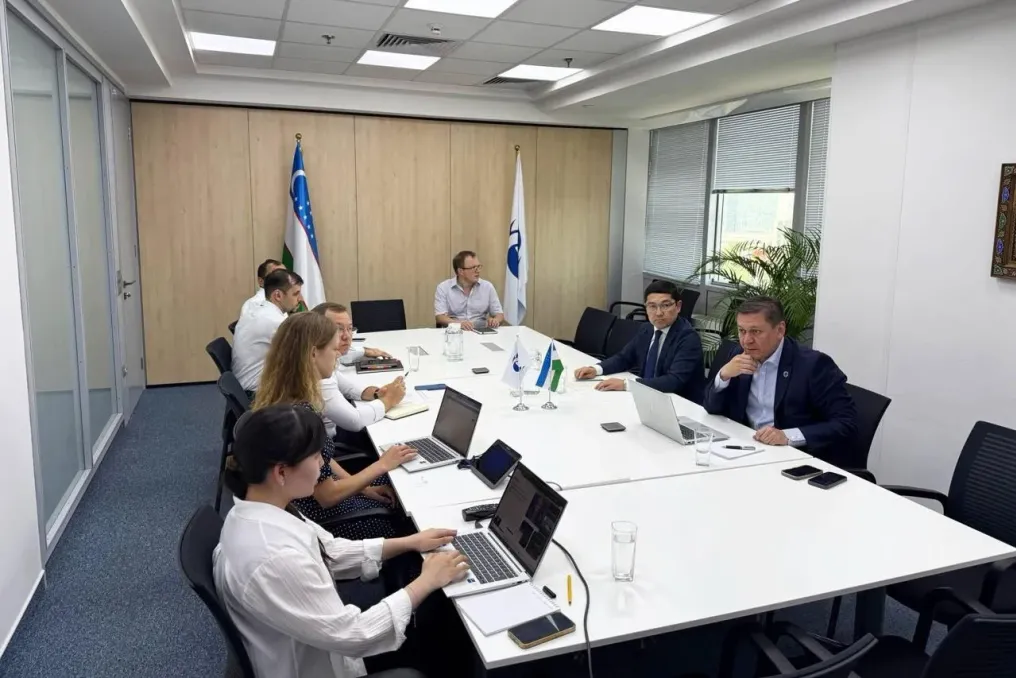
The Ministry of Agriculture of Uzbekistan, together with the European Bank for Reconstruction and Development (EBRD) and the National Committee on Ecology and Climate Change, held an online meeting with partners to discuss the practical implementation of the ANORA platform (Investment Opportunities in the Agro-Food Sector for Sustainable Agriculture).
The main goal of the meeting was to bring the platform into practical operation and strengthen cooperation between state structures, international financial institutions, development partners, and donor organizations. Advisor to the Minister of Agriculture N. Kushnazarov and representatives of the project office presented priority directions for the transformation of Uzbekistan's agro-food system, as well as outlined the sector's investment needs.
Representatives of the EBRD and the FAO Investment Centre presented mechanisms for implementing the ANORA platform, its key areas of focus, and prospects for international cooperation. Participants in the discussion included representatives of the National Committee on Ecology and Climate Change, the Ministry of Economy and Finance, the Ministry of Investment, Industry and Trade, the Ministry of Water Resources, the Agency for Agrobusiness Development, commercial banks, as well as major structures such as the World Bank, the Asian Development Bank, FAO, the Global Environment Facility, the Green Climate Fund, the Institute for Global Green Growth, the United Nations Development Programme, GIZ, the European Union, the embassies of Uzbekistan in Germany and the United Kingdom, and more than twenty international organizations and development partners.
Participants discussed the formation of a portfolio of investment projects within the ANORA platform, the mobilization of financial and technical support, issues of food security, efficient water resource management, and the development of climate-resilient agriculture. At the end of the meeting, participants agreed on further steps for implementing the platform, defined its priority areas, and mechanisms for future cooperation. The organizers noted that the launch of the ANORA platform should contribute to attracting green investments and strengthening long-term partnerships between state bodies, international financial institutions, and development partners.