When a striker prepares to take a decisive penalty kick at the FIFA World Cup, another race unfolds far from the stadium. Video footage from the field is transmitted through fiber optic networks and processed by cloud platforms in mere seconds.
Artificial intelligence analyzes this data while interconnected data centers direct the video stream to billions of screens worldwide. Behind the scenes, cybersecurity teams work to prevent hackers from interfering with the planet's largest sporting event.
For football fans, this process appears seamless. A goal appears almost instantly on televisions, smartphones, and tablets, accompanied by live statistics, player tracking, and instant replays. However, behind this convenience lies an extensive digital ecosystem where every millisecond matters.
Jeremy Doich, Managing Director of Equinix for the Middle East and North Africa, told Khaleej Times: 'It is a complete ecosystem. It is the path from the field to the screen.'
He emphasized that modern sporting events rely on the coordinated efforts of broadcasters, internet service providers, cloud platforms, and interconnected data centers to transmit huge volumes of information across continents in real time. According to Doich, 'if even one part of this supply chain fails, you do not get the desired experience. You do not want to watch a penalty five minutes after it happened.'
Doich compared data centers to the 'kitchen' of the digital world, where internet service providers, cloud platforms, and content services converge before broadcasts are delivered from facilities closest to the viewers, which helps minimize latency even when millions of users are connected simultaneously.
Artificial intelligence has become as vital an element of the viewing experience. In addition to assisting technologies like Video Assistant Referee (VAR), AI analyzes player movements, ball speed, possession statistics, and other real-time data that are now part of modern football broadcasts.
However, while billions of fans focus on the action on the field, cybercriminals are also watching. Dr. Claude Fahha, a cybercrime expert and associate professor at the University of Dubai, noted: 'Where you see a crowd, you will also find criminals.'
In Fahha's view, global sporting events are attractive targets because they combine a massive online audience, valuable digital infrastructure, and millions of financial transactions over a short period. He added that 'attackers hunt for money, personal information, or simply the opportunity to damage an organization's reputation.'
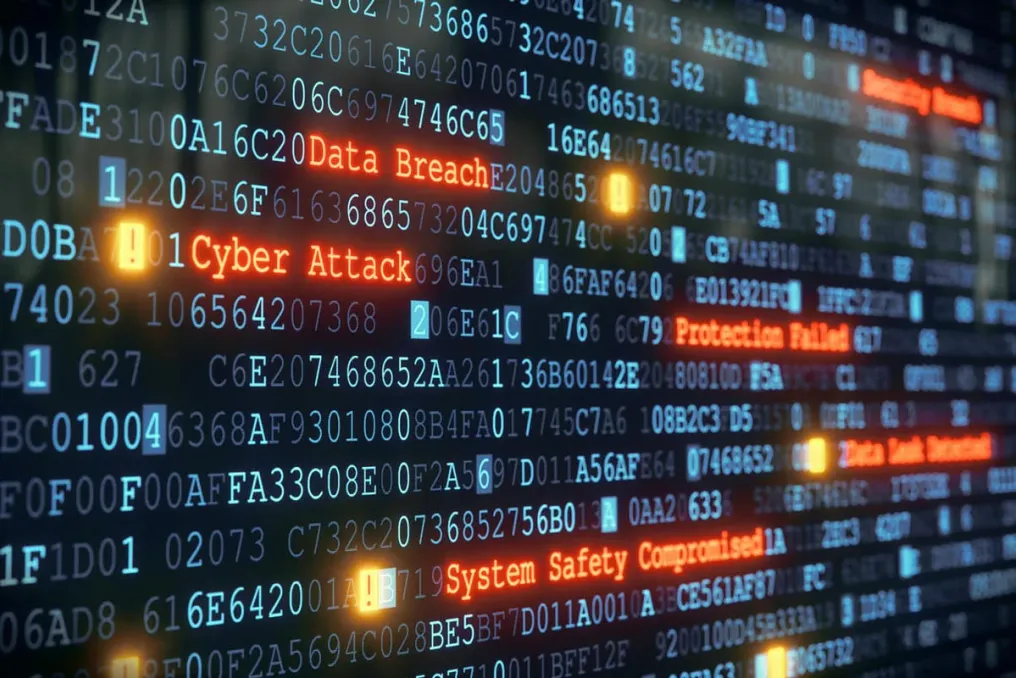
Among the most serious threats are Distributed Denial of Service (DDoS) attacks designed to overload online services; fake streaming sites created to steal passwords or payment data; phishing campaigns targeting avid fans; and attempts to disrupt the digital infrastructure supporting live broadcasts.
Fahha explained that 'people are excited. They want to watch the match immediately, so many click on the first link they find for streaming without verifying its legitimacy. This is what attackers count on.'
He also pointed out that cybercriminals often impersonate legitimate broadcasters or streaming platforms, luring users to convincing fake websites where malicious code can be installed or confidential information stolen.
The broadcasters' task is not only to block attacks but also to ensure that viewers never notice them. Fahha explained that 'if a live broadcast is interrupted, people immediately switch to another platform,' making availability one of the highest priorities for the industry during major sporting events.
To prevent failures, broadcasters and technology providers implement multiple levels of fault tolerance in their infrastructure. If one server is overloaded or compromised, traffic can be automatically rerouted to backup systems using load balancing, allowing streams to continue with virtually no interruption.
Artificial intelligence is increasingly helping security teams respond faster. Instead of relying solely on engineers manually monitoring systems, AI continuously analyzes network traffic, detects unusual activity, and flags suspicious behavior in real time.
Fahha noted: 'AI does not get tired. It can monitor systems 24 hours a day, seven days a week.' Nevertheless, he warned that human oversight remains necessary. While AI can quickly identify anomalies, it can also generate false positives, flagging legitimate activity as malicious, or false negatives, missing real threats. 'People who make critical decisions are still needed.'
Fahha also noted that cyberattacks are not always aimed at stealing information. Some are simply intended to distract attention by temporarily replacing legitimate broadcasts with unauthorized images or messages, undermining trust in the platform even if engineers restore service within seconds.
Looking ahead, he expects AI to become even more deeply integrated into cybersecurity, helping security teams predict attacks before they occur, rather than just reacting afterward.
For Doich, the rapid growth of AI is also transforming the infrastructure required to support global events, increasing the demand for highly interconnected data centers capable of processing and distributing vast amounts of information with minimal delay.
As AI, cloud computing, and streaming evolve, experts note that the technology underpinning global sporting events is becoming increasingly complex and invisible.
Every pass, every save, and every goal can be decided on the field. But ensuring that billions of fans can see these moments without interruption is a game in itself, played out across thousands of servers, countless kilometers of fiber optic cables, and round-the-clock security operations centers long before the final whistle.