For many years, hundreds of children in government primary schools in Ratlam (Madhya Pradesh) were forced to spend mornings sitting on the classroom floor due to a lack of desks. While secondary schools in the district acquired interactive whiteboards, they lacked digital content to be truly useful.
IAS officer Vaishali Jain, who serves as the Executive Director of Ratlam Zila Panchayat and Additional Collector, viewed these issues not as isolated gaps but as interconnected problems. Over nine months since assuming office, the Madhya Pradesh cadre officer from 2021 has created a three-tiered educational model for the district aimed at enhancing classroom dignity, improving learning, and fostering ambition.
Instead of fragmented programs, Ratlam now features a unified educational pathway that integrates access to infrastructure, technology, and education.
A remote survey revealed that basic furniture was missing in hundreds of primary schools. This finding formed the basis for the Gyanodaya - Shala Unnayan Abhiyan campaign, which aimed to install over 21,000 benches and desks in 1011 government primary schools, covering more than 42,000 students.
The administration did not limit itself to government funding; it invited villagers to participate in supporting their own schools by attracting Corporate Social Responsibility (CSR) partners and funds from local Members of Legislative Assembly (MLAs), mirroring examples of public school restoration in other parts of India through contributions from residents and corporations.
Thanks to a transparent system of Standard Operating Procedures (SOPs), Google forms, approved supplier lists, and a public hotline, donors can directly select schools. Currently, about 200 schools are equipped with benches, and nearly 100 have undergone renovations, including the installation of rainwater harvesting systems to extend the lifespan of the buildings.
Jain noted: 'No student in these schools sits on the floor anymore. They sit very respectfully on their benches.' In her view, the presence of infrastructure signals to a child that they are valued even before the first lesson begins.
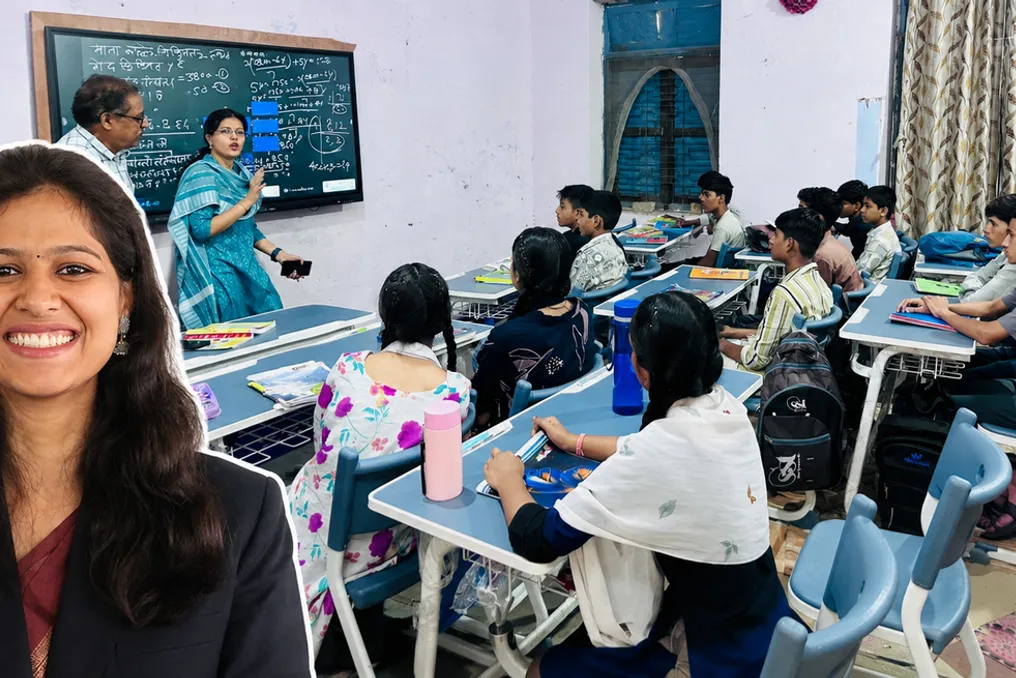
After making classrooms more conducive, Jain addressed a more complex challenge: how to ensure students in remote schools have access to the same quality of teaching as those elsewhere? The answer lay in the E-Gyan Setu project, designed to supplement, not replace, teachers in the ninth and tenth grades.
A team of 16 subject matter experts developed video lectures, preparatory courses, chapter materials, revision modules, worksheets, and AI-driven educational content aligned with the curriculum and delivered through the existing 'smart' classroom infrastructure. The program is being implemented in 100 government schools, with assessments conducted every two weeks to identify weaknesses and provide remedial support.
Plans are underway to create a specialized recording and content development studio for local languages such as Malvi and Bhili. Jain explained: 'We are bridging the knowledge gap. Traditional teaching has not been completely replaced, but we are supplementing teachers with additional learning materials so that students are more engaged in classes.'
According to Jain, the learning process should not end at the school gate. Students from rural Ratlam preparing for entrance exams often lacked a quiet place to study after school hours. Therefore, the administration launched the Public Rural Library initiative, converting unused government buildings into learning centers across six Panchayat areas using grants from the 15th Finance Commission.
Each library will provide seating, computers, internet access, and a quiet environment for a small hourly fee. The centers will be managed by women from Self-Help Groups, who will run adjacent Didi cafes, combining educational infrastructure with earning opportunities.
Jain's approach to governance predates Ratlam. While working in Rewa, she resolved over 9,000 cases in revenue courts, ensuring every applicant was heard, and discovered nearly 200 inactive bank accounts with expected land compensation, returning almost 100 crore rupees to farmers and helping the district identify another approximately 200 crore rupees in debt.
Jain acknowledges that results will not be immediate. She stated: 'Education requires continuous effort. You will see results in a year or two, or perhaps longer.'
Her teams continue to work in Ratlam's tribal blocks, meeting with parents, tracking attendance, painting schools, and installing benches—all toward one goal: ensuring that children in government schools genuinely want to attend. This is a philosophy she brought from Rewa: 'One complaint is not limited to just that person. The entire system can be changed for such cases.'