With the arrival of the month of Sawan, the atmosphere of the Kawad Yatra pilgrimage comes alive in the country, as millions of Shiva devotees set out with holy water from the Ganges to perform Jalabhishek in honor of Lord Shiva. Consequently, the markets are experiencing active sales of kawads, which range from modest models priced at 150 rupees to luxurious options costing up to 500 thousand rupees. Some traders claim they can custom-make kawads worth up to 10 million rupees. The pilgrims carrying the kawads are also known as 'Bole.'
In the markets of Kadd Ganga and Merat, sellers note that the highest demand this year is for kawads in the price range of 500 to 5,000 rupees. These models are characterized by their light weight, attractive appearance, and convenience during long journeys. Nevertheless, some devotees also purchase premium kawads ranging from 20 thousand to 500 thousand rupees, which are usually made for large groups of pilgrims or as custom orders.
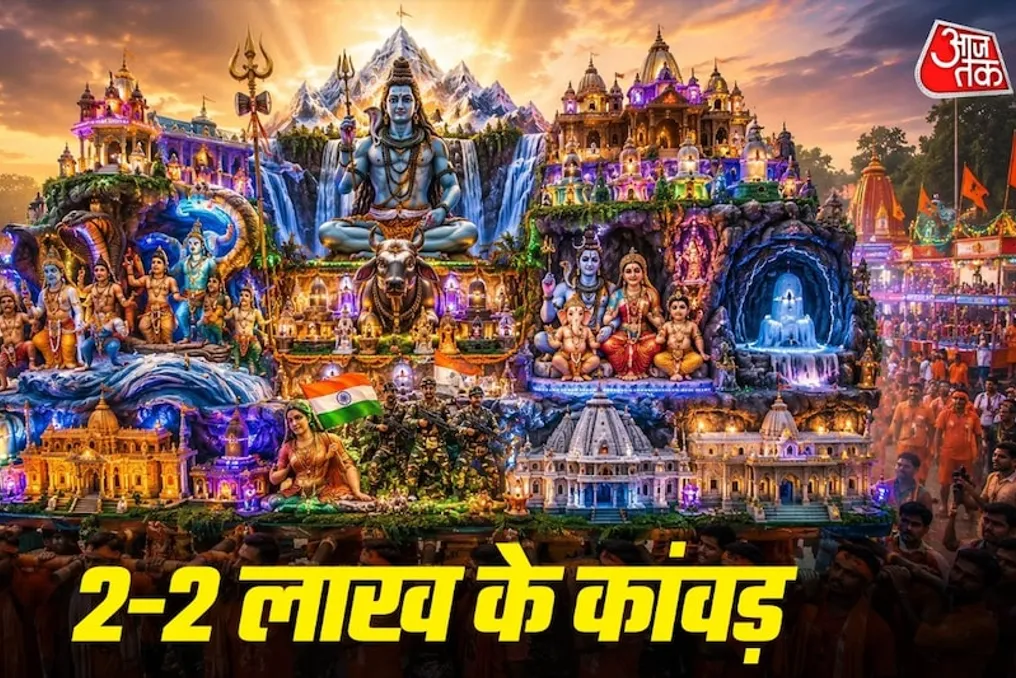
The high cost of expensive kawads is due not only to the decorations but also to the inclusion of numerous modern features and months of painstaking labor. Magnificent decorations depicting Shiva's court, Mount Kailash, a flowing waterfall, 12 Jyotirlingas, Sandhi Mahan, Shiva's family, Rama's temple, Kedarnath, Kashi Vishwanath, Mahakal, and the Amnarathe cave are integrated into such kawads. Many kawads also feature patriotic themes, including images of the tricolor, Mother India, and soldiers.
Modern premium kawads are not limited to traditional styles; they are equipped with advanced technologies. They feature thousands of LEDs, programmable light shows, powerful sound systems, as well as setups for bhajans and DJs. Some kawads include smoke effects, moving waterfalls, rotating duras, and movable statues. Batteries or small generators are used to provide power. Creating a kawad worth one hundred thousand rupees or more requires the use of expensive fiber, stainless steel, aluminum, electronic equipment, and special decorative materials.
Furthermore, the design development, sculpture making, installation of lighting and sound equipment, and balancing of the entire structure require days or weeks of effort, which explains their price reaching several hundred thousand rupees. Meanwhile, the largest volume of sales is in the price segment of 500 to 10 thousand rupees.
Mahesh Sahani, a seller from Merat, notes that the design of kawads is updated every year. There is a growing interest among the youth in kawads with LED lighting and modern themes. However, many pilgrims still prefer traditional, simple bamboo kawads. He also emphasizes that the increase in the number of pilgrims leads to an increase in kawad sales.
Kawad Yatra is a symbol of Hindu faith, but its creation is carried out through the joint efforts of artisans from various communities. Sellers report that many Muslim artisans have been making kawads for many years, while Hindu artisans and traders also prepare and sell them. According to them, skill, hard work, and providing employment are more important in this work than religious affiliation. In cities like Haridwar, Merat, Muzaffarnagar, Saharanpur, and Delhi, thousands of craftsmen work around the clock on creating kawads during the Sawan period.
The creation of a kawad begins with design development. First, it is determined whether the kawad will be simple, with LED lighting, or executed in a specific theme. Many large pilgrim groups provide their design in advance. Then, a sturdy frame is created from bamboo, wood, fiber, PVC, or steel. After this, foam, fiberboard, or plastic is used to shape temples, Shiva lingams, Mount Kailash, or other decorations. After the frame is complete, painting is done. Next, fabrics, flowers, garlands, beads, and other decorative elements are attached. Religious symbols such as Shiva, Nandi, Trishula, Dura, and the 'Om' symbol are also decorated. Finally, LEDs, batteries, wiring, and, if necessary, a sound system and motor are installed. The kawad is sent to the market or to the buyer only after a full inspection.
A simple kawad can be ready in just a few hours. A decorative kawad requires one or two days. Kawads with LED lighting take two to five days to prepare. Thematic kawads may require five to fifteen days. And creating very expensive premium kawads can take from 15 to 30 days or even longer.
Creating a large kawad is not the work of one person. Various specialists participate in it: carpenters, fiber artisans, sculptors, artists, electricians, and decorators. A team of 10-20 people works for several days to make an expensive and massive kawad.
During the Sawan period, the market presents diverse types of kawads to meet various needs and budgets. The first category is the simple kawad, which is the most affordable and is made from bamboo or wood. The second category is the decorative kawad, made from colored paper.