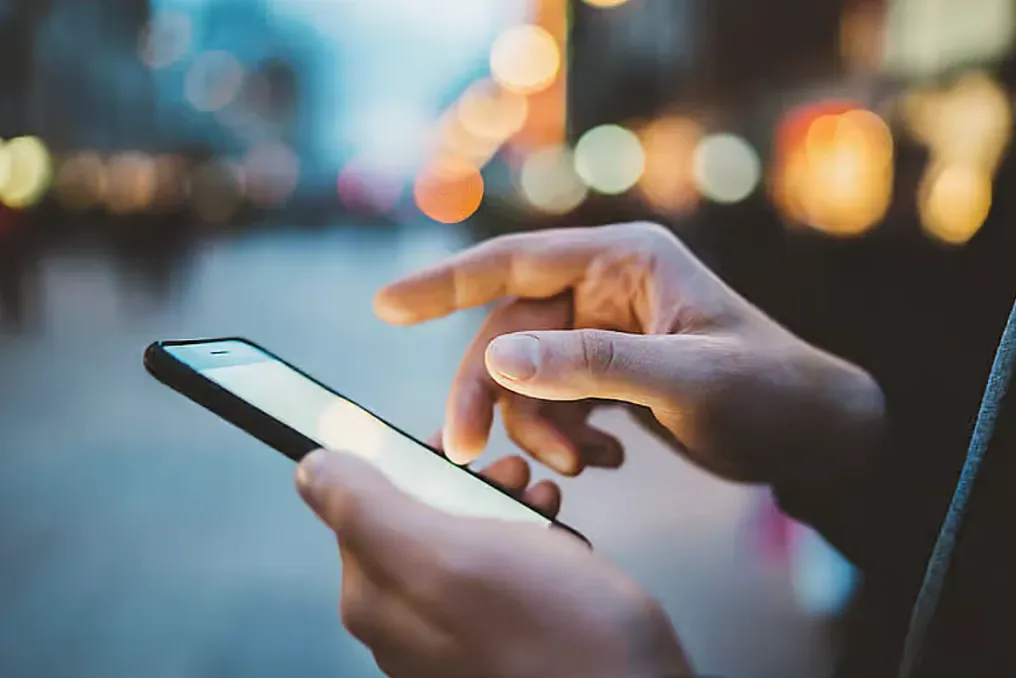
In the absence of mobile signal, especially in desert areas, a regular phone, which usually serves only as a camera and clock, can be equipped with the ability to send messages, transmit location, or call for help via a direct connection to a satellite.
Space42 from Abu Dhabi, in collaboration with American Skylo Technologies, successfully tested two-way SMS and emergency SOS signaling between a standard Android smartphone and the Thuraya-4 satellite from Space42.
According to company statements, no separate antenna or specialized satellite terminal was required for the test. Furthermore, messages passed through existing identification systems and mobile network operators without needing changes to the device's main network.
The testing demonstrated the possibility of exchanging small amounts of data via satellite when terrestrial coverage is lost, but it did not show the capability for unlimited calls, internet browsing, or video streaming.
Ali Al Hashmi, CEO of Space Services at Space42, noted that previously, while having 100,000 subscribers on the satellite, the company was satisfied, but the direct-to-device technology fundamentally changes the situation by providing access to any phone owner, regardless of whether they have a satellite terminal.
Traditionally, satellite communication required special phones or external terminals with large antennas. The D2D technology aims to eliminate this barrier, allowing compatible smartphones to communicate via satellites using mobile network standards.
The ultimate goal is for the phone to remain connected to the terrestrial network while available, and then automatically switch to satellite connection when coverage disappears.
The Thuraya-4 satellite is in geostationary orbit approximately 36,000 km above Earth, from where it can cover a vast area. However, the distance limits the efficiency of transmitting large amounts of data to a small receiver, so messages, alerts, and location data are transmitted first, rather than heavy services like full internet access or video.
Larger plans are being implemented within Equatys—a planned venture between Space42 and Viasat. It is designed as a shared infrastructure that mobile operators can use instead of creating their own satellite networks. The proposed architecture could potentially include up to 2,800 satellites.
Nevertheless, Al Hashmi emphasizes that the number of satellites is only part of the equation. A more important advantage may be the spectrum—the limited radio frequency bands through which phones and satellites communicate. He explained this with an analogy: if you have a perfect car but no road, the journey will be difficult.
Al Hashmi believes that access to this spectrum will allow the network to provide connectivity with fewer technical complexities and lower costs for users. Space42 and Viasat claim that Equatys can operate in over 100 MHz of globally allocated and coordinated mobile satellite spectrum.
He added that instead of building powerful machines, he can offer a service similar to a bus because he owns the spectrum, making it more efficient, simple, and energy-saving, offering a 'bus' tariff instead of the 'supercar' cost for the same journey.
The issue of cost may determine whether satellite communication remains an emergency function in remote areas or becomes part of a regular mobile plan. Space42 has entered preliminary agreements with e& UAE and Telkomsat from Indonesia regarding technical integration, licensing, and possible field tests.
Despite the successes, phones will still require compatible software and hardware. Operators must agree on commercial terms, regulators must approve spectrum usage, and Equatys must prove its ability to provide reliable service at a price acceptable to ordinary users.
For Al Hashmi, success means that the user will hardly notice the infrastructure being used. He stated that the user simply wants to make a call, regardless of whether it is satellite or not, and should not worry about losing coverage or that the call will 'drain their bank account' at the end of the day. Communication must be seamless both in terms of connection and in terms of the end-user experience.
The test in the UAE proved the possibility of sending a message, but the more complex task is to make this connection widely available, automatic, and affordable enough that the user does not care whether the signal comes from a tower or from a satellite.