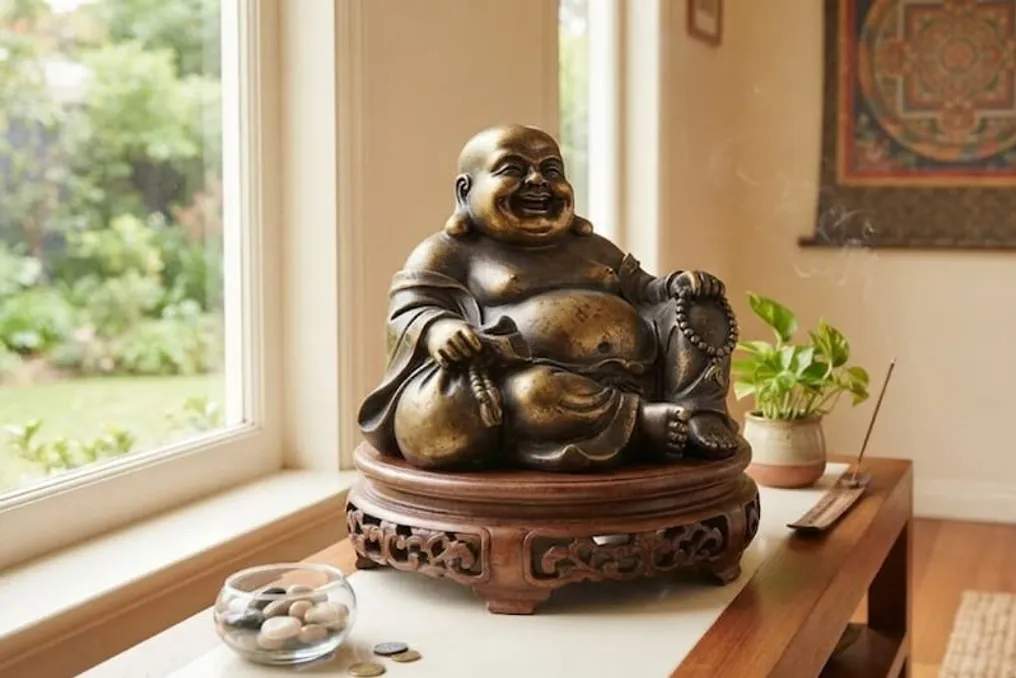
The Laughing Buddha figurine is considered very auspicious in homes, shops, and offices worldwide. According to Feng Shui and Vastu Shastra principles, this statue of the smiling Buddha attracts happiness, peace, positive energy, and luck into the home. The following discusses the history of the Laughing Buddha, its variations, meaning, and the correct places for its placement in the house.
History of the Laughing Buddha
The Laughing Buddha is known in Chinese tradition as Budai, and in Japanese culture as Hotei. He was a Chinese Zen monk who lived during the Liang Dynasty in the 10th century. The word Budai in Chinese means 'cloth sack,' as he always carried a bag with him while traveling. Due to his round figure and perpetually smiling face, he became a symbol of joy and merriment. Over time, he transformed into a beloved symbol of enlightenment, joy, and good fortune.
The Meaning of Placing the Laughing Buddha in the Home
Placing the Laughing Buddha statue in a residence is considered extremely beneficial for several reasons. His joyful posture calms the mind and creates an atmosphere of well-being and prosperity in the home. His presence contributes to the arrival of wealth and good health. His carefree and joyful face helps eliminate all negativity in the house, amplifying positive vibrations. Furthermore, this statue strengthens mutual love, cooperation, and harmony among family members.
Types of Laughing Buddha and Their Meanings
Different Laughing Buddhas with various poses and appearances carry different meanings. The figure with a sack brings luck and prosperity. The statue with children symbolizes family prosperity, increased offspring, and good relationships with children. The figure holding a gold coin (ingot) in its hand attracts wealth and business success. Combined with a frog in Feng Shui, this is considered a reliable symbol of wealth, happiness, and prosperity. The figure with beads symbolizes meditation and inner peace. And the figure with a fan in its hand is considered a symbol of wish fulfillment and the removal of all obstacles.
Meaning of Colors
Different colors have their own meanings: gold—for wealth, prosperity, and luck; green—for physical health, balance, and development; black—for protection against negative energy and the evil eye; red—for energy, enthusiasm, and success in life; white—for peace, purity, and tranquility.
8 Most Auspicious Places to Place the Laughing Buddha in the Home
It is very favorable to place it near the main entrance of the house or on a table in front of it to welcome positive energy entering the dwelling. At the same time, the height of the statue should not be lower than eye level. In the living room, it should be placed so that it faces the main seating area of the family, spreading joy and agreement throughout the house. If there is a garden or balcony with plants in the house, placing it among the natural setting will bring serene and pleasant energy. However, there are places where the Laughing Buddha must categorically not be kept: never place it in the kitchen, dining room, or bedroom. Also, avoid placing it directly on the floor; it should always be on a clean and slightly elevated surface, such as a table or shelf. It is also advisable to refrain from placing it near the walls of the bathroom or toilet.