The Competition Committee studied the tender worth 5.7 billion soums. This was carried out after a critical article circulating on social networks titled 'One Address, Common Past, and Billion-Soum Tender'.
A new financial support mechanism is being introduced for citizens planning to purchase an electric vehicle. This mechanism provides for partial coverage of the interest rate on car loans by the state.
Starting from August 1, 2026, the state will compensate part of the interest rate on car loans that meet the established conditions. The compensation applies to the portion of the interest rate exceeding 16 percent during the first two years of the loan, but not more than 8 percent set by the bank.
The Competition Committee studied the tender worth 5.7 billion soums. This was carried out after a critical article circulating on social networks titled 'One Address, Common Past, and Billion-Soum Tender'.
Customs authorities play an increasingly important role in ensuring state economic security, the legal and transparent conduct of foreign trade operations, and the stable increase of state budget revenues. Thanks to modern approaches, digital technologies, and strengthened control mechanisms, this system is becoming not only a pillar of economic stability but also an important foundation for protecting public safety.
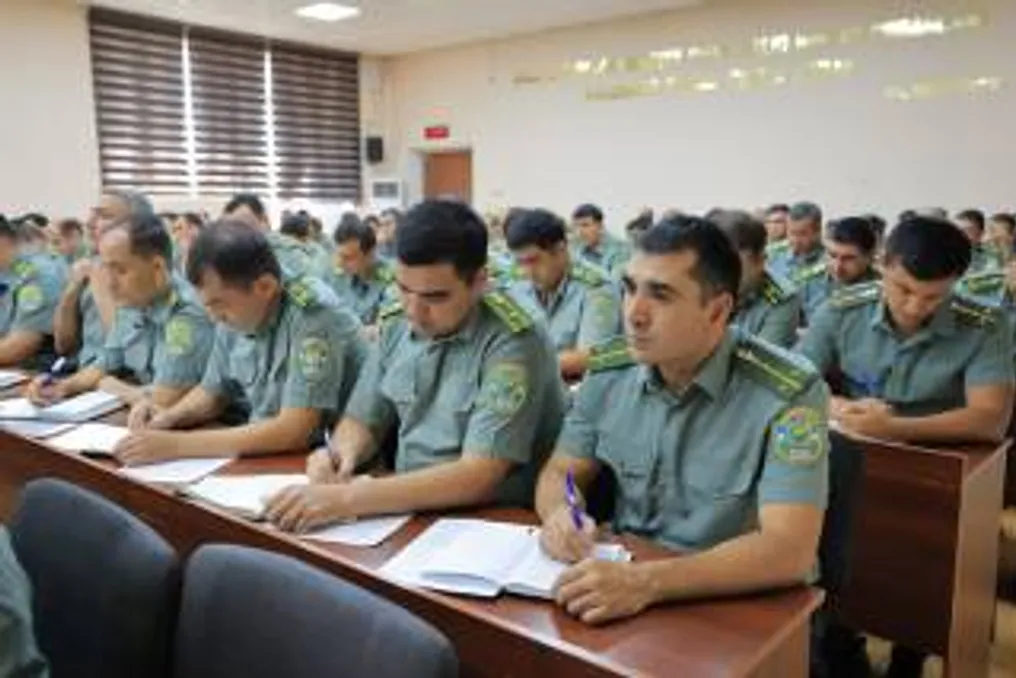
In this regard, an expanded Council meeting was held at the Bukhara Regional Customs Administration, dedicated to the results of the first half of 2026, with the participation of Deputy Chairman of the Customs Committee N. Musamukhamedov. During the meeting, the work performed during the reporting period was analyzed in detail, achievements and shortcomings were identified, and priority tasks for the second half of the year were determined.
At the meeting, the head of the Bukhara Regional Customs Administration, B. Muratov, presented a report detailing the work done in increasing state budget revenues, strengthening economic security, combating smuggling and customs offenses, and creating more favorable conditions for participants in foreign economic activities.
It was noted that in the first six months of the current year, the administration collected customs payments totaling 2 trillion 120 billion sums. Of this amount, 881.9 billion sums were provided as customs benefits stipulated by legislation. The remaining 1 trillion 238 billion sums were timely and fully paid into the state budget, contributing to the stability of the country's economy.
The meeting also highlighted the results of operational measures aimed at ensuring public health and safety. Specifically, 14.68 kilograms of narcotics planned for illegal import were discovered in a timely manner, as well as 147.23 kilograms of medicinal products, preventing their spread within the country. Such achievements are the result of systematic work conducted in cooperation with law enforcement agencies.
A total of 9,947 customs inspections were conducted during the reporting period to enhance the efficiency of customs control. As a result, 182 cases of customs rule violations were identified, which allowed for the interception of illegal movement of goods and material assets worth almost 27.9 billion sums.
Furthermore, 782 cases of offenses were uncovered within the framework of anti-smuggling and investigative activities. Goods and material assets amounting to 63.3 billion sums related to these cases were processed as material evidence. These figures once again demonstrated the active fight of customs authorities against economic crimes.
The meeting also focused on comprehensive support for system employees and strengthening their social protection. During the reporting period, 48 employees were commended for exemplary performance of their duties, and 12 received subsequent ranks. Additionally, a quota for preferential admission of children to higher educational institutions was allocated for 8 employees, and two employees were granted a loan to improve housing conditions. Such social support measures are of great importance for increasing the labor productivity of system personnel and encouraging their devoted service.
During the meeting, the activities of structural units were critically discussed, and specific instructions were given to strengthen the fight against corruption, ensure service discipline and supervisory activities, and approach every task with a sense of responsibility. Important goals were also set for the effective use of digital technologies, improving the risk analysis system, and enhancing the quality of services provided to participants in foreign economic activities.
Based on the meeting results, priority areas were defined: further increasing state budget revenues, expanding a favorable business environment for entrepreneurs, elevating the level of services for participants in foreign economic activities, increasing the effectiveness of combating smuggling and customs offenses, and strengthening the service and executive discipline.
From January to June 2026, the average nominal wage in Uzbekistan was 7.09 million soms, with the highest figure recorded in Tashkent.
The wage for January-June 2026 reached an average of 7,911 thousand soms nationwide. This figure exceeds the same period last year by 18.4%. For comparison, in January-June 2022, the average wage was 3,551.6 thousand soms, which represents an almost twofold increase in the average salary over four years.
When comparing by region, the highest average wage level was noted in the city of Tashkent, where it reached 12.014 million soms. Following in terms of income level is the Navoi region, where the average salary amounted to 8.723 million soms.
The lowest values for the average wage were registered in the Kashkadarya region, where it was 4.865 million soms, as well as in the Surkhandarya region, where the indicator reached 4.937 million soms.