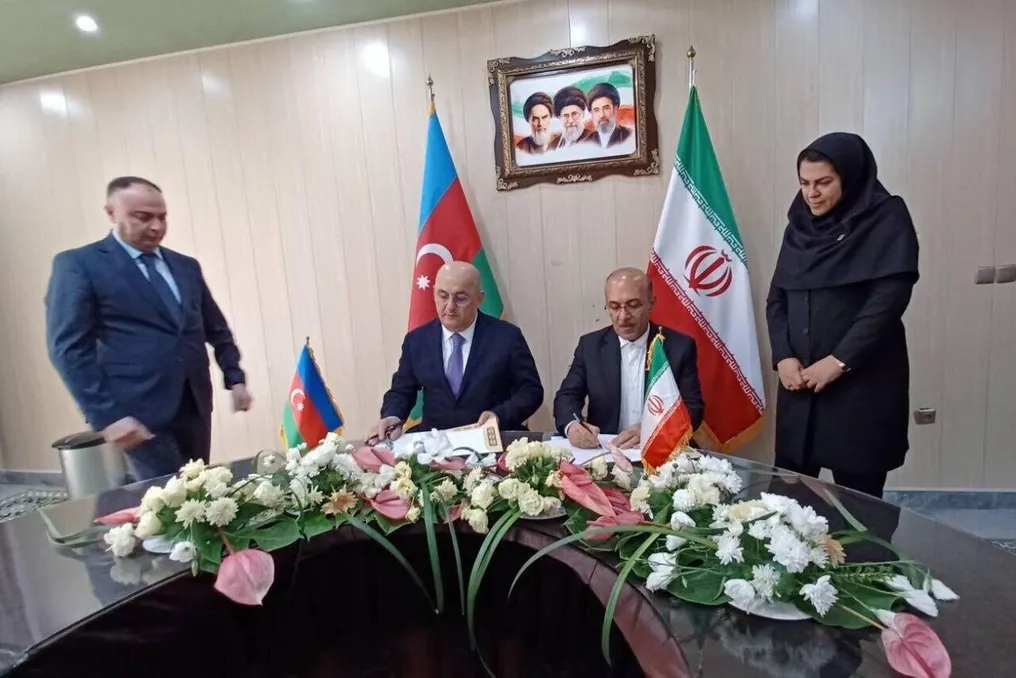
Iran and the Republic of Azerbaijan signed a memorandum on customs cooperation aimed at accelerating and facilitating trade and transit between the two neighboring states. This agreement was concluded at the Bileh Savar border crossing and is part of a series of diplomatic and economic initiatives marking a new era of strategic partnership between Tehran and Baku.
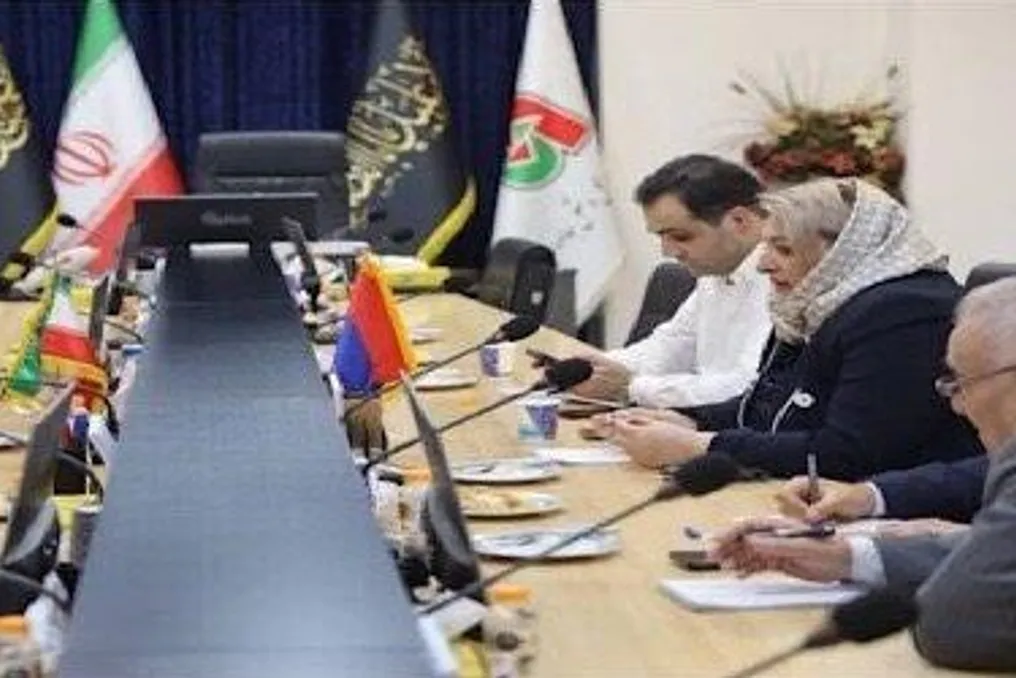
A high-level meeting brought together Fouroud Asgari, Deputy Minister of Economy and Head of Iran Customs Administration, and Shahin Bagirov, Head of the State Customs Committee of the Republic of Azerbaijan, along with their delegations. The parties reviewed existing issues related to transit development and trade simplification and agreed on new programs to eliminate barriers and optimize cross-border movement of goods.
One of the central topics of discussion was the decisive role of infrastructure in increasing trade turnover. Fouroud Asgari pointed out that infrastructure deficiencies pose a serious obstacle to the development of commercial and transit exchange, emphasizing that the completion of bridges on the Astara and Nakhchivan borders will significantly improve connectivity and ensure unimpeded passage for trucks.
Asgari stated that the completion of these bridges by the Republic of Azerbaijan will bring prosperity to trade and facilitate the movement of commercial transport. The head of customs also noted that the main problem in bilateral trade is border congestion, as the unimpeded flow of trucks is hindered by procedural and physical bottlenecks. He stressed the importance of continuous interaction to resolve these issues, expressing optimism about the measurable improvements that the recent agreements will bring.
It is important to note that Asgari reported the special interest of the Iranian President in expanding trade exchange with Azerbaijan, consistently emphasizing the development of economic relations at various meetings. This high-level political will has created momentum for closer cooperation in several sectors.
Shahin Bagirov, Head of the State Customs Committee of Azerbaijan, supported Iran's positive sentiment, calling bilateral trade 'important' and expressing a general vision for expanding cooperation. Bagirov emphasized Azerbaijan's interest in expanding interaction and promised to make greater efforts to develop trade and transit flows. He highly praised the establishment of a 24/7 online link with the head of Iran Customs, which is intended to promptly resolve emerging issues and prevent delays in customs procedures.
The signing of the memorandum of understanding following the meeting formalized the commitment of both parties to accelerate the customs clearance processes for commercial and transit goods, laying the foundation for further cooperation beyond the current agreement.
In addition to the customs agreement, economic cooperation between Iran and Azerbaijan is developing in numerous areas. At the end of June, leaders from the Chambers of Commerce of Iran in industry, mining, and agriculture, as well as the National Confederation of Entrepreneurs of Azerbaijan, emphasized the need to expand joint investments and better utilize the potential of border trade.
Samad Hassanzadeh, Head of the Iranian Chamber of Commerce, speaking at the 40th meeting of the Board of Directors of the Islamic Chamber in Ankara, stressed Iran's commitment to peace and stability in the region. He highlighted the deep cultural similarities between Iran and Azerbaijan, emphasizing the importance of trade delegations and calling for an update of the list of joint investment opportunities. He urged both sides to identify specific sectors for expanding bilateral trade, creating a roadmap for future economic interaction.
Kadir Kiyafeh, Vice President of the Iranian Chamber of Commerce, supported these views, describing Iran and Azerbaijan as 'brotherly countries with a common culture.' He called for overcoming negative propaganda aimed at hindering the expansion of relations between the two nations. Kiyafeh expressed hope for social and economic development, as well as sustainable peace in the region, dismissing the possibility of external interference disrupting regional processes.
Mohammad Musaev, Head of the National Confederation of Entrepreneurs of Azerbaijan, welcomed the initiatives for joint investment and emphasized the importance of utilizing shared border potential for mutual economic benefit. The Iranian delegation to the meeting included Seyyed Hamed Asgari, Deputy for International Affairs of the Iranian Chamber of Commerce, and other high-ranking officials, demonstrating Iran's commitment to deepening economic ties.
The impetus for bilateral economic cooperation extends to investments and project development. On June 19, Mehdi Heidari, Deputy Minister of Economic Affairs and Finance and Head of the Organization for Investment, Economic and Technical Assistance of Iran, met with Yusuf Abdullayev, Head of the Export-Investment Agency of Azerbaijan, during the 51st annual meeting of the Executive Board of the Islamic Development Bank in Baku. Heidari focused on experience exchange and identifying common points and projects for cooperation, presenting his organization's opportunities to stimulate and improve foreign investment.
He mentioned the signing of a memorandum to establish a Joint Investment Committee during the visit of President Pezeshkian to Azerbaijan, noting that although the first meeting of the committee has not yet taken place, it could be convened very soon. Heidari presented the Azerbaijani side with a list of projects prepared for foreign investment in Iran and explained the conditions of each sector.
In response, Abdullayev stated Azerbaijan's readiness to hold the first meeting of the Joint Committee. He positively assessed his agency's recent measures and programs, especially the development of information on investment opportunities. Furthermore, he invited Iranian business figures, investors, and competent companies to participate in Azerbaijan's International Investment Summit scheduled for September 2026. Abdullayev noted that the history of Iranians' activities in the Azerbaijani economy demonstrates potential for increased cooperation and called the Joint Investment Committee a valuable asset for structuring interaction.
One of the most significant indicators of growing bilateral economic integration is the cooperation document signed at the end of February, which outlines joint economic initiatives in ten sectors. The memorandum was signed at the 17th session of the Iran-Azerbaijan Joint Economic Committee by Farzaneh Sadeghi, Iran's Minister of Transport and Urban Development, and Shahin Mustafayev, Azerbaijan's Deputy Prime Minister.
This document establishes the basis for bilateral cooperation in infrastructure, energy, and water projects, as well as in broader economic, social, and cultural fields. In the transport sector, the parties agreed to expand cooperation in road transport, border management, and railway construction, including the Kalaleh–Agband bridge, the Astara bridge, the Kalaleh–Jolfa road expansion, the Kalaleh–Siahrud railway line, and the launch of the Astara railway terminal at the common border.
In the energy sector, cooperation was approved in oil blocks one and two, with the creation of a joint working group to monitor the relevant memorandums. Energy agreements covered plans to connect the energy grids of Iran, Azerbaijan, and Russia, as well as the export of electricity from Azerbaijan to Iran. Water cooperation focused on joint projects related to the Hodha Afarin and Qyzil Kalesi dams and power plants, as well as the Marazad–Ordubad hydropower project.
The comprehensive agreement also includes arrangements in tourism, agriculture, customs, industry, investment, sports, and youth affairs, paving the way for closer economic ties and expanded strategic cooperation between Tehran and Baku.
Speaking at the Joint Economic Committee meeting, Minister Sadeghi emphasized Iran's ambitious goal of increasing the transit volume along the western branch of the International North-South Transport Corridor (INSTC) to 15 million tons by 2030. This goal represents a significant increase over current transit volumes and underscores the strategic importance of the corridor for both countries.
Sadeghi noted that trade between the countries reached approximately $650 million over the past two years, with the exchange trending upwards. She suggested that developing a roadmap for trade cooperation could provide clearer prospects for expanding economic relations. Transport and transit were identified as key pillars of cooperation. Over the past year, about 120,000 Iranian trucks transited through Azerbaijan, and more than 50,000 Azerbaijani trucks entered Iran, reflecting significant cross-border freight activity.
Sadeghi stressed that achieving the target of 15 million tons by 2030 will require more than tripling current vehicle movements, highlighting the need to modernize border infrastructure and optimize procedures. The construction of the Kalaleh–Agband bridge is in its final stages and is expected to play a vital role in easing transport flows and trade upon completion. Energy cooperation and joint projects on the Aras River were named strategic areas of cooperation, alongside agriculture, tourism (especially medical tourism), and broader cooperation in industry, investment, and infrastructure.
The impetus for closer economic ties was reinforced by direct interaction at the highest political level. During his visit to Baku to attend the Joint Economic Committee meeting, Minister Sadeghi met with President Ilham Aliyev, conveying greetings from President Masoud Pezeshkian and emphasizing Iran's particular interest in relations with Azerbaijan. President Aliyev, thanking Pezeshkian for his message, expressed satisfaction with the expansion of bilateral relations and stressed that jointly implemented projects would provide extensive opportunities for both countries and the entire region. New railway infrastructures, joint oil fields, transport cooperation, utilization of new border infrastructure, and energy sector cooperation were discussed. The parties also exchanged views on joint oil fields in the Caspian Sea and methods of extracting resources from these fields, as well as on developing bilateral and multilateral regional cooperation with neighbors.