In Guaruo City, which is known in China as the 'Lingerie City,' a significant part of the local economy is based on the business of producing bras, can-canes, and underwear. Millions of items are produced here annually and sent to both the domestic Chinese market and other countries.
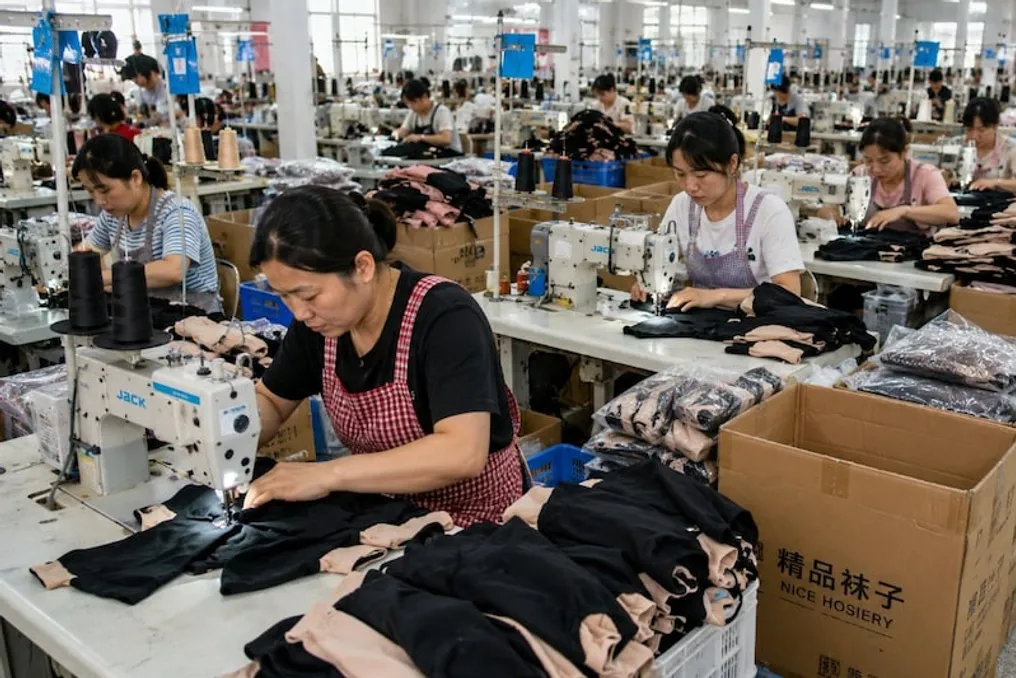
At one factory in Guaruo, about 30-40 thousand padded bras and underwear are produced daily. Workers on the production line perform repetitive tasks: one employee completes their part of the work, and the item is passed to the next specialist for further processing.
Thousands of small and large factories operating in Guaruo are engaged in lingerie production. According to available data, approximately 350 million bras and 430 million can-canes and underwear are manufactured in the city each year. The city's industrial output is estimated to be 80 percent related to goods belonging to the lingerie industry.
The lingerie business is not limited to factories; advertisements for lingerie featuring models can be seen all over the city on large billboards. This is why local authorities call Guaruo the 'Lingerie City.' This industry is the main source of employment and income for thousands of people connected to this business directly or indirectly.
The history of lingerie production in Guaruo began around 1982. The growth of this industry was supported by investments coming from neighboring Hong Kong and Taiwan. Thanks to the city's location and relatively low labor costs, factories began to expand actively, especially between 1995 and 2005, allowing Guaruo to become a major industrial center.
The city's strength has turned into its main vulnerability, as the entire industry is concentrated in one sector. Any downturn in lingerie production or increased competition from other countries directly affects the entire city. Factory owners note a constant rise in production costs, but consumers are unwilling to pay significantly higher prices, which negatively impacts small and medium-sized enterprises.
Guaruo faces problems not only with the domestic market. Countries such as Thailand and Vietnam actively compete with China in lingerie production. In some cases, production in these countries is more profitable due to lower taxes and production costs. After 2008, some orders for mid-range and low-end lingerie began shifting from China to these countries, which reduced Guaruo's exports.
Despite China's rapid economic growth, many small industrial cities like Guaruo have failed to diversify their economies. The excessive dependence on the lingerie industry causes concern among residents. Many people leave for neighboring cities or other countries in search of better jobs and futures, while some factory owners close their businesses and leave the city.
The history of Guaruo reflects the situation in many Chinese cities where the entire local economy revolves around the production of one type of goods—be it plastic toys or textiles. These 'single-industry cities' played an important role in transforming China into a global manufacturing hub. However, their weakness lies in the fact that the appearance of another country in the market with cheap production can put pressure on the entire local economy.
Today, the whirring of sewing machines and mountains of lingerie can still be heard in Guaruo, but behind these millions of bras and underwear, the question arises: how much can the city transform given that its entire economy rests on one industry?