For a long time, the residents of Zakariyapura faced difficulties that seemed insurmountable. Kitchens were filled with smoke from traditional wood-burning stoves, causing eye irritation and respiratory problems. Furthermore, household expenses were rising, domestic conflicts often arose, and many families struggled to cover basic needs.
However, today the same village tells a completely different story. The changes began because of what many considered waste.
Madhuben never imagined that cattle dung could improve life. Everything changed after she visited a biogas plant in a neighboring village. Seeing how this system worked, she realized that her own village could also benefit from it. Deciding to introduce this idea to her community, she encouraged others to adopt the renewable solution.
When waste turned into wealth
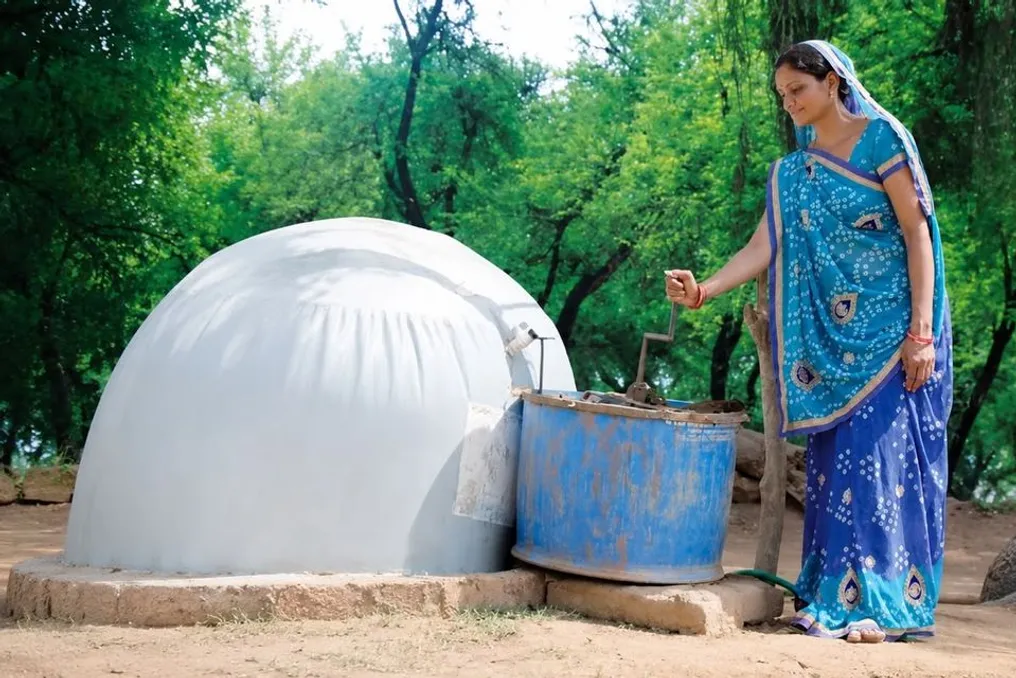
With the support of the National Dairy Development Board, biogas plants were installed in all 368 cattle-owning households in Zakariyapura. Each plant uses a simple mixture of manure and water to produce biogas for cooking, as well as nutrient-rich slurry.
Soon, the village began to notice positive changes. Families were no longer dependent on smoky wood-burning stoves or LPG cylinder costs. Women, who used to spend hours cooking in smoky kitchens, finally found relief from respiratory issues and constant eye irritation. Health improved, and household expenses decreased, easing the financial strain that had provoked domestic disputes.
The slurry produced by these plants opened up an entirely new opportunity. Women banded together and created the first all-women manual cooperative organization in the country for processing and selling organic fertilizer in the market. What was previously thrown away as trash now became an additional source of income, allowing households to earn between 3000 and 5000 rupees monthly.
The benefits go far beyond earnings. Since women spend less time collecting firewood and doing housework, young girls have more time to dedicate to education instead of helping with chores. The story of Zakariyapura demonstrates how a simple idea, backed by community participation, can revitalize an entire village. The village has discovered the exceptional value in what was once ignored. Now, it supports kitchens, provides livelihoods, improves health, and gives families confidence in building a better future. As more villages seek sustainable ways to improve rural life, this village offers a model proving that significant change can start with the most ordinary resources.