China has taken a significant step in improving its economic and trade regulation by launching the first national security investigation in the foreign trade sector in history. Experts view this initiative as a legitimate, restrained, and proportional response to sanctions from the United States.
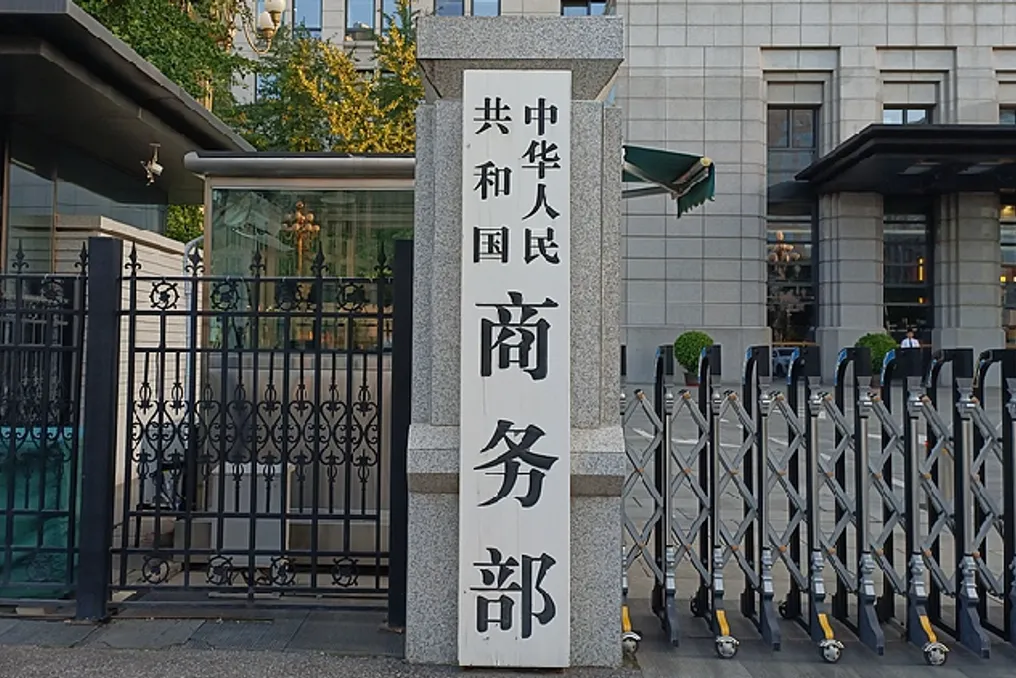
As part of measures to counter recent restrictive trade actions by the US, China's Ministry of Commerce (MOFCOM) announced on Wednesday the opening of a 12-month national security investigation into imported office equipment that has printing and copying functions and is equipped with foreign system software.
According to MOFCOM, since this is the first such investigation in foreign trade, it will assess import volumes, security risks, dependence on foreign suppliers, domestic industry capabilities, and the impact on foreign policy through written questionnaires, public hearings, on-site inspections, and commissioned studies.
Data shows that printers and copiers imported into China account for nearly 50% of the market by sales volume and value, significantly affecting the local industry. Meanwhile, the share of Chinese manufacturers holding full intellectual property rights does not exceed 25% of the market.
Shi Xiaoli, Director of the WTO Legal Research Center at the Chinese University of Political Science and Law, considers such an investigation timely and necessary. In an interview with Xinhua, she noted that using this security tool in foreign trade allows for an accurate picture of imports, an objective assessment of the impact on domestic industry, and a complete understanding of how these imported goods, as well as related foreign policy decisions, affect the country's national security interests.
Shi added that if the investigation establishes a threat to national security, authorities have the legal right to apply necessary trade countermeasures to protect the country's security and development. She also emphasized that this investigation into imported printers and copiers is 'legal, reasonable, and proportional,' noting that its scope is highly limited and directly related to real national security concerns, distinguishing it from large-scale investigations across entire industries conducted by some other countries without a genuine link to security.
Tu Xincuan, Dean of the WTO Research Institute at the University of International Business and Economics, pointed out that the current investigation is the first application of national security provisions in China's revised Foreign Trade Law. This revised law, adopted on December 27, 2025, and effective March 1, 2026, emerged against the backdrop of profound changes in the global trading environment and accelerated restructuring of international rules, expanding China's legal arsenal for resolving foreign trade disputes and establishing a refined basis for countermeasures.
According to Tu, the United States has repeatedly cited and used national security risks—its universal justifications—to impose trade restrictions against China, and in principle, China can conduct corresponding trade investigations or impose certain trade measures based on national security. He added that growing geopolitical competition has generated real national security concerns in foreign trade. Nevertheless, Tu stressed that China exercises great caution when implementing such measures and investigations, explaining that they follow a careful, objective process based on facts and reasoning, and that targeted actions will only be taken if the investigation confirms that specific trade practices or policies genuinely threaten national security, ensuring the country does not use national security arbitrarily to impose trade barriers.