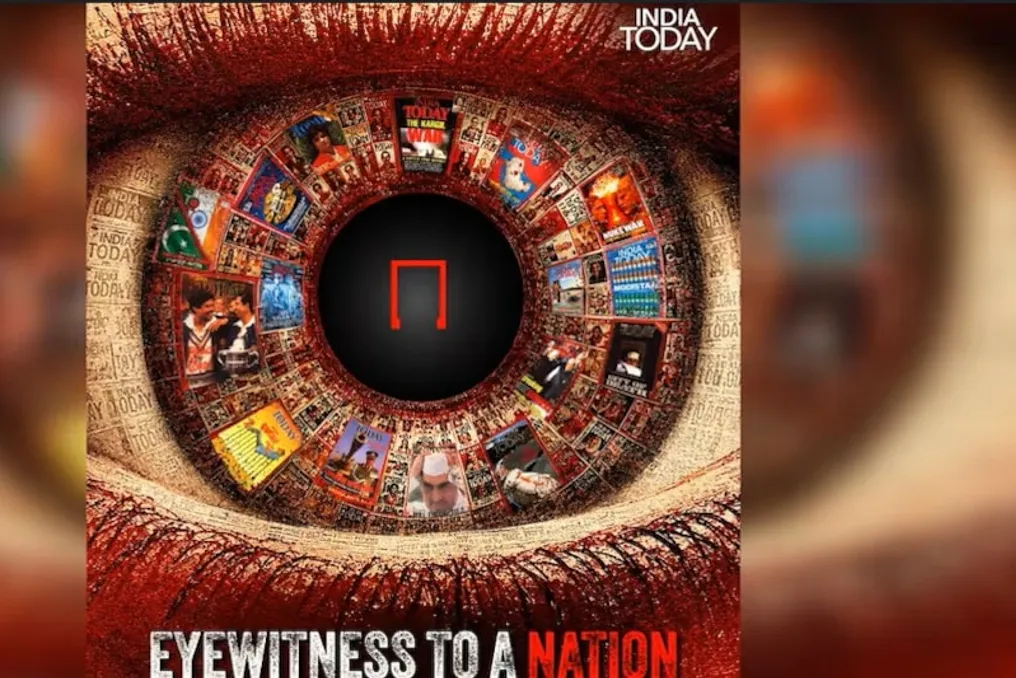
On the occasion of the golden jubilee of the media corporation India Today, which has established itself in the industry, the documentary film 'Eyewitness to a Nation' was released. This film covers the 50-year journey starting from 1975 and demonstrates all aspects of the country's life: political upheavals, cultural changes, cinematic and international events, as well as social movements and military actions.
The film allows viewers to experience the picture of India over five decades in just 2 hours and 44 minutes. It sheds light on how modern India was shaped after struggling with unrest, conflicts, and political tragedies in the independent nation. This unique story is presented using rare archival footage, interviews with experts, on-site reports, and behind-the-scenes footage.
The documentary shows India's path from 1975 to 2025 through the lens of journalism. Since fifty years of journalism is not just a series of news, it is also a living document of the era. The use of archival materials lends realism to the film, transporting viewers back to that era through old videos, photographs, newspaper headlines, and on-site reports, summarizing the events that shook the country between 1975 and 2025.
The risks faced by journalists are astonishing. Examples include the Kargil War, the Kandahar plane hijacking, the Mumbai blasts, the Pulwama attack, and the coronavirus period. There were many moments when journalists risked their lives to preserve the profession, and covering situations in war zones makes one think.
India Today first launched in December 1975, during the state of emergency in the country. At that time, the public was dissatisfied with the decisions of then Prime Minister Indira Gandhi. The magazine represented the pain of the people, the chaos in the streets, and emotions on its covers. Despite press censorship and an atmosphere of fear, India Today gave voice to the people. The corporation's initial journalism aimed to highlight the social and political tension of that time, laying the foundation for its own identity formation.
As the country and politics changed, cinema inevitably changed as well. Over these five decades, cinema underwent significant transformations. In 1975, a controversy arose around the film 'Kissa Kursi Ka,' a political satire by Amrit Nathat, which shocked Indira's government. India Today documented the rise and fall of stars in the world of cinema during this period, observing the transition from parallel to commercial cinema. Viewers saw the success of Kapoor's 'Karishma' and Amit Bhachan's 'Angrannaymen Image.'
Film directors such as Rajkumar Hirani, Anurag Kashyap, Dibakar Banerjee, and Imtiaz Ali challenged traditional narrative structures with their realistic presentation. Then came the coronavirus period, when the entertainment industry stalled. During this time, Shah Rukh Khan's 'Pathaan' and Alia Bhatt's 'Gangubai Kathiawadi' breathed new life into the dormant Bollywood industry.
India Today's journey is inextricably linked to the ups and downs of Indian politics. The corporation closely monitored Indira Gandhi's political career: from her tenure under the Emergency to losing her seat in government. She later returned as Prime Minister in 1980, then experienced the loss of her son Sanjay Gandhi and the death of Indira Gandhi after the 'Sindoor' operation, which was a major blow to the country. This was followed by an analysis of various periods of power—from Rajiv Gandhi to Atal Bihari Vajpayee, Manmohan Singh, and Narendra Modi.