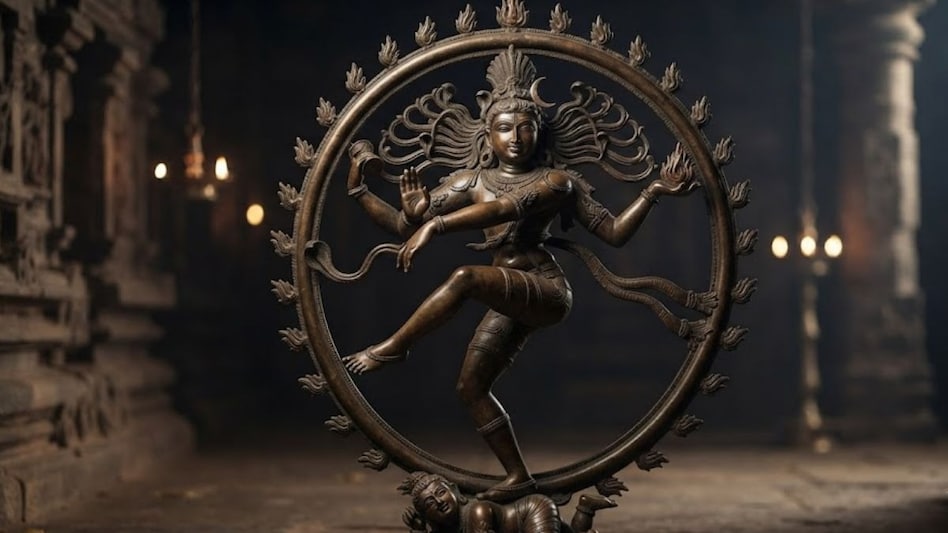
In Hindu culture, every aspect, posture, and symbol of the deity Shiva conceals a profound spiritual, philosophical, and scientific message. The form of Nataraja, one of the most enigmatic and artistic depictions of the Mahadeva Devas, has always attracted the attention of scientists, artists, and philosophers from around the world. Every feature of this figure, who embodies the lord of dance, speaks of the mysteries of the universe. This text further examines Shiva's wondrous dance and the deep meaning of Apasmara, which he holds under his foot, offering important life lessons.
Nataraja, the form of Shiva, the king of dances, symbolizes the eternal cycle of creation, preservation, and destruction. The flow of energy in the universe never stops, and the bronze statue of Nataraja is considered the most accurate and living representation of this cosmic energy. Modern science and physics acknowledge this cosmic dance; a prime example is the massive Nataraja statue installed on the grounds of the prestigious CERN institute in Geneva.
On the sculpture of Mahadeva, he is depicted in a pose where he treads upon a small figure with one foot. This image is called Apasmara or Muyala. In Hindu mythology, Apasmara represents ignorance, foolishness, arrogance, and mental sluggishness. The fact that Lord Shiva crushes it with his right foot conveys the message that a person cannot attain true knowledge and liberation until they suppress or control their inner ignorance and pride. It also signifies that in the frantic race of life, reason and consciousness must always triumph over ignorance.
Surrounding Nataraja is a fiery circle called the Prabha Mandala, which symbolizes the physical cycle of the universe, the sphere of time, and the cycle of rebirth. In Shiva's upper right hand is a drum (Damaru), which is a symbol of the first sound of creation (nada or cosmic vibration) and the beginning of time. The upper left hand holds fire, indicating that this entire universe will eventually end or be consumed by this fire. One of his hands is raised in the Abhaya Mudra gesture, which offers solace to believers, assuring them that those who follow the path of Dharma and spirituality should not fear.