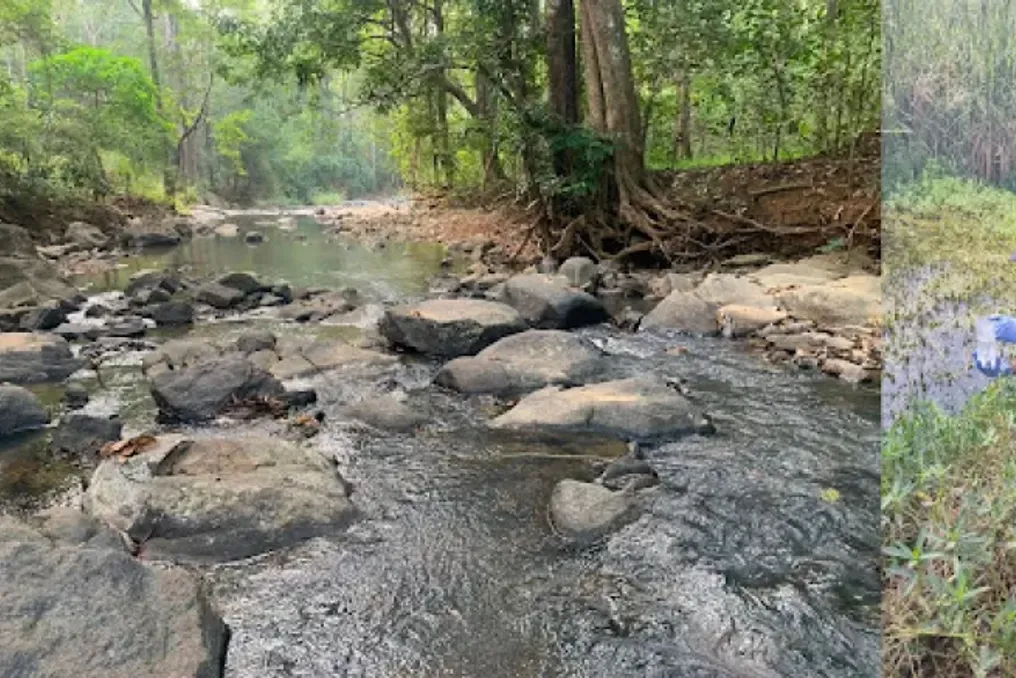
A new scientific study has established that diatoms, which are an important biological indicator of river health, are much less demanding about their habitat than previously assumed. The research, conducted by the Agharkar Research Institute, Savitribai Phule Pune University, and the Canadian Museum of Nature, Canada, demonstrated that these microscopic algae show almost no preference when growing on both submerged rocks and aquatic plant stems.
The results suggest that researchers can adopt a more flexible approach when sampling these organisms to detect river pollution. Instead of looking for specific types of rocks, which is the current gold standard in many monitoring guidelines, any available surface can now be reliably used, significantly simplifying and reducing the cost of sampling in tropical rivers.
Diatoms are single-celled algae enclosed in silica shells. Since different diatom species have very specific tolerance thresholds for pollutants, acidity, and nutrients, they are often used as indicators of ecosystem health. Decades of research in Europe and North America have often indicated differences between diatoms living on rocks and those living on plants, requiring scientists to exercise extreme caution when collecting samples to avoid a distorted picture of the environment.
However, the new study, carried out in the Western Ghats—one of the world's most important biodiversity hotspots—challenges this assumption for tropical systems. By analyzing 40 sites in the Western Ghats, the research group found that diatom communities on both types of surfaces were virtually identical.
Scientists discovered that factors such as phosphorus levels, water temperature, and electrical conductivity influence the formation of diatom communities thirteen times more strongly than the type of surface to which the algae are attached. Many streams in the Western Ghats showed naturally high levels of phosphorus—a nutrient that often limits diatom growth elsewhere. This high nutrient availability, combined with relatively stable tropical temperatures, apparently creates a selective pressure effect.
Local water conditions function as a biological filter, determining which species can survive at a particular point in the river, regardless of whether they settle on a boulder or a leaf. The study also revealed a striking level of regional uniqueness: over 57% of species are endemic to this region, meaning they are found only in this part of India. This level of endemism is significantly higher than what is typically observed in rivers in Europe or North America.
The team also found that under the stable warm conditions of the Western Ghats, diatoms tend to be generalists rather than specialists. In light of growing pressure on the Western Ghats from urbanization, agriculture, and climate change, the need for rapid and reliable water monitoring has never been more pressing. By demonstrating the flexibility of diatoms in using habitats, this study allows for the development of substrate-independent monitoring methods.
This means that even in muddy rivers where rocks are buried, or in fast-flowing currents where plants are scarce, scientists can obtain accurate data on water quality using whatever is at hand. Such adaptability facilitates continuous monitoring of water resources by local communities and conservation activists, ensuring the preservation of this global hotspot's unique biodiversity for future generations.