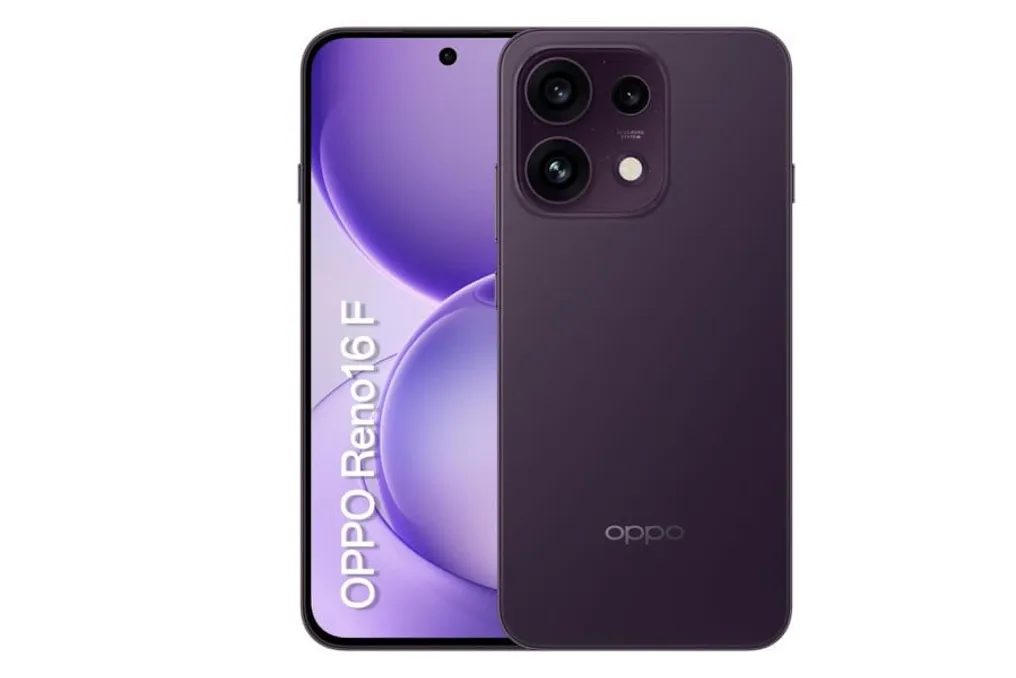
Oppo recently launched the Reno 16F in the Brazilian market, a device classified as a premium mid-ranger that combines a good set of hardware components, quality cameras, and artificial intelligence-based functionalities.
Oppo recently launched the Reno 16F in the Brazilian market, a device classified as a premium mid-ranger that combines a good set of hardware components, quality cameras, and artificial intelligence-based functionalities.
The vehicle Olhar Digital had the opportunity to test the device, presenting a detailed analysis of its main merits and areas for improvement. In a scenario where many smartphones show great similarity, the Oppo Reno 16F stands out in its white version due to a rear technology that generates a three-dimensional depth effect, giving the impression that an image floats over the glass.
The manufacturer itself names this feature 'Galaxy Design,' referencing the projected image onto a planet. Although this aesthetic detail does not affect the general operation of the phone, it represents a positive point for seeking differentiation in the model.
Aside from this rear visual aspect, the rest of the design follows the expected standard for a modern cell phone: a screen that covers almost the entire front, USB-C connection, speakers located at the bottom, side buttons for power on/off and volume control, and a customizable button on the left side.
Overall, the Oppo Reno 16F is a light and compact device, with a 6.57-inch screen, providing comfort in handling. Additionally, it has dust and water resistance, giving it durability.
The display uses 6.57-inch AMOLED technology, offering vibrant colors, deep blacks, and high contrast. Thanks to support for a 120 Hz refresh rate, navigation and screen transitions on social media or menus are notably fluid, which is expected for this price range.
Even without competing in maximum resolution with higher category models, the screen performs well in its function with adequate pixel density. External visibility is well ensured by the maximum brightness, keeping content legible even under intense light.
Internally, performance is managed by the MediaTek Dimensity 7300 processor, a chip optimized to balance speed and energy efficiency. This ensures good performance in daily tasks, such as browsing the web, watching videos, editing simple photos, and using social media, without application crashes.
For gaming, the device offers stable performance in popular titles, managing to maintain consistent frame rates even during long sessions. Although it may not display all top-tier graphic details, it handles more demanding games well without overheating excessively.
The operating system is based on Android, with Oppo's ColorOS 16 interface implemented. This interface includes a set of AI tools developed by the manufacturer, such as 'AI Mind Space,' an information center that allows saving data on the screen. For example, when taking a screenshot of an email with an event date, AI Mind Space suggests adding this information directly to the calendar.
This functionality extends to other situations; if a screenshot of a news article from Olhar Digital about a lunar eclipse is taken, the device will offer the option to insert it into the calendar. Besides the calendar, the tool can be used for various other purposes.
As mentioned, the Oppo Reno 16F has a side button that can be customized. With this configuration, a single tap can trigger screen analysis and open AI Mind Space, while a long press starts automatic audio recording. The button can also be set as a shortcut for the camera, facilitating photo capture.
In addition to organization features, the system offers native resources for photo and video editing, such as tilt correction and creating custom stickers, aimed mainly at those who produce and consume content for social media.
One of the device's biggest strengths is the 7000mAh battery, which ensures autonomy for a full day of intensive use or up to two days with moderate use.
The charger included in the box uses Oppo's SUPERVOOC fast charging technology, with an 80W capacity, allowing the battery to be fully recharged in approximately one hour. Thus, even if the user forgets to charge overnight, a brief period connected to the outlet already allows them to leave home without battery worries.
The camera system is versatile, featuring a 50MP main camera with optical stabilization (OIS), which produces sharp and natural images in good lighting. The 50MP telephoto lens is a highlight, ideal for portraits, as is the 50MP front camera, designed for wide group selfies and high-quality vlog recording.
The camera software provides creative modes, such as retro filters and tools for performing smart crops and collages directly on the device. The ultrawide camera, although delivering acceptable results, is the sensor that seems to have received less focus compared to the other high-resolution sensors in the system.
Despite this, the Oppo Reno 16F presents a quite competent camera set, capable of generating excellent images for both social media and for those looking to produce higher-quality content.
Among the positive points, the vast battery capacity and fast charging stand out, providing peace of mind away from outlets. The water and dust resistant build, combined with the diversified camera system—especially the telephoto and front camera—makes the device a very balanced package for those who value autonomy and photography.
Regarding negative aspects, the absence of a dedicated headphone jack (3.5mm) may bother some users. Furthermore, the performance of the ultrawide camera, which is more basic compared to the rest of the set, may disappoint more demanding users.
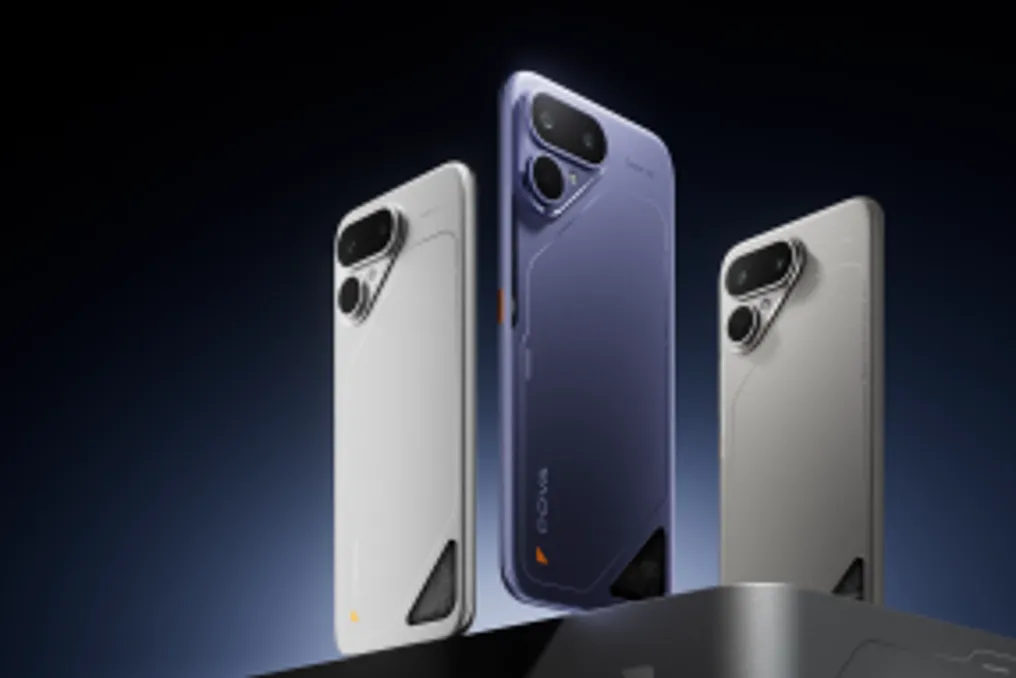
The Chinese manufacturer Tecno has received Anatel approval to introduce the Pova Curve 2 5G smartphone to the Brazilian market. This device stands out for having a robust 8,000 mAh battery and a curved AMOLED screen with a 144 Hz refresh rate.
According to information obtained by Tecnoblog, the Pova Curve 2 5G is equipped with the Mediatek Dimensity 7100 processor, in addition to offering RAM configurations of 8 GB or 12 GB, and internal storage options of 128 GB or 256 GB.
Although the approval was granted this month, Tecno has not yet confirmed an official launch date for the device in Brazil. In its Indian version, the device cost 27,999 Indian rupees, which is equivalent to approximately R$ 1,490.
Tecno Mobile is part of Transsion Holdings, a Chinese conglomerate that also owns other brands such as Itel and Infinix, with the latter operating in the country in collaboration with Positivo. In addition to the Pova Curve 2 5G, the brand also received approval for the entry-level Tecno Spark Go 3 phone.
The most notable aspect of the Pova Curve 2 5G is its 8,000 mAh battery, a capacity significantly higher than the average of phones sold in Brazil. To optimize charging, the model supports 45W fast charging technology.
In the Brazilian market, finding phones with 8,000 mAh is still uncommon. A competitor that shares this feature is the Realme C100x, which incorporates the component into a thicker body, measuring 8.6 mm, compared to the 7.42 mm of the Pova Curve 2.
In addition to the battery, the Pova Curve 2 5G features a remarkably curved AMOLED panel, with dimensions of 6.78 inches, Full HD+ resolution, and a 144 Hz refresh rate.
Regarding the camera system, the Pova Curve 2 5G is equipped with a 50-megapixel main sensor, which includes a wide-angle lens with an f/1.8 aperture. It also has a secondary 2-megapixel macro sensor and a 13-megapixel front camera capable of recording in Full HD at 30 frames per second.
The phone's hardware is powered by the octa-core mid-range MediaTek Dimensity 7100 chip, manufactured using a 6-nanometer process and incorporating the Mali-G610 MC2 GPU. This processor, launched in January, had not yet been seen in other devices in Brazil.
Internationally, the smartphone is available in versions with 8 GB or 12 GB of RAM and storage options of 128 GB or 256 GB. The Pova Curve 2 5G also offers 5G connectivity, supports dual Nano-SIM chips, Wi-Fi 5, Bluetooth 5.4, NFC for contactless payments, and an under-display optical fingerprint reader.