The Tax Committee of Uzbekistan has clarified the application of Value Added Tax (VAT) to the export of goods and services for payers using the simplified method of calculating and paying VAT.
The Tax Committee of Uzbekistan has clarified the application of Value Added Tax (VAT) to the export of goods and services for payers using the simplified method of calculating and paying VAT.
The Committee stated that export operations under this regime are subject to a 6% VAT rate, not a zero rate. This information was provided by the Tax Committee of Uzbekistan.
This clarification followed social media reports claiming that exports under the simplified VAT regime continue to be taxed at 0%. The Committee explained that this conclusion was drawn because the tax amount is not displayed in line 0103 of the simplified VAT declaration form.
The Tax Committee emphasized that the absence of the VAT amount in this line does not mean the application of a zero rate. According to paragraph 6(a) of Presidential Decree No. UP-100 dated May 26, 2026, taxpayers applying the simplified VAT calculation and payment regime are subject to a 6% rate on all supplies of goods and services, including exports.
The Committee further explained that the VAT amount is not indicated when filling out the cargo customs declaration and, consequently, is not reflected in column 4 of line 0103 of the VAT declaration. Instead, the tax is calculated at a 6% rate of the total turnover from the sale of goods and services indicated in column 3 of line 010 of the tax declaration.
Finally, the Tax Committee stressed that the absence of the VAT amount in line 0103 is solely a feature of the reporting form and does not indicate that export operations are subject to a zero rate.
The 'Law on Real Estate Activities' has entered into force in Uzbekistan, having been approved on August 7, and is intended to regulate relations in the field of real estate services.
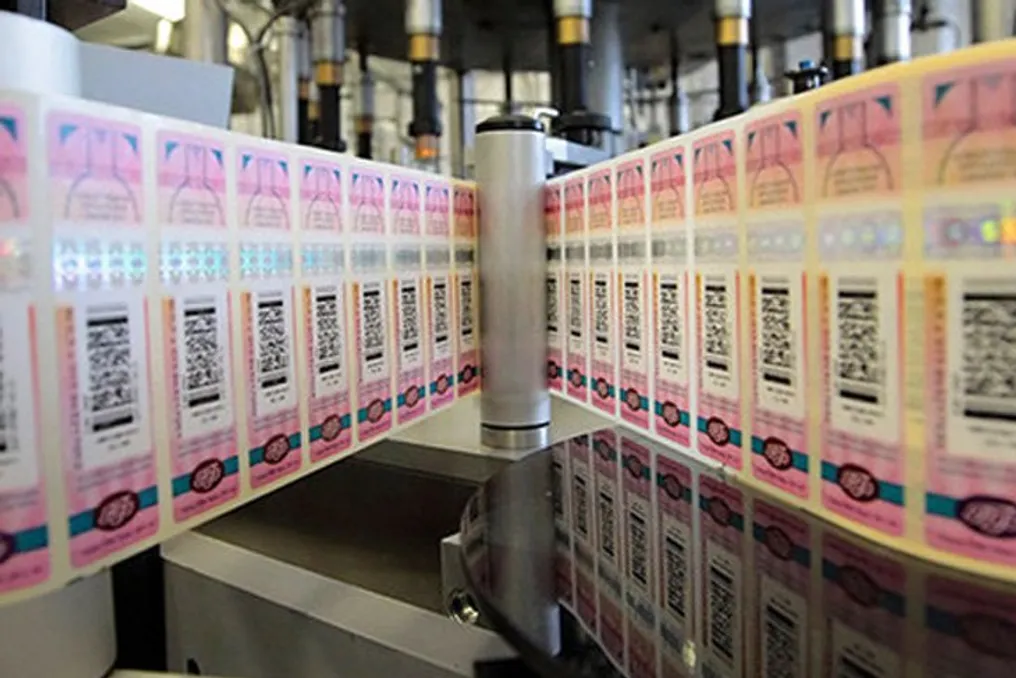
The State Agency for Management of State Assets has been appointed as the state body responsible for supervision in this area. Under the new legislation, real estate agents are now required to operate within a registered real estate organization and possess a qualified barcode certificate.
This certificate is issued by a professional public association after the specialist completes training and successfully passes the relevant examination. The right of real estate organizations and agencies to provide services arises after the data on these structures is entered into the Unified Register.
The law clearly regulates several types of activities that can be performed by real estate agents. These include intermediation in concluding transactions involving real estate and its rights, as well as organizing the trade of such properties.
Services for entrusted management of real estate objects are also provided, along with providing consulting, informational, and advertising services in the housing market.
In addition, the implementation of a multilisting system is planned in the sector. This system will be developed by the private sector and will allow real estate services to be provided under urgent contracts using a 'one-stop-shop' model, guaranteeing secure electronic data exchange.
A proposal has been put forward in Uzbekistan to change the excise tax system for alcoholic beverages, which involves increasing excise duties while simultaneously lowering final retail prices.
The Institute suggests increasing the excise rate from 63 to 70 thousand soums in 2027, but taking into account the projected alcohol rate, which is estimated at 25 thousand soums. Thanks to this change, the cost of one liter of vodka could potentially drop to 45 thousand soums.
Furthermore, due to the increase in excise taxes next year, including fortified wine (increasing from 12,000 to 12,600 soums), natural wine (from 10,000 to 10,500 soums), and beer (from 4,000 to 4,200 soums), the country's budget could receive an additional 62.1 billion soums, according to the institute's calculations.
For the successful implementation of these measures, it is proposed to make corresponding amendments to the Tax Code and develop a special support program for entrepreneurs. This program should include duty-free import of equipment, provision of preferential loans, and simplification of the certification procedure. Analysts also recommend publishing excise rates for a three-year period in advance.
It was previously reported that in 2026, Uzbekistan will begin the phased equalization of excise rates for both domestic and imported alcohol and tobacco, in line with WTO requirements.