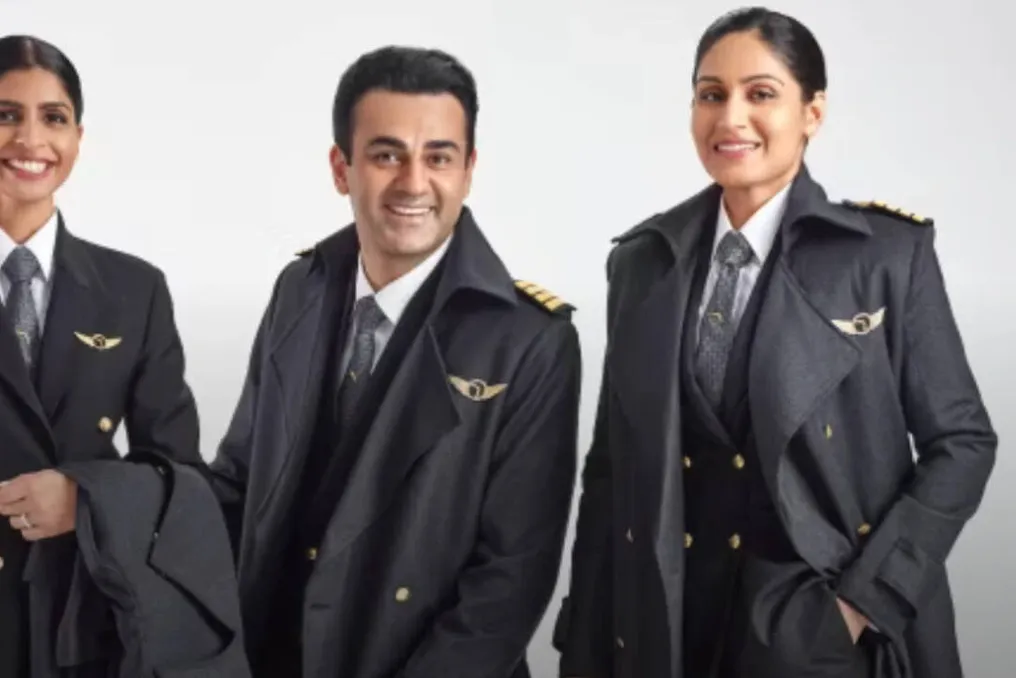

Air India announced on Friday an increase in pilot salaries ranging from 8% to 15%. Captains received the largest increase, followed by a gradual reduction of this raise depending on rank.
The company plans to give top pilots or first officer captains the priority opportunity to be promoted to captains in AI Express (which uses only single-aisle aircraft), and then transition to Air India, where wide-body aircraft are used with higher pay. This is being done to create a 'solid foundation for internal group progression.'
The group has taken various steps to make AI Express more attractive to pilots by improving compensation and addressing staff shortages, especially in the Boeing 737 fleet, as well as to prevent resignations and retain cabin crew.
For a long time, Air India pilots faced a guaranteed payment of 40 hours, meaning they received a minimum amount for that number of hours regardless of actual flight time; meanwhile, IndiGo offers a fixed payment for 70 hours. This situation caused dissatisfaction among pilots. Under the revised system, Air India will maintain the guaranteed payment for 40 flight hours but will increase the flight allowance rates. The rates for flights exceeding 40 hours have also been raised, aligning with industry standards and rewarding performance.
Currently, Air India is resuming international flights that were cut after the Middle East crisis and plans to return to January-February levels next month. However, Pakistan's airspace closure remains a constraint for Indian carriers, forcing them to choose longer routes for flights to and from the West, which leads to increased flight times and a greater need for pilots compared to direct routes used by foreign carriers.
A senior captain flying about 55 hours per month will now earn 8.3 lakh rupees, up from 7.5 lakh rupees currently. A first officer flying the same number of hours will earn 3.3 lakh rupees, which is higher than the current slightly over 3 lakh rupees.
Although the privileged leave was reduced from 30 to 24 days, sources reported that the airline will not account for mandatory weekly rest time provided to pilots according to regulatory requirements, and the new leave structure does not take this into account, which may be perceived as a reduction in leave. There is speculation that IndiGo may also review its leave policy for pilots.
Since the Tata Group took over Air India and AI Express in January 2022, the company has lost over 55,000 crore rupees due to various reasons. The salary increase announced on Friday indicates that management is looking to the future and preparing for growth, having hundreds of aircraft on order, unburdened by a turbulent past.
An official spokesperson stated: 'New career paths, improved compensation and benefits, and quality of life initiatives support the next phase of Air India Group expansion. At the core of these initiatives is a clear, structured, and transparent career path that provides faster opportunities for command positions, long-term advancement, and access to one of the most significant wide-body aircraft growth programs in global aviation.'
Since 2022, the Air India Group has grown from approximately 100 aircraft to nearly 300 and has placed orders for 600 new aircraft, including 80 wide-bodies. Tata is investing in capacity building, including the creation of a modern aviation academy in Gurugram with full-scale Airbus and Boeing simulators, as well as a new flight training school in Amravati, Maharashtra.
The same official spokesperson noted: 'As the Air India Group expands, we are focused on developing and retaining internal talent through a structured promotion model in both Air India Express and Air India. Pilots of Air India and Air India Express will operate within a common seniority system, creating an integrated and transparent career path across the entire group. This system ensures greater transparency of future opportunities while providing a consistent and structured approach to advancement.'
Under the new system, AI Express will serve as the 'primary pathway for pilots aspiring to become captains.' This approach is designed to accelerate opportunities for command positions, allow pilots to gain command experience earlier, and build a solid foundation for internal Group progression.
The official spokesperson added: 'After gaining command experience in AI Express, pilots will have the opportunity to move to Air India and subsequently undertake flights and command tasks on wide-body aircraft. Since 80 wide-body aircraft are still on order and will be introduced in the coming years, Air India offers pilots a long-term path unique in the Indian market.' Furthermore, pilots who agree to support the growing Boeing 737 fleet in Air India Express are offered an additional incentive in the form of a fleet allowance.