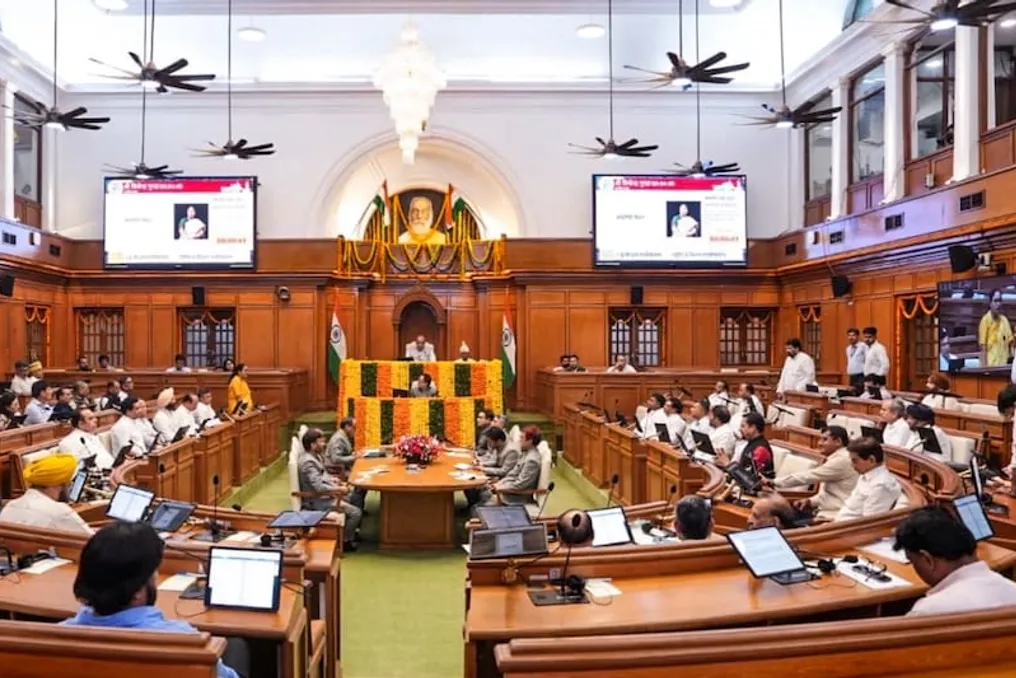
The Delhi government has approved the private university bill. The objective of this legislation is to establish a proper legal framework for the establishment and functioning of private higher education institutions.
According to this bill, the government will be able to issue notifications for the creation of private universities. All such universities must adhere to the standards set by the UGC and other regulatory bodies. Furthermore, they will operate under a unitary model, meaning they cannot grant accreditation to other colleges. Nevertheless, opening new campuses, regional centers, and educational centers is permitted if necessary.
To establish a university, the sponsoring organization must possess valid land or a lease of at least 30 years. It is also necessary to ensure the availability of educational buildings, laboratories, libraries, digital resources, and other facilities required for students. The hiring of faculty and other academic staff will be done in accordance with UGC standards.
The draft law stipulates that 25% of seats in every program must be reserved for Delhi students. Admission to these seats will be conducted according to the existing reservation policy of the Delhi government.
Under the bill, the Minister of Higher Education will act as the university visitor. He will be empowered to request information, conduct inspections, and issue necessary directives in case of rule violations. Audits of administrative, academic, and financial matters may be conducted if needed.
Additionally, secretaries of DHE/DTTE or their appointed representatives will be included in the Governing Council. Their presence is mandatory when making decisions related to government affairs. The draft law emphasizes creating a robust system to prevent the operation of superficial institutions. It includes provisions compliant with the rules of regulatory bodies such as UGC, AICTE, NMC, BCI, NCTE, PCI, and ICAR. Academic collaboration with foreign universities will also be carried out within UGC guidelines.
The Delhi government notes that there was previously no separate legislation for private colleges in the capital. This bill is an important step toward closing this gap and creating a clear regulatory system for private higher education institutions.
Education Minister Aashish Sood stated that in recent years, Delhi children have been forced to seek higher education in other parts of the country or abroad, incurring significant expenses. The government's goal is to ensure access to quality education directly in Delhi so that students have better opportunities in their own city.
The cabinet approved this bill today. It will soon be presented to the Delhi Legislative Assembly. After discussion by the legislators and passage by the legislative body, the path will be cleared for the establishment of private universities in Delhi. The Delhi government continues to follow the National Education Policy 2020 since its introduction. Universities established in Delhi will also comply with the provisions of NEP 2020. The government expresses a clear desire that priority in these universities be given to Delhi children, ensuring them the best opportunity to receive quality education in the capital.