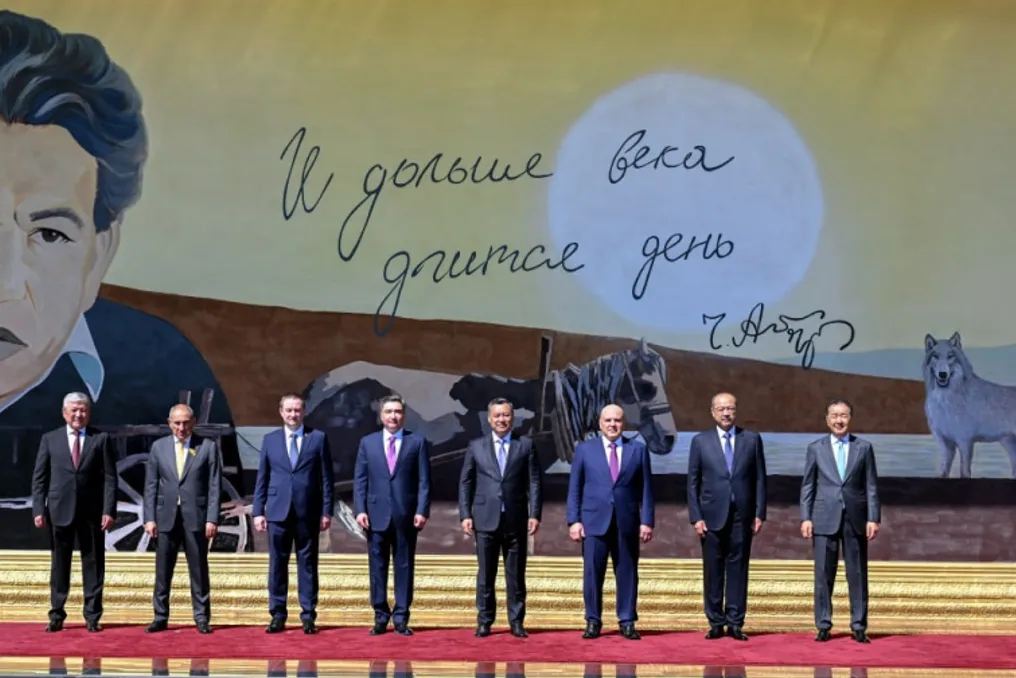
Starting September 1, 2026, a traceability system will be introduced in the states of the Eurasian Economic Union (EAEU) for certain goods. The goal of this system is to increase market transparency and reduce the volume of illegal imports.
Starting September 1, 2026, a traceability system will be introduced in the states of the Eurasian Economic Union (EAEU) for certain goods. The goal of this system is to increase market transparency and reduce the volume of illegal imports.
The Chairman of the Board of the Eurasian Economic Commission, Bakytzhan Sagintayev, presented information on the preparation of this system at an EAEU meeting. He specified that work is currently underway to expand the list of goods subject to mandatory control.
The new mechanism will monitor the entire life cycle of the product—from the moment of its import to final sale. According to participants, this should promote greater openness in trade turnover and ensure more complete collection of tax revenues into the budgets of the union's member countries.
Initially, the system will cover household appliances, including refrigerators, freezers, televisions, and washing machines. There is a possibility of further expanding this list.
The EEC believes that this system will have a positive impact on both the state and businesses. Enterprises will gain additional protection against unfair competition, and consumers will be assured of the legality of the goods they purchase.
The Eurasian Economic Union includes countries such as Russia, Belarus, Kazakhstan, Armenia, and Kyrgyzstan. Additionally, observer countries, including Uzbekistan, Iran, and Cuba, participate in the expanded meeting of the Intergovernmental Council.
Previously, Uzbekistan submitted proposals to the EAEU countries regarding the creation of a common industrial cooperation program and initiated several new directions in the fields of digitalization, tourism, employment, and energy.
Uzbekistan presented several new proposals to the countries of the Eurasian Economic Union (EAEU) concerning digitalization, energy, employment, and tourism, and also initiated the preparation of a joint industrial cooperation program.
These initiatives were voiced by Prime Minister Abdullah Aripov during the meeting of the Eurasian Intergovernmental Council, which took place in Cholpon-Ata, Kyrgyzstan, on August 6–7. Uzbekistan participated in this event as an observer state. During the meeting, Aripov also took part in the meeting between the President of Kyrgyzstan, Sadyr Japarov, and the heads of government of the union member states.
The head of the Government of Uzbekistan proposed creating a general program of industrial interaction. He noted that agreements reached at the 'Innoprom. Central Asia' exhibition, held in Tashkent in the spring, could form the basis for this program. This program is planned to include specific production sites, partner companies, financing mechanisms, and joint projects.
In addition, Uzbekistan put forward the idea of forming a unified digital space to facilitate trade operations between EAEU states. It is planned to ensure mutual recognition of electronic documents and set up information exchange between regulatory bodies.
Aripov paid significant attention to the topic of environmental modernization of industry. He called on the union countries to jointly develop a portfolio of projects aimed at increasing energy efficiency, implementing technologies that comply with environmental standards, and using artificial intelligence solutions to monitor energy consumption.
Another important initiative was the proposal to integrate Uzbekistan's national employment system with the general EAEU system. This is expected to simplify the process of labor migration for citizens. The Uzbek side is ready to conduct consultations with the Eurasian Economic Commission to start this project.
Tashkent also proposed strengthening interaction in the field of tourism through the concept of the 'Central Asia Tourism Belt'. This initiative involves creating a unified calendar of events and cross-border tourist routes.
The Prime Minister emphasized that all the presented proposals are designed to promote practical cooperation between Uzbekistan and the EAEU states, continuing the course set previously by President Shavkat Mirziyoyev. During the meeting with Sadyr Japarov, the heads of government also discussed issues of agricultural and industrial complex development, as well as the access of union countries to financial support mechanisms.
Sadyr Japarov additionally announced that the next Eurasian Economic Forum will take place in Kyrgyzstan in 2027 and suggested inviting partner states and international organizations to it. It should be noted that the current volume of joint projects between Uzbekistan and EAEU states is estimated at over 50 billion dollars.