The Royan Institute has demonstrated its commitment to integrating reproductive health into modern oncological practice, achieving significant progress in the field of pediatric oncofertility. This success was noted after three years of treatment for two young girls diagnosed with Ewing's sarcoma.
Through the application of an advanced surgical procedure, the Royan Institute successfully preserved ovarian function and future fertility potential in both patients. As reported by Royan.org in a press release dated August 3rd, both girls have undergone normal sexual development and continue to show healthy ovarian function.
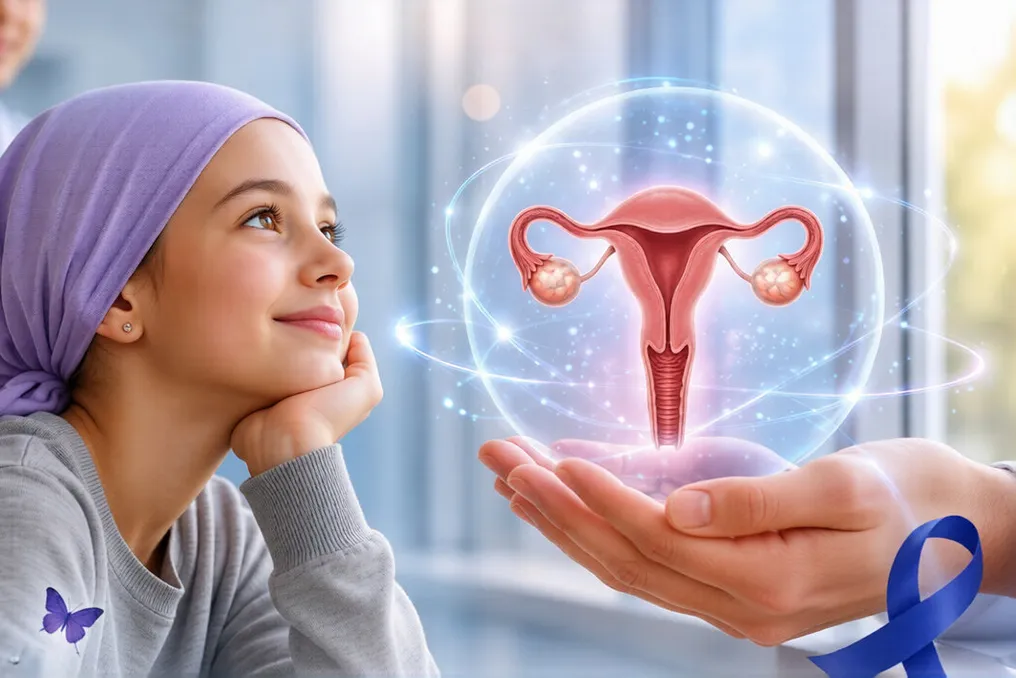
According to the report, specialists at the Institute performed laparoscopic ovarian transposition (LOT) before pelvic radiation therapy on the two girls. This operation was undertaken to protect the ovaries from radiation exposure prior to cancer treatment. Three years after the intervention, the results have been very encouraging: both patients maintain normal ovarian function and their future reproductive potential.
Firouze Ghaffari, a gynecologist, obstetrician-gynecologist, and infertility specialist trained at the Royan Institute, explained that when the cancer diagnosis was made, both patients were pre-pubertal and were scheduled to undergo pelvic radiation therapy. Since pelvic irradiation can cause serious and irreversible damage to the ovaries, leading to premature ovarian insufficiency and permanent infertility, the ovaries were laparoscopically moved outside the radiation zone before treatment began.
Ghaffari noted: 'Now, three years after the surgery, both girls have spontaneously entered puberty, have regular menstrual cycles, and clinical assessments confirm the successful preservation of ovarian function.' She added that 'if this procedure had not been performed, the probability of irreversible ovarian failure and loss of their future fertile potential would have been extremely high.'
Emphasizing the importance of quality of life after cancer survival, Ghaffari pointed out that advancements in oncology have significantly improved long-term survival rates. She stated: 'As survival outcomes improve, preserving fertility, especially in children and adolescents, has become an integral part of modern cancer treatment. Today, our responsibility extends beyond treating the disease; we must also protect the future quality of life of patients, including their ability to have biological children.'
Furthermore, she highlighted that this successful experience demonstrates the importance of early multidisciplinary planning and close collaboration between teams of oncologists, surgeons, and reproductive medicine specialists. Such coordinated care allows not only for effective treatment of the malignancy but also for preserving patients' chances of parenthood in the future.
This achievement serves as an example of the Royan Institute's best practices in oncofertility and fertility preservation for cancer patients. It also marks a significant step forward in strengthening comprehensive supportive care for children and adolescents with malignant diseases, confirming the Institute's commitment to integrating reproductive health into modern oncology.
The Royan Institute was founded in 1991 by the late Dr. Said Kazemi Ashtiani and a group of researchers and physicians from the Academic Center for Education, Culture, and Research (ACECR) of the Iranian University of Medical Sciences as an outpatient surgical center to provide medical services to infertile couples, as well as to conduct research and training in reproductive sciences.
Reproductive biomedicine and stem cell biology have established themselves as one of the most successful scientific projects in Iran and West Asia since 2000. In 2002, the research areas at the Royan Institute also expanded to include stem cell studies. Subsequent scientific findings were adapted for use in regenerative medicine and cellular therapy approaches. Over three decades, the Royan Institute has focused its efforts on increasing the success rate of infertility treatment, as well as public health standards through clinical applications of cell therapy and embryo health.