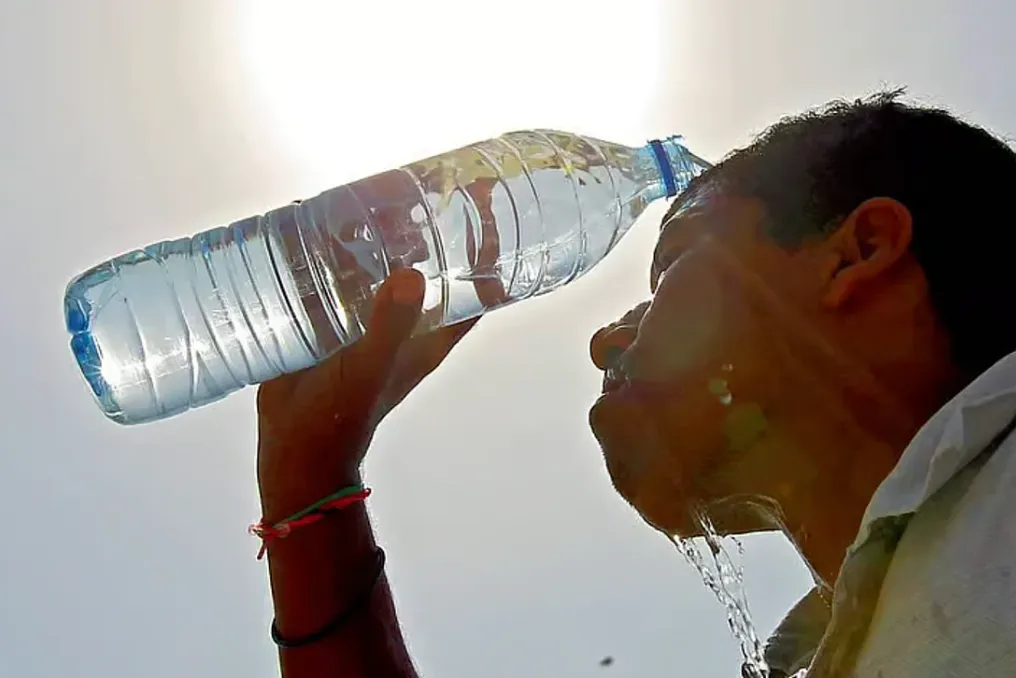
The Ministry of Health and Prevention of the United Arab Emirates (UAE) has published a guide with precautions to protect the population from the dangers of summer heat.
The Ministry of Health and Prevention of the United Arab Emirates (UAE) has published a guide with precautions to protect the population from the dangers of summer heat.
As temperatures rise, a little caution can significantly help in preventing heat exhaustion. The Ministry emphasized that simple steps, such as maintaining water balance, limiting time under direct sunlight, and seeking cooler places, contribute to keeping people safe during scorching summer heat.
It is necessary to stay hydrated throughout the day: one should drink water regularly, even if there is no feeling of thirst, to help the body maintain a healthy fluid level and reduce the risk of heat exhaustion.
It is also recommended to limit exposure to direct sunlight: one should avoid prolonged time under the sun, especially during the hottest hours of the day when temperatures reach their peak.
When choosing clothing, light, loose, and light-colored garments should be preferred, which helps the body stay cool and facilitates heat evaporation.
Whenever possible, one should remain in shaded, well-ventilated, or air-conditioned premises, especially during periods of extreme heat.
When engaging in physical activity, it is important to exercise caution: the intensity and duration of workouts in hot weather must be reduced, and fluids lost through sweat must be replenished before, during, and after exercise.
Heavy outdoor labor should be avoided: strenuous activities or outdoor workouts are better postponed to cooler times of the day.
Furthermore, it is important to monitor the technical condition of the vehicle: in summer, it is recommended to regularly check the car, including tire pressure, to ensure safe driving and minimize the risk of heat-related car problems.
According to data from the National Center for Meteorology (NCM), on Wednesday, August 5, the temperature in the UAE rose to 51.2°C, marking the highest temperature in the country this year, as the UAE experiences unstable weather conditions in the middle of summer.
This extreme reading was recorded in Bududafas in Al Dhafra at 12:45 UAE time. Previously, the highest recorded temperature this year was 50°C, noted in Al Shamwah in Abu Dhabi on August 1.
Experts warn that when parking in the summer heat in the UAE, the temperature inside a car can exceed 60°C. Such high temperatures can cause skin burns and create conditions that impair concentration, slow down driver reaction time, and increase the probability of traffic accidents.
Mustafa Alda, founder of RoadHeroAcademy, noted that the temperature in parked vehicles reaches levels that pose not only a physical danger but also affect the driver's ability to operate the vehicle safely. While the danger of leaving children or pets in a car is well known, specialists point out that extreme heat presents a less obvious risk to the drivers themselves.
Overheated cabins can reduce concentration, contribute to heat exhaustion, place additional strain on the vehicle, and ultimately increase the chance of an accident if drivers do not take preparatory measures before a trip.
A car left in direct sunlight can dangerously heat up in just a few minutes, exposing drivers to extreme cabin temperatures, which endangers both their health and their ability to drive. Alda added that heat exhaustion is a real problem that can significantly affect a driver's ability to remain alert and focused on the road. He emphasized: 'Heat exhaustion is a real thing. Ensuring adequate sleep and proper hydration significantly contributes to the ability to concentrate on safe driving.'
He also noted that human performance decreases with rising temperatures. 'People have working windows. Cognitive functions drop above 26°C, so imagine what happens at 46°C.'
Doctors explained that entering a car parked and heated by the sun creates immediate stress on the body, overloading its natural cooling mechanisms. Dr. Zara Ahmed, an emergency medicine specialist at Rak Hospital, explained that the body reacts by increasing blood flow to the skin and profuse sweating, leading to rapid fluid loss.
She warned: 'Within minutes, people can develop dehydration, dizziness, headaches, nausea, and reduced concentration. Prolonged exposure can lead to heat exhaustion, and in severe cases, heatstroke—a life-threatening condition that can cause organ failure, brain damage, or death if not treated immediately.'
Dr. Joseph Youssef, an internal medicine specialist at Medcare Royal Speciality Hospital, stated that even healthy adults can quickly show symptoms after entering an overheated car. He specified: 'Our natural cooling system depends on sweating and increased blood flow to the skin, but when the surrounding air is extremely hot, these mechanisms become much less effective. As the body fights to dissipate heat, the internal temperature begins to rise, and dehydration can develop quickly.'
He added that people with heart disease, diabetes, respiratory illnesses, and those taking certain medications are at even greater risk.
Experts also pointed out that extreme temperatures put additional strain on the vehicles themselves, making scheduled inspections particularly important during the summer. Alda strongly urged drivers to conduct a quick inspection of the car before every trip, instead of focusing solely on cabin cooling. He recommended paying more attention to listening for any signs of malfunction before a breakdown occurs.
He advised looking for signs of low tire pressure, fluid leaks, loose undercarriage components, and unusual mechanical noises. 'I see many cars driving with loose parts ready to fall off. These parts make noise at speed. Be curious about the sounds your car makes; do not ignore them.'
He warned that detached car parts or tire problems can pose a serious danger to other road users, especially motorcyclists. Thomas Edelmann, founder and CEO of RoadSafetyUAE, advised drivers to pay special attention to tire maintenance in the summer months, as high temperatures increase the risk of tire damage due to neglected pressure or maintenance.
He also recommended that drivers carry drinking water on long trips, regularly check coolant, engine oil, belts, and batteries, monitor the proper functioning of air conditioning systems, and be attentive to road debris that could cause additional accident risks.
Specialists reiterated that children, the elderly, vulnerable adults, and pets should never be left unattended in parked cars, even for a few minutes. Dr. Zahra warned that children heat up much faster than adults, while the elderly, pregnant women, and people with chronic illnesses often have reduced ability to regulate body temperature.
She noted that confusion, fainting, seizures, or loss of consciousness after heat exposure should be considered a medical emergency requiring immediate treatment. Alda also cautioned against leaving family members or pets in running vehicles while the driver steps away, as unexpected electrical failures can lock passengers inside. 'Some cars have electrical faults that cause them to lock without the driver. What will happen to your precious cargo, pet, child, or relative if they are locked in the middle of summer? It is truly not worth the risk.'
He also advised drivers to carefully choose a parking spot, recalling an incident where a neighbor's parked car caught fire due to a suspected electrical fault. 'If your car catches fire in that spot, would you want to be responsible for damaging the building or people because of your actions?'
Doctors advised stopping the journey immediately if dizziness, blurred vision, weakness, confusion, or nausea occurs during a trip. Early signs of heat exhaustion include heavy sweating, headache, intense thirst, fatigue, muscle spasms, and decreased urine output.
If symptoms progress to confusion, seizures, fainting, or loss of consciousness, heatstroke should be suspected, and emergency services should be called immediately while initiating cooling measures. To reduce heat exposure, experts recommend parking in shaded areas, using sun shades for the windshield, venting hot air before entering the cabin, ensuring the cabin has cooled down before starting to drive, maintaining hydration, and never assuming that partially open windows make a parked car safe. They also urged drivers to pay attention to pedestrians, cyclists, and motorcyclists, whose behavior and reactions may also be affected by extreme heat.