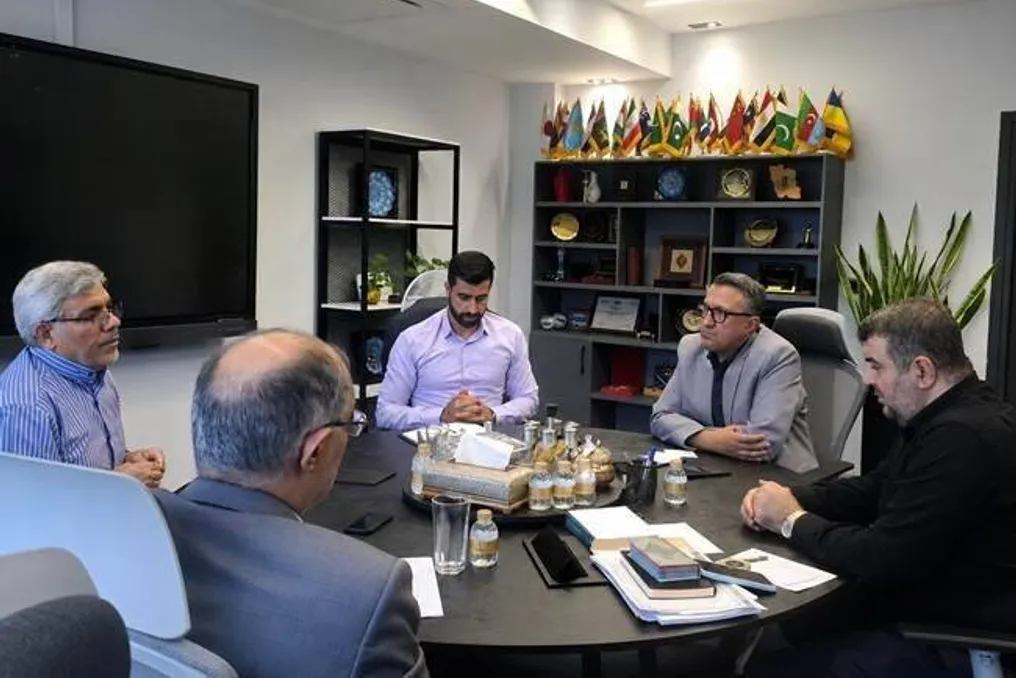
Iraqi officials, during a meeting with the Minister of Science, Research and Technology Hossein Simai-Sarraf, called for expanding scientific, academic, and technological interaction with Iran. This meeting took place in Baghdad on Thursday.
Iraqi officials, during a meeting with the Minister of Science, Research and Technology Hossein Simai-Sarraf, called for expanding scientific, academic, and technological interaction with Iran. This meeting took place in Baghdad on Thursday.
Participants in the negotiations included Haider Abd-Dahd Al-Rubai, Deputy Minister of Higher Education and Scientific Research of Iraq; Abdul Hussein Al-Musawi, Minister of Health of Iraq; and Abdul Hussein Al-Musawi, Acting Minister of Higher Education and Scientific Research, as reported by IRNA.
The parties emphasized the need to accelerate the implementation of previously signed memoranda of understanding. The main areas of discussion included sharing Iran's experience in developing higher education to achieve quantitative and qualitative goals, meeting the needs of Iraq's large youth population, attracting talented Iraqi students, and strengthening research partnerships.
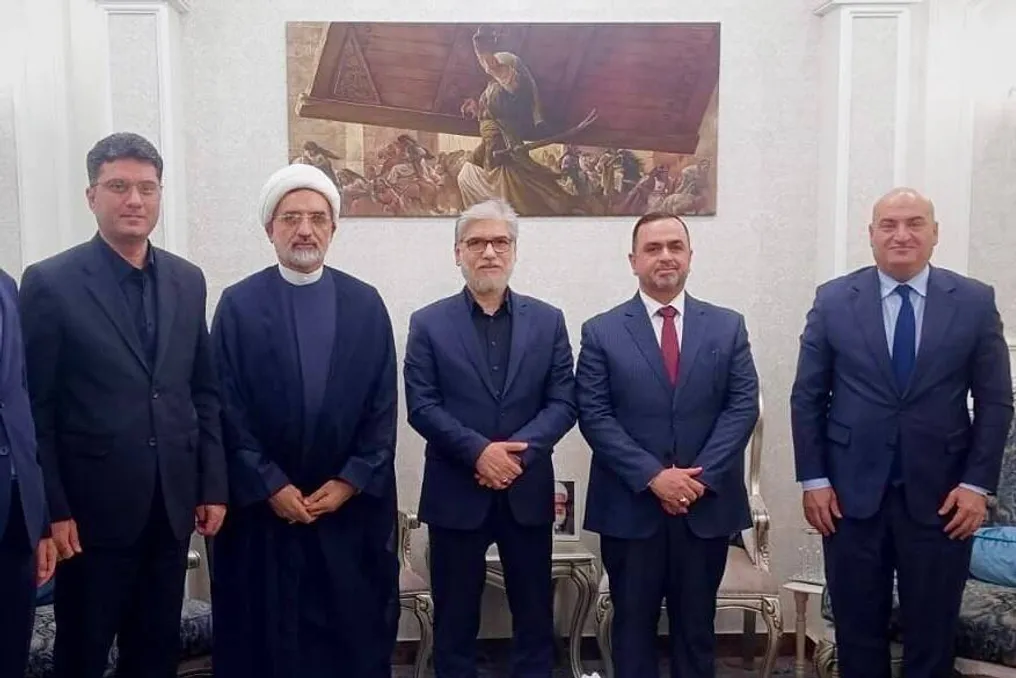
Simai-Sarraf also met with Sayed Ammar Al-Hakim, leader of the National Movement of Wisdom in Iraq. Both sides noted the significant scientific and academic potential of Iran and Iraq, exchanging views on strategies for advancing scientific cooperation, expanding joint research, and developing academic ties between the two countries' universities.
In April, Simai-Sarraf and Al-Aboudi highlighted the necessity of activating scientific and technological cooperation between the two states. Furthermore, ways to develop joint work in the field of artificial intelligence (AI) using the capabilities of both nations were discussed.
During the meeting held in Tehran on April 18, Al-Aboudi stated that the issue of establishing a branch of Tehran University of Medical Sciences in Iraq was included in the agenda. For his part, Simai-Sarraf expressed Iran's readiness to share its scientific, research, and educational achievements with Iraq to improve bilateral relations.
According to the official, Iranian and Iraqi students have already conducted a total of 350 joint research projects, which requires improvement given the available opportunities. Simai-Sarraf mentioned the upcoming Iran-Iraq Science Week, scheduled in the provinces of Isfahan and Fars. He noted that the event was postponed due to the war imposed by the US and Israel but will be held at the earliest opportunity.
As agreed by the two officials, AI and smart education will be topics of discussion at the Iran-Iraq Science Week. This event is expected to serve as a basis for holding a joint AI conference in the near future.
The parties held a meeting in Baghdad in January. During this meeting, the Iraqi minister welcomed Iran's experience in creating science and technology parks. He added: 'During my previous visits to Iran, I visited its science and technology parks and familiarized myself with Iran's impressive capabilities in the technology sector.' He also noted: 'The legal framework for establishing science and technology parks in Iraq has now been developed, and we are ready to utilize Iran's experience in this area.'
Al-Aboudi stressed that strengthening academic cooperation between Iran and Iraq would allow for the synergy of the scientific potentials of both countries to solve common problems. The second Iran-Iraq Science Week took place in Karbala, Iraq, from January 18 to 20, aimed at strengthening bilateral scientific, academic, and technological relations. Both countries signed an action plan to stimulate their scientific cooperation.
This plan was signed by Omid Rezaei-Far, an employee of the Ministry of Science, and Haider Abd Dahd, Deputy Minister of Higher Education and Scientific Research of Iraq. Joint scientific programs were developed focusing on various aspects, including increasing cooperation in providing postgraduate scholarships, especially under the 'study in Iraq' program. They also provided for conducting training courses for professors and students, facilitating joint scientific supervision, faculty exchange for scientific research, and the joint creation of science and technology parks in Iraq under the management of the Iraqi Ministry of Higher Education and Scientific Research.
Representatives from Iran and Belarus discussed ways to develop scientific, technological, and innovative cooperation between Tehran and Minsk. Hossein Rouzbakhsh, head of the Organization for the Development of International Cooperation in Science and Technology, and Mohsen Omidzamani, the Iranian ambassador to Belarus, held talks to advance joint projects.
Rouzbakhsh emphasized the country's high potential, noting that the vice-presidency for science, technology, and knowledge-based economy is a key player in developing the knowledge-based economy in the region, boasting 11,000 knowledge-based companies. He added that this potential could form the basis for effective interaction with Belarus in various technological fields.
Since over a thousand Iranian knowledge-based companies export products to international markets, the official representative stated that expanding joint efforts between companies of both countries, implementing joint technological projects, and promoting technology transfer will be the main directions of cooperation.
Furthermore, Rouzbakhsh noted the strategic opportunity to utilize the potential of the Eurasian Economic Union to expand scientific and technical interaction. He added that leveraging the capabilities of EAEU member states, including Belarus, Russia, Armenia, and Uzbekistan, can promote technological cooperation, the creation of joint innovation networks, and the development of multilateral projects.
He called for resuming work on previous strategic memoranda of understanding, developing joint projects between scientific and technical centers, strengthening cooperation between universities, research centers, and knowledge-based companies, as well as creating sustainable mechanisms for partnership development. Other topics discussed included the exchange of scientific and technological delegations, inviting Belarusian specialists in science and technology to Iran, and conducting mutual visits.
For his part, Omidzamani proposed establishing an economic and technological attaché at the Iranian embassy in Belarus as an effective measure to accelerate relations between companies, scientific centers, and technological institutions in both countries. He noted that the ongoing expansion of economic ties and the prospect of a free trade agreement will open new opportunities for technological and commercial cooperation between Iran and Belarus. Moreover, Omidzamani highlighted Iran's valuable experience and opportunities in healthcare and tourism, stating that both nations can strengthen ties in these areas.
Officials agreed to develop a strategic roadmap for cooperation, emphasizing the need for constant consultations, utilizing the innovation and technology ecosystems of both countries, and expanding scientific and technical interaction within bilateral relations and the regional potential of Eurasia.
In June, Minister of Science, Research and Technology Hossein Simai-Sarraf and Chairman of the State Committee of Belarus for Science and Technology Denis Korzhitsky signed a Memorandum of Understanding (MoU) to expand educational, research, and technological cooperation. The MoU was signed at the 8th meeting of the Joint Belarusian-Iranian Commission for Cooperation in Science, Technology, and Higher Education, held in Minsk.
The Commission defined priority areas for the period 2026–2028: digital economy and artificial intelligence; innovative industrial technologies; biological and medical technologies; innovative solutions in the agro-industrial complex and food industry, as well as the development and deepening of the study of languages and literature of both countries.
In addition, both sides expressed readiness to hold a joint competition of scientific and technical projects during the 2026–2028 period. A meeting protocol was signed after discussions.
Before the meeting, the Minister of Education of Belarus, Andrey Ivanets, held talks with Simai-Sarraf. The official hoped that the meeting would serve as a basis for expanding scientific and technical cooperation between the two states.
The Iranian minister, in turn, stressed the strategic importance of the SCO and called for strengthening cooperation among member states in the technological sector to meet the common needs of each nation.
In May, Ivanets announced in a phone conversation with Simai-Sarraf his country's readiness to support scientific and educational ties with Iran. He expressed solidarity with the Iranians following attacks by the US and Israel on Iran and stated a willingness to expand cooperation through joint research projects and student exchanges.
Highlighting Iran's scientific capabilities, Simai-Sarraf noted that Iran's higher education system is primarily focused on developing technology and innovation, and the country currently has 160 science and technology parks operating. The official invited Ivanets to visit Iran to familiarize himself with the science and technology parks and universities, which would contribute to strengthening ties.
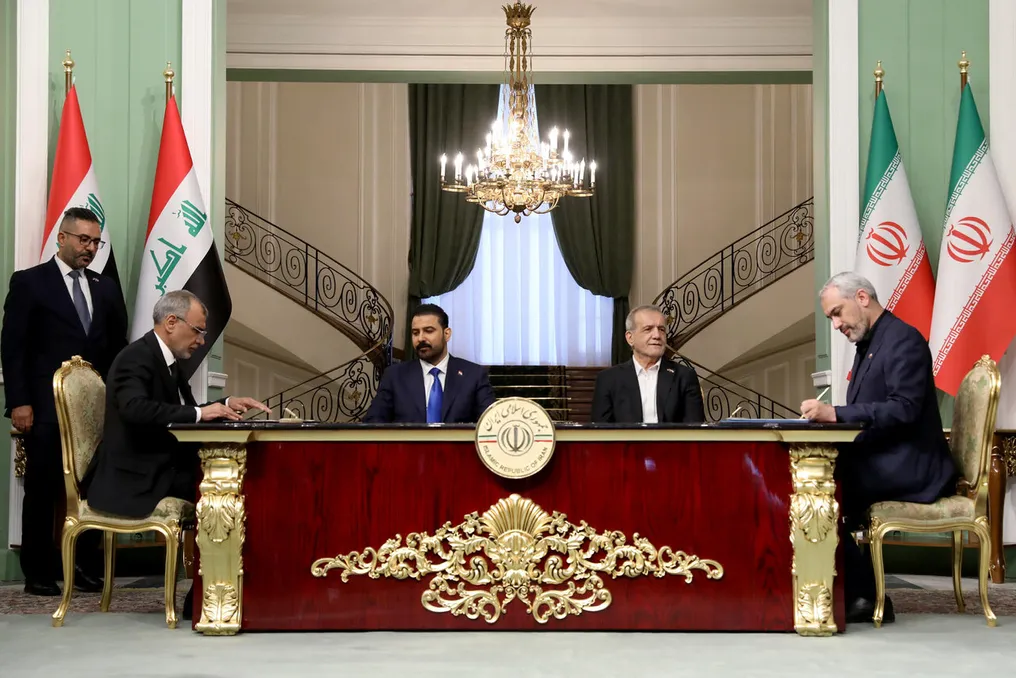
High-ranking officials from Iran and Iraq signed four cooperation agreements and memoranda of understanding aimed at enhancing bilateral relations between the two states.
During the official visit of Iraqi Prime Minister Ali Falih al-Zaydi and a high-level delegation to Tehran, in the presence of the heads of both countries, four documents were signed. These documents include an agreement on road transport of goods, a memorandum on the construction of the Hosravi – Hanakin – Baghdad railway, a memorandum of sister cities between Tehran and Baghdad, and a memorandum on public administration, education, and human resources.
Ali Falih al-Zaydi arrived in Tehran on Thursday, July 23. According to IRNA, he came as part of an official visit invited by Iranian President Masoud Pezeshkian. Upon arrival, he was met by the Minister of Economy and head of the Iran-Iraq Joint Economic Committee, Sajjad Ali Madanizadeh.
Previously, the Iraqi Prime Minister stated that during his trip to Tehran, he intends to discuss general issues and ways to strengthen bilateral cooperation with high-ranking Iranian officials. In a post on the social network X, al-Zaydi noted that his visit is dedicated to meeting with high-ranking officials of the Islamic Republic of Iran to discuss important bilateral issues, joint cooperation, consultations on regional problems, and the aspiration to strengthen regional security and stability.
Al-Zaydi emphasized that Iraq and Iran share historical and civilizational ties, a common border, and mutual interests. He stated that these commonalities are based on cooperation, dialogue, and mutual respect, contributing to the growth and prosperity of both countries, as well as supporting global and regional stability.
The Iraqi Ambassador to Iran, Yasser Abdulzahra Al-Hajjaj, confirmed Baghdad's commitment to strengthening ties with Tehran. He characterized the relationship between the neighboring countries as rooted in centuries of history, civilization, and cultural proximity, emphasizing that Iraq's foreign policy is based on balanced regional engagement, dialogue, and mutual respect.
In an article published by the Iraqi News Agency (INA) before Prime Minister Ali al-Zaydi's visit, Al-Hajjaj expressed honor in representing Iraq in a country with deep historical, geographical, cultural, and religious ties to Iraq. He noted that Iraq views its region as strategic depth and a key partner in building a more prosperous future. In his view, long-term regional stability is only possible through cooperation, dialogue, and strengthening trust between neighboring states.
The diplomat stressed that relations between Iraq and Iran have significantly expanded in recent years in political, economic, cultural, and social spheres due to strong people-to-people ties and shared historical heritage. He believes that bilateral relations have great potential to move to a more advanced stage focused on expanding economic partnerships, stimulating investment, increasing trade, and improving cooperation in transport, connectivity, and energy projects.
Al-Hajjaj specifically noted that Baghdad adheres to a balanced foreign policy based on national interests, openness to all countries, and avoidance of regional polarization. He believes that dialogue remains the most effective way to resolve disputes, and regional cooperation provides the most reliable guarantee of lasting peace and stability. The ambassador also mentioned Iran's significant soft power, stemming from its ancient civilization and extensive cultural connections.
He named relations with Iran as one of Iraq's main foreign policy priorities due to their political, economic, and social importance. Al-Hajjaj emphasized that Prime Minister Ali al-Zaydi's visit reflects Baghdad's determination to deepen bilateral ties, expand strategic partnership, and enhance coordination on common issues. Furthermore, he pointed out that the ties between the peoples of the two countries are maintained not only through diplomatic contacts but also through numerous humanitarian and cultural events, including the participation of Iraqis in mourning ceremonies in Iran for the late Iranian leader Ayatollah Seyyed Ali Khamenei, which demonstrated respect and the depth of popular bonds.