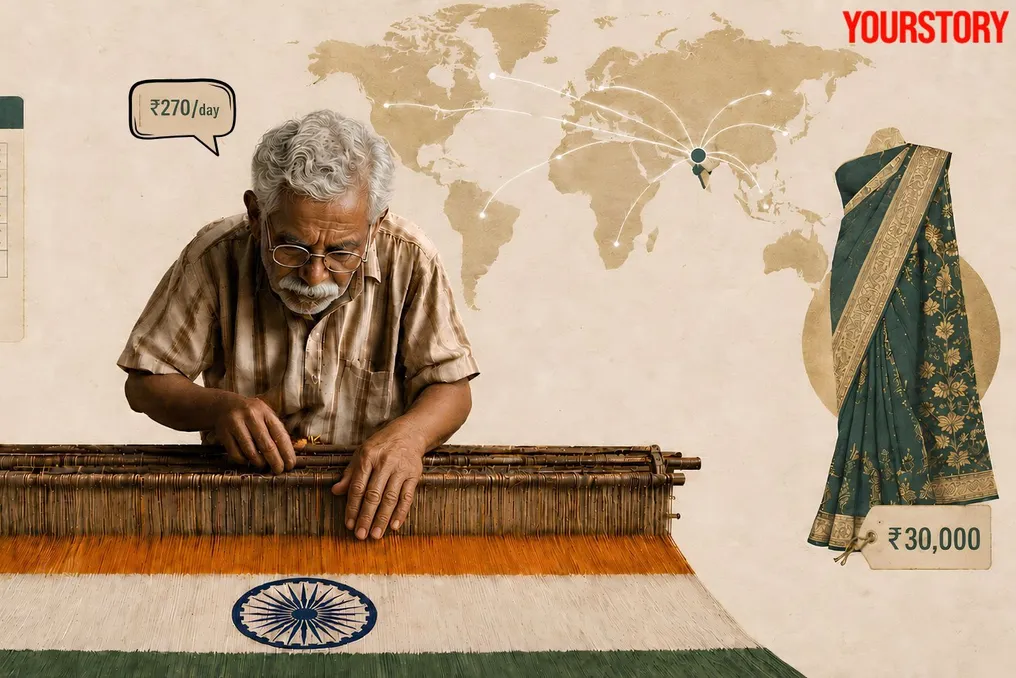
India has achieved a unique success among industrializing nations by preserving traditional weaving methods that have disappeared or declined in other textile economies. More than 120 years after the start of the Swadeshi Movement, which placed the loom at the center of economic self-sufficiency, millions of Indian families continue to use these techniques.
[ ]
Similar stories
Popular
The Union Minister for Textiles, Giriraj Singh, informed Rajya Sabha in March 2026 that about 95% of the world's handloom products are produced in India, with approximately 35.22 lakh weavers and associated workers, and over 28 lakh looms in the country. This is a reason to celebrate on National Handloom Day.
However, mere survival does not equate to prosperity, as the workforce is shrinking. According to the Third Handloom Census, 43.32 lakh workers were registered in 2010–2011, while the Fourth Census showed a decline to 35.2 lakh between 2019–20. India has preserved the skill, but it has not yet created the economic base that can support the people.
Although a handwoven Kanjeevaram saree can sell for ₹30,000 or more, a study of handloom enterprises and crafts in five states, published in May 2026 by the Institute of Human Development and the Crafts Council of India, established an average added value of approximately ₹7,000 per worker per month, or about ₹270 per day. These two figures cannot be directly compared because the retail price of a saree includes silk, zari, dyeing, pre-weaving preparation, design, working capital, inventory storage, and retail overheads, which are distributed among numerous participants. The figure of ₹7,000 is an average for one worker across two sectors and five states, not net wages for a specific item.
Nevertheless, this contrast points to a real problem: value accumulates as the fabric moves toward the exhibition hall, while the economic situation of the person at the loom remains unchanged. The macroeconomic picture reflects the micro-level: in the fiscal year 2025–26, India exported handloom products worth ₹1,359 crore out of a total of textiles, apparel, and crafts worth ₹3.25 lakh crore, accounting for only about 0.42%. For a country that produces a large portion of the world's woven cloth, this is a very small share of its own textile revenue.
The handloom census data contains a metric that better explains weavers' earnings than any arguments about wage rates, and this metric is rarely cited. The Fourth Census records an average weaving activity of 208 days per year per person: 262 days in urban areas and 201 days in rural areas. This is an improvement compared to the 183 working days recorded in the Third Census. However, even with 201 days in villages where 88.7% of weaver households reside, the rural weaver still stands idle for about two out of five days. This changes the focus of the problem: low income is largely an issue of order flow, not just insufficient payment per unit, and the order flow depends on design institutions, export channels, and market linkages.
Any intervention in the handloom sector must be evaluated on three criteria: does it increase the number of paid days at the loom, does it increase the share of value reaching the artisan, and does it make this income more predictable. Women constitute 72.29% of India's handloom workforce, or over 25 lakh workers. Nevertheless, in July 2025, the Ministry of Textiles stated that it had not conducted a special study on the income and working conditions of female weavers, which is a serious oversight. Since women dominate the workforce, policy in this area must track their earnings, paid days, and the effectiveness of improving their income through finance, technology, and market access.
Women's income cannot be considered merely an indirect result; it must become a key indicator. It is easy to blame intermediaries for the gap between the retail price and the weaver's income, but reality is more complex. Master weavers, contractors, and traders finance yarn procurement, disseminate designs, control quality, and assume market risks. Eliminating them without replacing these functions will lead to a deterioration of the weaver household's condition, not an improvement.
The core problem lies in the imbalance of information and bargaining power. The artisan possesses production knowledge and technical skill, while the intermediary controls customer relationships, order flows, wholesale prices, and design trends. Limited only to production, weavers lack pricing leverage and everything the fabric brings in subsequent stages. Financial isolation exacerbates the situation: less than a quarter of the 26.73 lakh weavers counted in the census had bank accounts, and only about 4% were insured. A household without a bank account cannot easily receive payment from a remote buyer, cannot build a credit history, and has few alternatives for those who pay cash at the door. The solution is not to eliminate intermediaries, but to create institutions that provide weavers with visibility, bargaining power, and a share of the final profit.
Since mechanical looms always produce fabric faster and cheaper, the economic question for handloom boils down to whether buyers can reliably distinguish authentic handloom products from cheaper alternatives, and whether the premium they pay for authenticity reaches the loom itself. India has attempted to solve this problem twice through certification. The Handloom Mark, introduced in 2006, certified authenticity, and the India Handloom Brand, launched on the first National Handloom Day in 2015 for zero-defect and eco-friendly products, ensured quality control. By August 2024, 1,998 registrations had been issued across 184 product categories—a significant achievement in standardization, as well as about 220 registrations per year in a sector with 35 lakh workers.
The conclusion is not that branding was the wrong tool, but that the mark itself does not generate orders. Certification tells the buyer that the fabric is genuine, but it does not bring the buyer to the fabric. Therefore, certification should be evaluated not only by the number of registrations issued but also by whether it creates buyer trust, higher realized prices, and repeat orders for certified producers.
Market programs have significantly expanded geographical reach, and the state has also created its own channel: the Commissioner for Development (Handloom) manages the India Handmade portal, intended for weavers to sell without intermediaries, alongside listings of weavers on the State e-Marketplace. However, reach cannot be confused with income. On any platform, the default seller is usually not an individual weaver, but a cooperative, brand, master weaver, or aggregator. Sales growth of an account demonstrates channel efficiency, not an increase in the per-unit rate at the loom, and platform metrics rarely disclose net payouts after commissions, logistics, returns, and aggregator margins. The solution applies equally to private and public platforms: there must be an annual assessment of the artisans' economy published, showing how many weavers were paid, how much money they received, how fast, and what the per-unit price was.
India has schemes to support handloom, and it is no longer accurate to claim that government reporting only accounts for investments. In the materials for this year's National Handloom Day, the Ministry of Textiles published something more useful than counting deployed looms: data on how these interventions affected earnings. Moving a household from ₹9,600 to ₹15,000 per month allows it to overcome the threshold that holds back most of the sector; according to the latest census, 66.3% of weaver households earned less than ₹5,000 per month. Interventions are working, and the government can now demonstrate this.
The gap is in coverage. Between 2021–22 and June 2026, over 40,000 Weaver MUDRA loans worth over ₹280 crore, averaging about ₹70,000, were approved, covering approximately 1.1% of the census workforce. In 2025–26, ₹94 crore was allocated for workshops, looms, accessories, and electronic jacquards. During the same period, 357 small clusters were approved, and ₹370.72 crore reached 162,682 weavers through mega-clusters. For 2026–27, the National Handloom Development Programme provides ₹205 crore, and the Raw Material Supply Scheme provides ₹200 crore.
The situation shows that proven interventions have reached only a small fraction of those who could benefit, which is a different, more manageable problem. The question for the next cycle is not what works, but what is needed to provide electronic jacquards or proper workshops to the remaining 99%. Time is critical: the current program cycle runs until 2025–26, so anything that follows can be benchmarked against metrics that the Ministry can now show.
India has 29 Weaver Service Centers, confirmed by the Textile Minister in June 2026, as well as a network of Indian Institutes of Handloom Technology. They possess deep capabilities in CAD design, dyeing, and loom upgrading, and cluster guidelines already allocate up to ₹15 lakh for a designer-marketer within a limit of ₹2 crore per cluster. Infrastructure and budgetary lines exist; what remains invisible is any published metric of what they are producing commercially. Each center could take on specific cluster nodes and remain involved from product development to repeat orders, being evaluated by products brought to market, converted export orders, and documented change in artisan net income. This would transform existing technical institutions into accountable commercial bridges between government investment and actual order flow. The key metric is: are there more paid days on the loom?
A new institution has been created for this purpose. The Centre of Excellence in Handloom Technology was opened at IIT Delhi on August 3, 2026, with an investment of ₹11.99 crore by the Government of India, launching the Handloom 4.0 productivity application, the Handloom e-Vidya training platform, and the HandloomX sector startup accelerator. It plans to train at least 1,000 people over five years. The agenda is correct; the question is about scaling early on.
The financial problem arises even before the product reaches the buyer. A confirmed order can still leave the weaver household dependent on whoever is willing to provide funds for yarn, dyes, and wages while the product goes through production and retail. A larger opportunity for startups lies in the label, in the backend infrastructure of clusters: financing orders for procurement under confirmed brands, which reduces dependence on working capital tied to who supplies the yarn; standardized quality control to prevent substitution with mechanical looms; joint export documentation; and payment systems that pay weavers within days of delivery, not after retail settlement. Technology should not try to automate handloom; it should eliminate the economic uncertainty surrounding it. Here, formal finance can go beyond loans tied to individual recipients. If confirmed orders can become bankable assets, working capital can follow demand, rather than forcing the artisan to bear the risk before the product is sold. There is also a demand lever already enshrined in law and rarely discussed: central government agencies must procure at least 20% of their textile needs from handloom producers, including cooperatives, self-help group federations, manufacturing companies, and weavers holding Pehchan cards. This is the largest guaranteed order book available to the sector, and the question of how compliance looks agency by agency deserves consideration.
The infrastructure for a more commercially accountable handloom economy is largely ready: over 200 handloom manufacturing companies established between 2020–21 and 2026–27, 29 Weaver Service Centers, a new Centre of Excellence, a state e-commerce channel, a procurement mandate, and, for the first time, published evidence of which interventions increase weaver income. The e-Pehchan portal, launched in January 2025, creates a level of identification that will allow income measurement at the individual level, not the scheme level.
According to data from TankerTrackers.com, which monitors oil supplies, a 'secret ship-to-ship transfer' of oil from Persian Gulf countries is currently taking place.
The company reported that a fleet of 'visually identified tankers' is operating without a digital footprint to support the export of oil from Arab states bordering Iran.
These vessels pass through the Strait of Hormuz to conduct covert oil transfer operations between ships in the Gulf of Oman. This activity, according to the source, contributes to ensuring the availability of summer holidays.
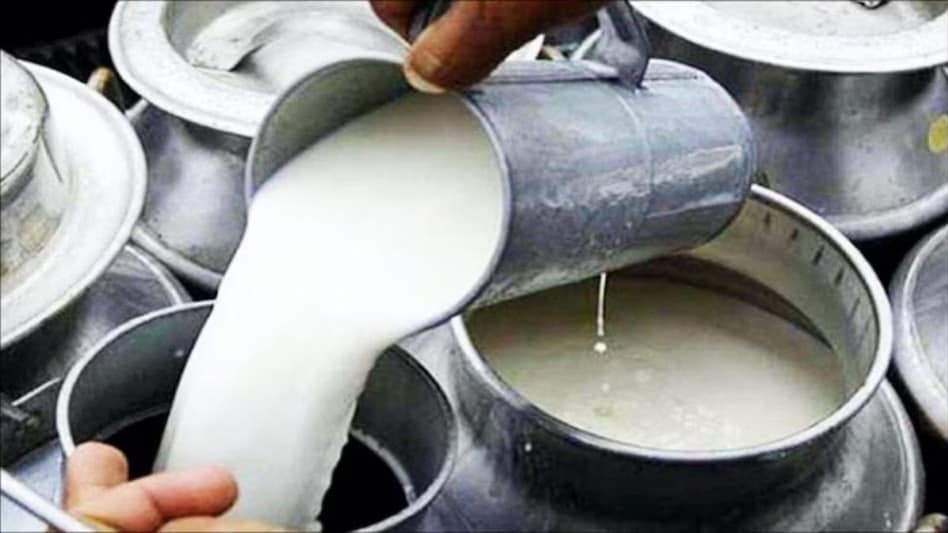
An increase in milk prices is expected in Maharashtra. Starting on Tuesday, August 11, the cost of both cow and buffalo milk will rise by 2 rupees per liter. This decision was made after approval from representatives of major cooperative and private dairy farms.
According to the information, this resolution was adopted at a meeting of the 'Milk Producers and Processors Welfare Association'. Gopalarao Mhaske chaired the meeting.
The association reported that the price hike is due to an increase in diesel fuel costs by 10 rupees per liter, as well as an approximate 30 percent rise in packaging expenses. Furthermore, the purchase price for milk has increased, and further growth is anticipated.
Given the rising costs, the Association decided to raise the selling price of milk by 2 rupees per liter, and the prices of dairy products by up to 10 percent. The new rates will come into effect on August 11.
Meanwhile, counterfeit milk is actively being sold in Maharashtra. The Maharashtra FDA Department continues to take action against this. Inspections are conducted daily in over 20 locations. To date, more than 1131 inspections have been carried out, during which products worth about 49.57 crore rupees were seized, and about 1.6 lakh liters of suspicious counterfeit milk were found.
Recently, the Commissioner of the Food and Drug Control Department of Maharashtra (FDA), Tukaram Mundhe, made several shocking statements regarding synthetic milk. He stated that some people prepare fake milk and mix it with real milk for sale.
In one podcast, the commissioner explained that some use components such as skimmed dry milk powder, chemicals, emulsifiers, caustic soda, and even shampoo to create a mixture that is externally indistinguishable from real milk. Such a product is significantly cheaper than natural milk.
Commissioner Tukaram noted that synthetic milk resembling cow's milk can cost around 15 rupees per liter, while buffalo-like milk prepared in this manner can cost approximately 30 rupees per liter.
The design team described the site of the HOURS Commercial Building, located in a narrow alley less than six meters wide. This plot faces the Daehyeon Elementary School to the south and is near the Hwimun High School and Samseong Station to the north. This unique location favors uses such as educational facilities or corporate offices that prioritize parking over street visibility.
The open facade provided by the adjacent school is considered an advantage but necessitates careful management of both visual privacy and noise levels. The client desired a building that was highly functional and flexible, capable of meeting local demand while respecting the existing context.
From the outset, the project approach focused on renovation rather than new construction, with the clear objective of reducing costs, decreasing execution time, and minimizing any negative impact on the neighborhood.
The architectural team at See Architects identified three central challenges in the undertaking. The first was maximizing marketable area: this was achieved by adding two floors vertically through increasing the utilization coefficient, without altering the projections of the existing floors, which avoided high expenses for updating fire safety systems. The new upper floors were designed with a ceiling height exceeding four meters, and the original pilotis structure was maintained to ensure spaces for up to eleven vehicles, raising the utilization coefficient to 230%.
The second challenge was visibility. Since the old building was less than three meters from the lot line, there was a risk of being obscured by future neighboring developments. To resolve this robustly, See Architects extended a concrete portico, accentuating vertical and horizontal lines, to the exact limit of the land. This new space created between the portico and the building functioned as an intermediate zone between the architecture and the city, also acting as a psychological and visual barrier relative to the school located to the south.
The third point addressed was efficiency. By limiting the demolition of primary structural components, both the timeline and cost of the work were reduced by less than half compared to a complete reconstruction. The decision for renovation was strategic. Exposed concrete finishing was applied to the portico elements, while gray ceramic bricks covered the surfaces of the pre-existing building. This material distinction helps make the structural logic legible and differentiates the building from the surrounding residential environment, which is made of red bricks.
Initially, the planned portico was a freestanding vertical wall set two meters away from the facade. However, during the licensing process, regulatory authorities expressed concern about the unauthorized enclosure of this intermediate space. The See Architects team managed to turn this limitation into an opportunity: the portico was redesigned to start integrated with the facade on the lower levels and progress gradually on each floor. Thus, what was merely a vertical element began to resemble a three-dimensional urban sculpture, viewed as a rhythmic front grid and a distinct volumetric presence.