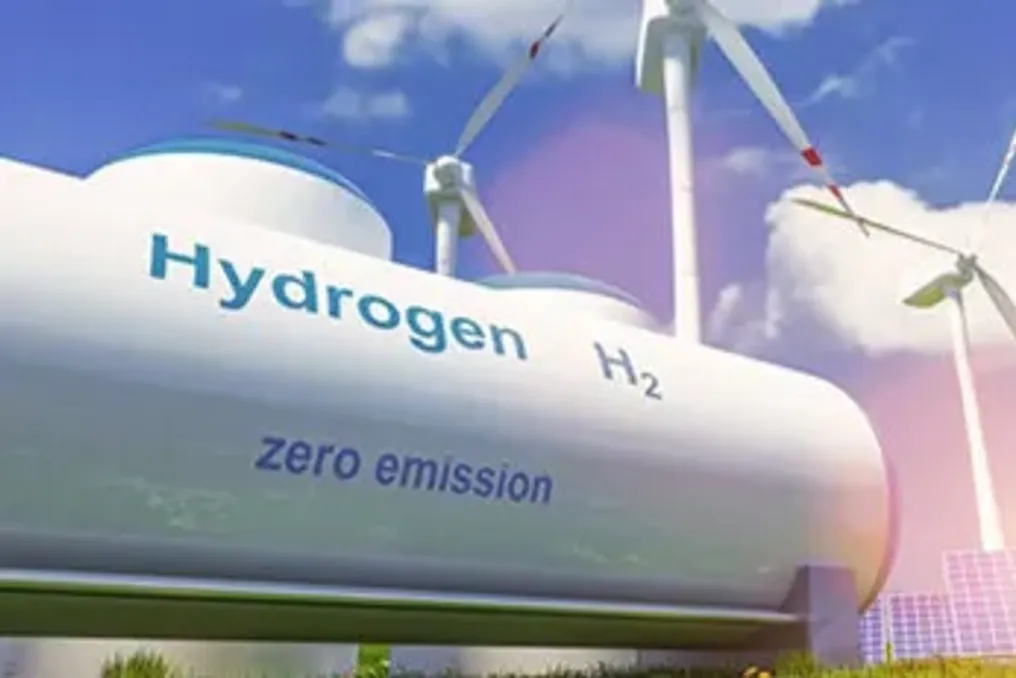
South Africa has invested 3 billion rand into the SA-H2 fund, which is designed to promote commercially viable hydrogen projects and stimulate the green economy.
Professor Samson Mamphela, head of the Department and Secretariat for Energy Innovation at Sanedi, noted that South Africa has the potential to develop large-scale hydrogen technologies due to holding 70% of the world's platinum group metal reserves.
The 3 billion rand funding was provided by leading South African financial institutions and several foreign development finance groups. The SA-H2 fund focuses on energy transition projects across the entire value chain of green hydrogen.
This chain includes the production of green hydrogen, as well as derivative products such as green ammonia and green methanol, as well as the decarbonization of hard-to-abate industries. Green hydrogen is produced through the electrolysis of water using renewable energy sources, such as solar or wind.
Energy
Mphokolo Makara, CEO of SA-H2 Fund Managers, stated that the presence of world-class renewable resources, a strong industrial base, and growing demand for low-carbon fuel allow the country to play a significant role in the green hydrogen economy.
He emphasized that through SA-H2, a portfolio of commercially viable projects is being developed that will help decarbonize industry, ensure long-term economic growth, and support a just energy transition.
Currently, the SA-H2 Fund has concluded development finance agreements with Green Efuels Producers, which is building a wastewater-to-green-methanol plant in Gauteng, and with Hive Hydrogen Coega Green Ammonia Project, which is the country's first large-scale green ammonia production facility.
The SA-H2 Fund operates as a blended finance mechanism, combining public and private capital to balance risks and secure institutional investment. It consists of a Development Tranche, which provides seed capital and technical assistance to prepare projects for final investment decisions, and Blended Equity Tranches, which facilitate the transition from financial close to project construction.
Commitments for the Development Tranche were secured from Invest International and the European Commission under its Global Gateway strategy, as well as from the Industrial Development Corporation of South Africa (IDC).
Meanwhile, commitments for the Equity Tranches came from the Public Investment Corporation (PIC) on behalf of the Government Employees Pension Fund (GEPF), Sanlam Life Insurance, Invest International, and the European Commission, with additional support from the Development Bank of Southern Africa (DBSA).
The fund's first closing reflects growing investor confidence in green hydrogen and its derivatives as a solution for decarbonizing hard-to-abate sectors, including steel, fertilizers, e-fuels, and chemicals. Andrew Johnston, CEO of Climate Fund Managers, stressed that industrial decarbonization requires solutions beyond electrification, and green hydrogen plays a critical role in this transition.
"With Climate Investor Three, we are developing and scaling projects that enable industrial consumers to switch to low-carbon alternatives. This first closing reflects confidence in our blended finance model and our experience in developing and scaling infrastructure projects in emerging markets to an institutional asset level," he said.
Jeroen Plag, Investment Director at Invest International, noted that the multi-tiered capital structure allows for more efficient capital allocation, reducing risks at early development stages and mobilizing institutional investment in large volumes. He added: "This supports investment-ready projects and creates long-term value in the energy transition."