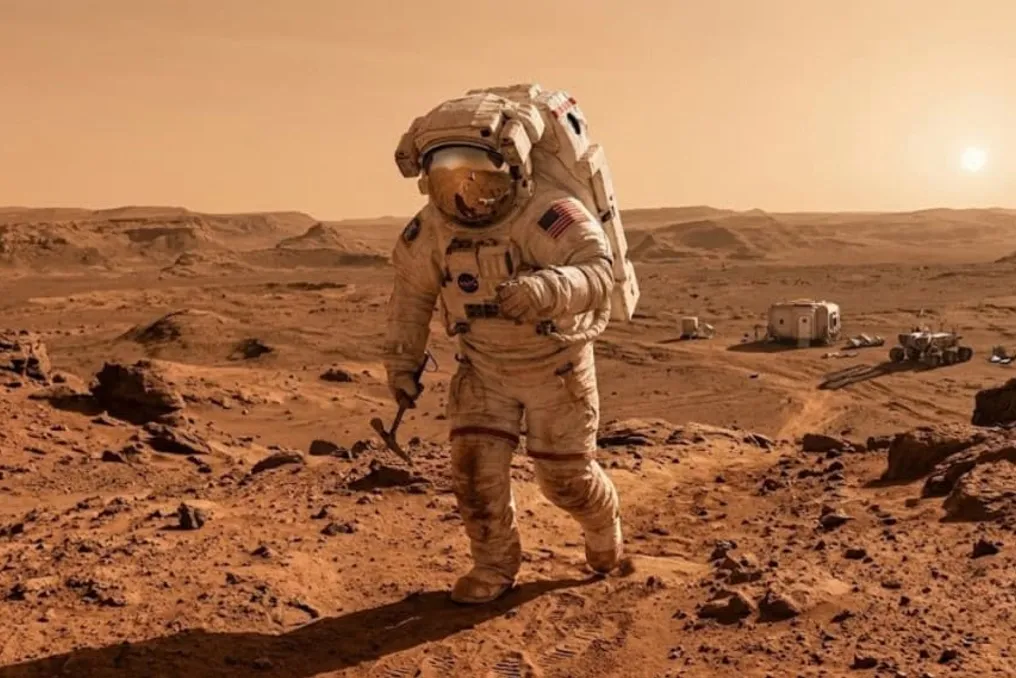
Mars dust represents one of the most serious challenges for future crewed missions to the planet. Beyond the difficulties of landing and sustaining life for astronauts on the Martian surface, scientists warn that inhaling these particles could pose a health threat due to the presence of toxic compounds, heavy metals, and other potentially carcinogenic substances.
To prepare for this situation, NASA formed the Martian Dust Limit Working Group this year. This group of experts is responsible for assessing the risks associated with Martian dust and developing safe exposure limits for astronauts.
According to the group's report, the initial safety standard must balance caution with the operational feasibility of future missions, but it will need to be updated as new data and research findings about Mars become available.
Although Martian dust is less abrasive than lunar dust, its chemical composition is considered more alarming. Brian Hynick, a professor in the Department of Earth Sciences at the University of Colorado (USA) and a member of the working group, explains to Space.com that Martian particles are rounder but contain substances absent in lunar regolith.
Among these are perchlorates—chemical compounds considered harmful to the body—as well as silicates and various heavy metals, some of which are linked to cancer development. According to Hynick, the risks may extend beyond simple dust inhalation. He notes: 'There are discussions about growing food on Mars. The Martian soil is full of these dangerous chemical compounds. Astronauts might be exposed to more from what they grow than from airborne dust.'
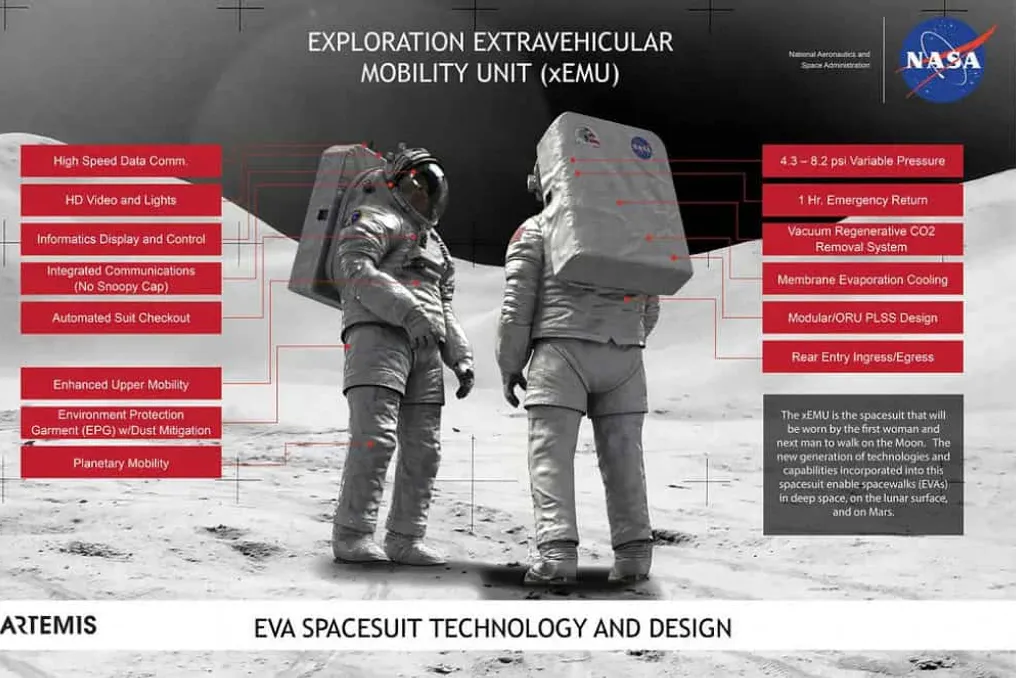
NASA's concerns are largely informed by the Apollo missions. Astronauts who walked on the Moon encountered various problems caused by lunar dust, which consists of extremely fine and sharp particles. This dust adhered to spacesuits, wore down equipment, compromised sealed systems, caused instrument overheating, and irritated the crew's eyes and lungs.
Despite these similarities, Hynick emphasizes that Mars presents a different challenge. He states: 'We can use the knowledge gained on the Moon, but Mars is an entirely different place.'
Another issue is preventing particles from entering the modules where astronauts will live. Experts believe there will always be dust adhering to suits and equipment used during extravehicular activities. In a closed, low-humidity environment, these particles can remain suspended in the air longer, increasing the risk of repeated inhalation over days or weeks. Therefore, engineers are studying air filtration systems and methods for rapidly removing dust from inside living quarters.
More Details:
Shonun Morrison, a professor at Rutgers University (USA) and a member of the NASA working group, asserts that the best approach is to prevent dust from entering habitable environments. She explained: 'The best strategy is prevention. As much dust as possible should be left outside the habitat module, removed quickly if it enters, airborne particles controlled, and the system designed so that the crew does not depend on medical treatment after exposure.'
She also points out that the agency currently lacks actual samples of dust carried by Martian winds. Consequently, current research utilizes information obtained from probes and robots sent to Mars, testing materials that mimic the planet's soil, and knowledge gained from lunar dust.
Joel Levin, a researcher from William & Mary and a lunar dust specialist, views it positively that this topic has been included in the planning for future crewed missions. According to a recent report by the National Academy of Sciences of the USA, two priorities have been identified: understanding how dust storms arise and develop on Mars, and studying the impact of these particles on both astronauts and equipment.
Levin argues that bringing Martian soil samples back to Earth would be fundamental for better characterizing the dust composition. However, he notes that due to uncertainty regarding a sample return mission from Mars, this material may never reach ground laboratories for analysis. Without these samples, NASA will continue to apply conservative criteria to protect the health of future crews exploring the Red Planet.