Despite its apparent affordability, a low purchase price can result in significantly higher costs over several months or years.
Despite its apparent affordability, a low purchase price can result in significantly higher costs over several months or years.
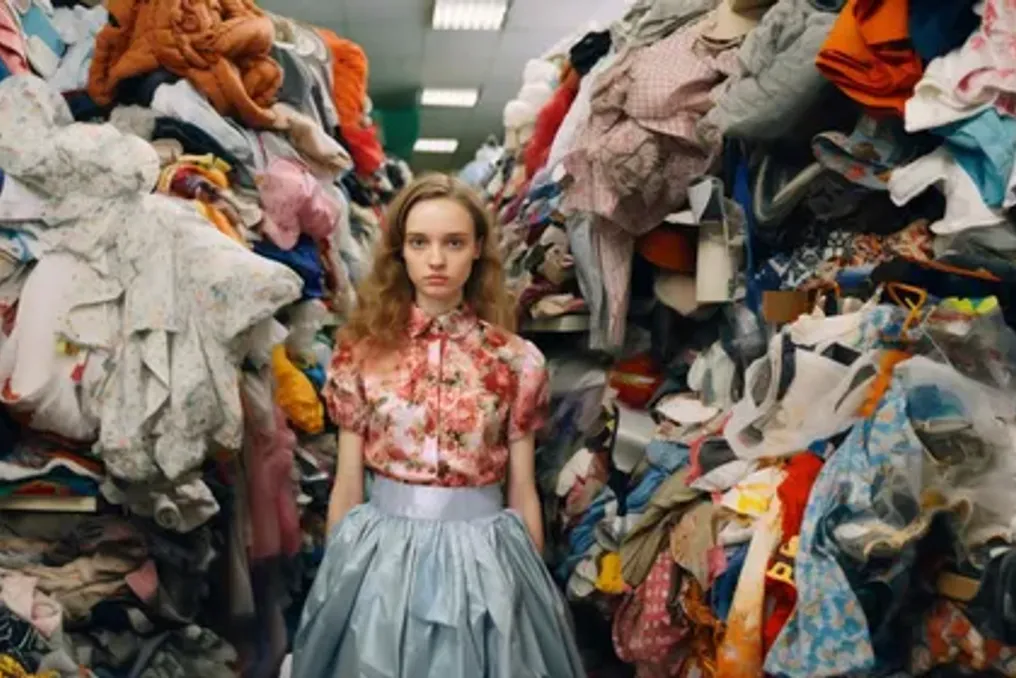
If a buyer purchases a t-shirt due to a discount and then discovers that it has stretched, faded, or lost its shape after a few washes, they have encountered one of the main problems of fast fashion. Fast fashion has simplified keeping up with changing trends without large initial expenses. New collections appear in stores almost weekly, prices look attractive, and it is easy to buy several extra items that were not originally planned.
Fast fashion refers to clothing that is designed, produced, and sold as quickly as possible to match the latest fashion trends. Retailers release large volumes of inexpensive clothing, allowing buyers to frequently update their wardrobes. The business model is based on speed and accessibility. Instead of creating items designed for long-term use, many items are created for a relatively short period of wear before consumers move on to the next trend. Although not all inexpensive clothing is low quality, fast fashion often prioritizes low production costs over durability.
Paying 150 riyals for a top seems like a good deal compared to spending 700 riyals on a similar item. However, if the cheaper top has to be replaced four or five times, while the higher-quality one remains in good condition, more money has been spent in the long run. The same applies to jeans that lose their shape, knitwear that pills after a few wears, or shoes whose soles begin to separate within a few months. Constant replacement of items accumulates costs, often unnoticed by the buyer. Thus, buying cheap clothes will cost more in the long run.
Low prices can also prompt buyers to purchase clothing they do not actually need. It is easy to justify adding another shirt or pair of leggings to the cart because each item seems inexpensive on its own. Nevertheless, several small purchases each month can quickly turn into a substantial clothing bill by the end of the year. Many of these items are worn only once or twice before being forgotten at the back of the closet.
Buying fewer, but better-made items does not necessarily mean shopping only at expensive brands. Well-constructed clothing often features stronger stitching, denser fabrics, and finishes that withstand multiple washes and regular wear better. Checking the fabric composition, seams, buttons, and zippers before purchasing can give an idea of the item's expected lifespan. Classic styles also tend to remain relevant much longer than trend-driven items, making them easier to wear season after season.
Slow wardrobe building can save money over time. Before buying something new, one should ask whether it matches existing clothing and if the person will want to wear it next year. It is also helpful to wait a day or two before making non-essential purchases to reduce impulsivity. This does not mean completely giving up on buying affordable clothing; there are times when budget items make sense. The key is selectivity, not just buying because something is cheap. Ultimately, the cheapest item on the shelf is not always the best value. A wardrobe filled with durable, well-fitting, and frequently worn clothing usually brings more value than one stuffed with sales that require replacement every few months.
During the Kanwar Yatra pilgrimage, the historic Shiv Chowk square in Muzaffarnagar transformed into a unique blend of faith, art, and spectacle. Pilgrim Hariom Chingari from Asora village in the Hapur area arrived with his grand thematic kanwar. Thousands of devotees gathered late into the night to witness the Ballanath procession, the Aghori dance, the Shivgan scene, and the performance of fire artists. The entire atmosphere of Shiv Chowk was imbued with religious tones.
A large number of pilgrims headed to Shiv Chowk square to view Hariom Chingari's thematic kanwar. This installation vividly depicted the fierce and Aghori aspect of Lord Shiva, including the Ballanath procession, Aghoris, spirits, and ghosts, which attracted public attention. Devotees watched the entire scene with great interest, constantly recording videos and photos on their mobile phones.
The performance was accompanied by the sound of the damaru, the ringing of gongs, special lighting, and artificial smoke. Artists dressed in garlands of human skulls presented the Aghori dance. During this time, the entire Shiv Chowk square resonated with shouts of 'Har Har Mahadeva' and 'Bol Bam.' The religious ambiance and the artists' performances kept attendees engaged for a long time.
Another highlight of this thematic kanwar was the performance of the fire artists. As soon as the artists began projecting tongues of flame into the air, the attending devotees greeted them with applause and cheers of support. People of all ages, from children to the elderly, were mesmerized by this spectacle. Many pilgrims continued to capture this memorable scene on their mobile phone cameras to preserve this momentous occasion.
Hariom Chingari's team prepares thematic kanwars annually, based on various religious narratives. This time, their team focused its installation around the Ballanath procession and the Aghori tradition. Preparing this performance took several weeks of diligent work. After creating special costumes, setting up the stage, lighting, and constant rehearsals by the artists, the installation was completed.
Pilgrim and artist Hariom Chingari stated that his name is Hariom Chingari and he is from Hapur. His kanwar came from Asora village, located near Hapur. He mentioned that his entire team are devotees of Baba Ballanath and create religious installations in a new style every year. Hariom Chingari emphasized that in this kanwar, he depicted the visit of the Aghori along with Ballanath at the cemetery. He added that his team tried to embody this image with complete devotion and dedication. He also stated that he himself is a devotee of Baba Ballanath and worships various forms of him. That is why he chose the fierce appearance of Ballanath and the Aghori tradition as the theme of his kanwar. He concluded that all this was possible due to the grace of Baba Ballanath.
The team prepares installations on different religious themes every year.
Until late at night, the crowd of devotees remained in Shiv Chowk square. People closely examined different parts of the installation and highly appreciated the artists' performances. The Ballanath procession, the Aghori dance, the Shivgan scene, the sound of the damaru, the ringing of gongs, artificial smoke, and the fire artists' performances made the entire atmosphere religious and captivating. This thematic kanwar became a topic of discussion among pilgrims in Shiv Chowk square during the Kanwar Yatra pilgrimage.
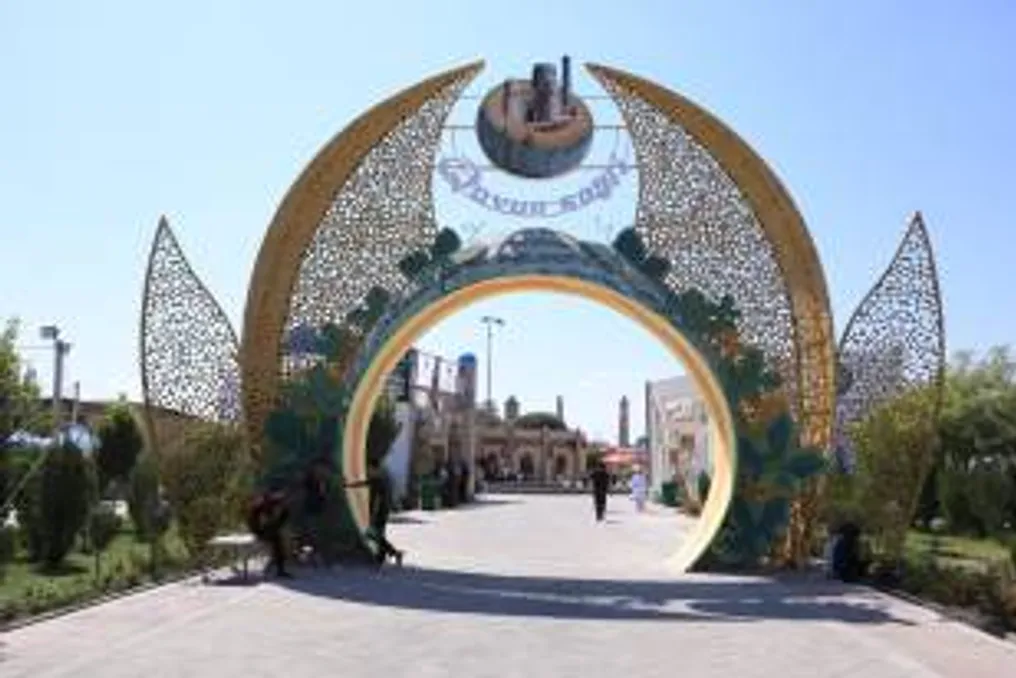
As part of international events held in Khorezm, the "Qovun Sayli" gastronomic festival, considered the largest in scale, is preparing to launch.
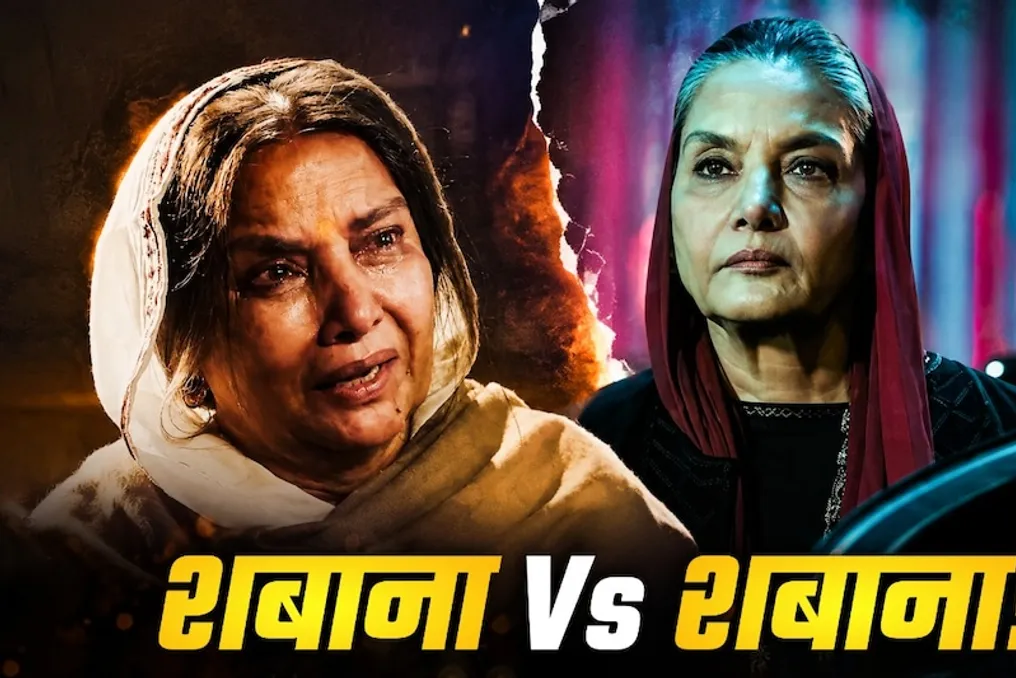
On August 14, the cinema will be the stage for a clash not only of two major films but also of two completely different portrayals of Shabana Azmi. In the film 'Bantwara 1947', she embodies the image of a mother experiencing the pain of the country's division, while in 'Avarapan 2', she plays a sinister Lady Don whose orders are carried out with weapons.
The release of these two movies on the same day is a rare phenomenon in Bollywood, where one actor participates in two big projects simultaneously. On August 14, 2026, audiences will see two projects by Shabana Azmi: 'Bantwara 1947' and 'Avarapan 2'.
The contrast between the roles in both films is quite significant. In the drama 'Bantwara 1947', directed by Rajkumar Santoshi, it tells the tragedy of the partition of India and Pakistan. The lead roles in this film are played by Sunny Deol and Preeti Jinta, with music composed by A.R. Rahman and visuals created by Santosh Sivan.
In 'Bantwara 1947', Shabana Azmi plays a mother whose life is destroyed by the violence and suffering associated with the partition. Her emotional struggle, helplessness, and pain are clearly visible in the trailer.
On the other hand, in 'Avarapan 2', directed by Nitin Kakkar, Shabana Azmi demonstrates a radically different image. Here, she acts as a powerful Lady Don named 'Nafeesa', who controls the criminal underworld. The trailer showed her character as cold-blooded, commanding respect, and dangerous, and in mere seconds, it was clear that the main challenge of the film would be not only Imran Hashmi but also her character.
'Avarapan 2' features Shabana Azmi alongside Imran Hashmi and Disha Patani. Whereas in 'Bantwara 1947', her screen presence will be alongside stars like Sunny Deol and Preeti Jinta. One film is a story of actions, revenge, and the criminal world, while the other is a historical drama based on human relationships, partition, and emotions.
Shabana Azmi is known for choosing roles that offer wide opportunities for acting. She has presented herself in new looks many times, whether in 'Art', 'Fire', 'Makari', or 'Nirja', as well as in recent negative and grey roles. Recently, in the film 'Rocky Aur Rani', she caused a stir by showing a kiss in mature age with Dharmendra.
Now, on August 14, two different worlds of hers will appear before the audience: one is a mother enduring the most painful period of history; the other is a Lady Don from whom even major enemies tremble.
The competition on August 14 will test two different facets of Shabana Azmi's acting talent. On one hand, she will touch the hearts of viewers in the role of a tearful mother; on the other, she will evoke fear in the role of a villainess with a cold face and dangerous demeanor. The main question is which image of Shabana Azmi will garner more public sympathy—the helpless mother of 1947 or the formidable Lady Don from 'Avarapan 2'?