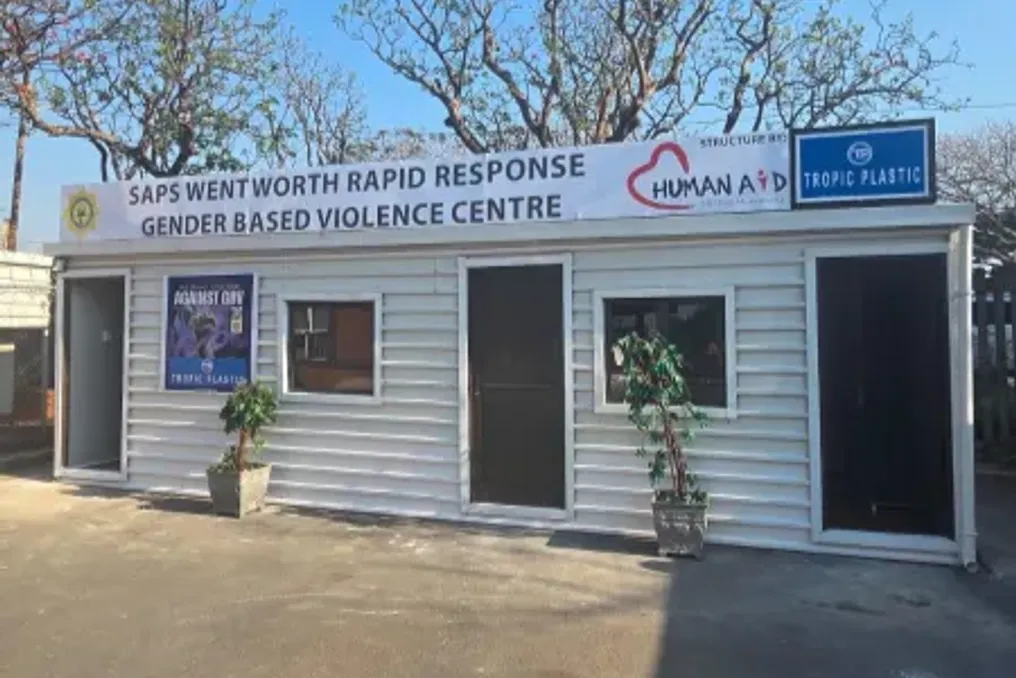
A new service has been opened in the southern part of the city in Durban—the Rapid Response and Gender-Based Violence Center at the Wentworth police station. Ahmed Osman, founder and patron of Human Aid SA, noted during the opening ceremony on Thursday that this center is designed to provide immediate support, comfort, and care to victims.
Osman emphasized that placing such services directly within a police station will ensure victims have faster access to counseling, referrals, and a safe space in critical moments. He added that the opening of the GBV Center in Wentworth is part of broader efforts to strengthen gender-based violence response measures across KwaZulu-Natal, ensuring dignified and coordinated assistance for those affected.
He expressed hope that this institution will change people's lives, transforming victims into survivors, and pledged readiness for further cooperation for the benefit of humanity.
Crime Statistics
During a recent publication of quarterly crime statistics, Police Minister Firoz Kachalia reported that 47.2% of rape cases registered between January and March 2026 occurred in residential premises. Nearly half of all rape cases recorded in South Africa in the fourth quarter of the 2025/2026 financial year (4620 out of 9782) took place in the homes of either the victim or the perpetrator, indicating a persistent threat of gender-based violence behind closed doors.
Kachalia stated that the reality is that violence in South Africa is often perpetrated by individuals known to the victims, including partners, relatives, neighbors, and acquaintances. He noted that the home, which should be the safest place, becomes dangerous for too many people.
Despite a decrease in some major categories of crime in the country this quarter, Kachalia warned that violence against women and children remains a serious issue requiring continuous action beyond the criminal justice system.
Government Interventions
According to a report from the Department of Women, Youth, and Persons with Disabilities, the scale of gender-based violence in South Africa has reached a crisis level. The Department plans the phased implementation of evidence-based approaches to preventing gender-based violence in schools, higher education institutions, and public spaces. This process will take over 22 months.
In August and September 2026, the department is in the design and planning phase of the program. The Department also indicated that the rate of femicide in the country is considered one of the highest globally, with some reports suggesting it is nearly five times the global average. The Department also highlighted areas with a high concentration of gender-based violence issues:
In KwaZulu-Natal:
Inanda, Ntuzuma, Umlazi, Empangeni, Eshowe, Mountain Rise, Plessislaer, and KwaDukuza.
In the Eastern Cape:
Lusikisiki, Mthatha, Ngqeleni.
In the Western Cape:
Delft, Emfuleni, Kraaifontein, Harare, and Nyanga.
In Gauteng:
Roodepoort, Diepsloot, Alexandra, and Orange Farm.
GBV Center Opening
KwaZulu-Natal Premier Thamsanga Ntuli stated that the center's opening coincided with the government's campaign against the disaster of gender-based violence and femicide under the slogan 'Silwa Nechilo'. Advisor Mohamed Tariq, representing the People's Freedom Party (PFP) in eThekwini, called the launch of the center an important step in protecting women and children. Tariq noted that the center embodies hope, support, and a place where victims can receive necessary help with dignity and compassion.
He stated: 'Let this center make a significant contribution to the lives of those who need it most. We cannot remain silent in the face of gender-based violence.'
Aidana David, representing the eThekwini District Police Council, highly praised this positive collaboration between business, the Community Policing Forum, and SAPS.
Osman explained that Human Aid SA is a humanitarian organization focused on empowerment, upliftment, disaster relief, community development, and supporting vulnerable groups throughout eThekwini. He reported that the project was implemented in partnership with the South African Police Service (SAPS) and Tropic Plastic, and thanked all donors, supporters, and partners whose contributions made this project possible.
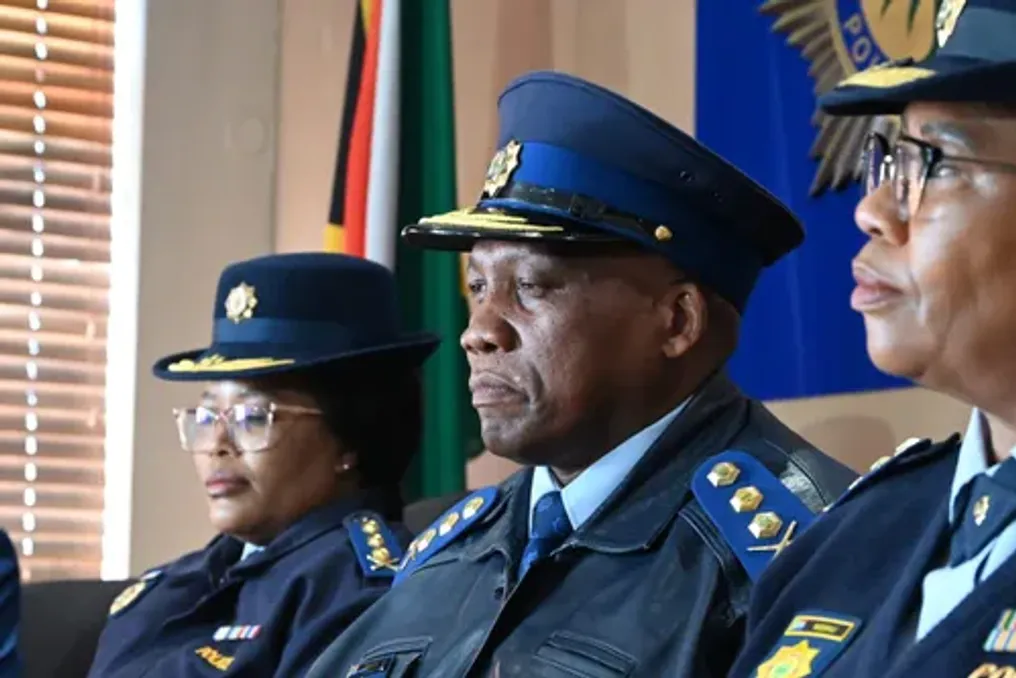
The new Provincial Commissioner of the Western Cape, Lieutenant General Sizakele William Danti, was introduced alongside the incumbent National Commissioner Puleng Dimpane. Political parties and civil organizations welcomed Danti's appointment, noting his commitment to combating gangs, but they also strongly urged him to focus on issues of gender-based violence (GBV) and strengthening community ties.
The death of Bronwyn Heslop occurred in the Durban North area two weeks ago. The woman was killed on Sunday, July 12th. According to paramedics' report, when they arrived at the scene on Blackburn Road in Durban North, she had already died from gunshot wounds. Two other people were also injured in the incident: a young boy and a delivery driver. The woman's funeral took place on Thursday, July 21st. The shooter has not yet been arrested, but it is suspected that the victim knew her killer.
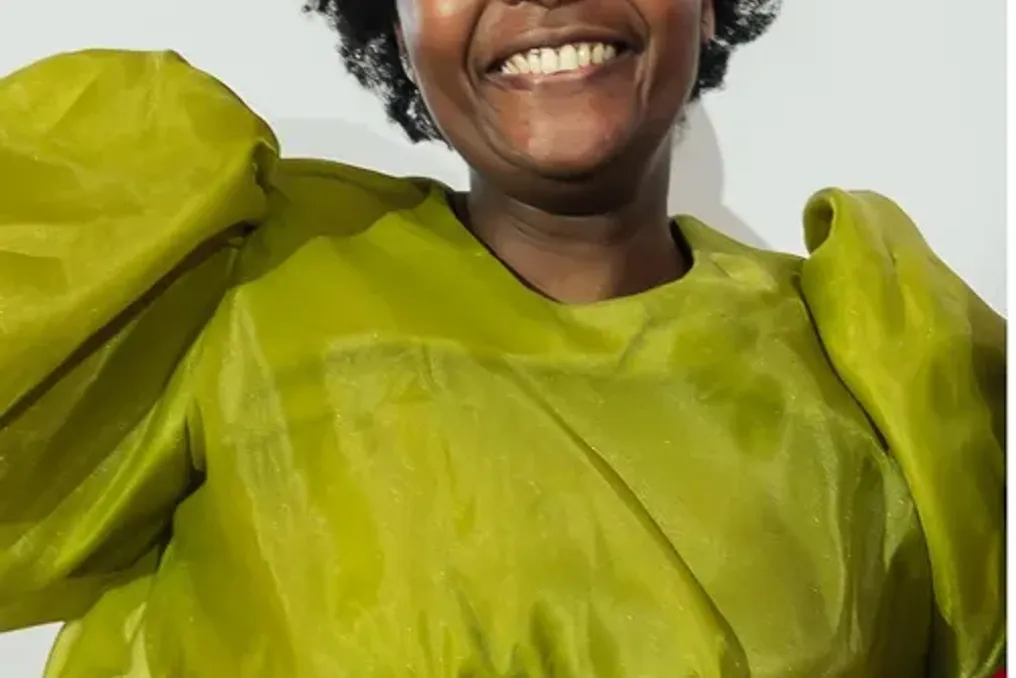
Lindiwe Nkunana-Kgopa turned a rejection into one of South Africa's most inspiring entrepreneurial success stories by founding a business that has changed the landscape of female entrepreneurship in Africa. After being told she did not 'fit the profile' for a manufacturing role, she built an enterprise entirely owned and managed by women.
More than a decade ago, a comment at a women's event fundamentally changed Nkunana-Kgopa's life. Today, she is the founder and CEO of Lindiwe Sanitary Pads (LSP) and was awarded the Veuve Clicquot Bold Woman Award 2026 for reimagining women's achievements in African manufacturing.
She recalled that the speaker at the event noted that there had never been a female president in South Africa, nor had any woman ever owned a large-scale sanitary pad factory. Although the audience continued its movement, Nkunana-Kgopa remained determined to change this situation. She emphasized: 'The entire industry, built on women's bodies, supported by women's needs and bought with women's money, has never belonged to a woman on an industrial scale.' This gap between who the industry served and who owned it prompted her to found LSP.
Today, Nkunana-Kgopa leads the first large-scale hygiene production facility in Africa that is exclusively owned and operated by women. Lindiwe Sanitary Pads, founded in 2018 in a home kitchen, has grown into a 4000 square meter factory in Centurion, Gauteng, capable of producing 800 South African Bureau of Standards compliant sanitary pads every minute.
The business now exports products to 11 African countries and employs women from previously underserved communities. Through partnerships and donation programs, the company provided free sanitary pads to over 100,000 schoolgirls in South Africa this year.
Born and raised in Limpopo, Nkunana-Kgopa became a mother while studying at university in Pretoria. Instead of letting circumstances dictate her future, she focused on creating a business that she felt Africa needed. However, gaining investor trust proved more difficult than developing the concept itself.
She remembers banking experts stating that she simply did not fit the profile of someone who could succeed in manufacturing. She responded that she intended to succeed, and the real question was whether they would be part of this success story. Rather than giving up due to unmet requirements, she built herself and her business until she met that profile.
Access to funding became one of the biggest hurdles for the nascent company. As the first producer entering a traditionally male-dominated industry, Nkunana-Kgopa struggled to convince lenders and investors to support her venture. Instead, she relied on business development programs, disciplined financial management, and relentless perseverance.
She noted that every setback—whether a facility delay, a difficult overdraft period, or stalled negotiations—was viewed as a problem to be solved, not a reason to stop. One defining moment occurred during one of the company's toughest periods. With little money, suppliers demanding payment and the business's future hanging in the balance, Nkunana-Kgopa invited potential sponsors to visit her factory instead of relying solely on presentations and documents.
This decision changed the company's future. She managed to secure R27 million in funding, allowing the business to transition from home operations to a modern production facility capable of supplying retail stores, wholesale buyers, and the National Dignity Program in South Africa.
Today, Lindiwe Sanitary Pads has 36 permanent employees and another 93 workers during peak production periods, most of whom are women from previously disadvantaged communities. For Nkunana-Kgopa, the greatest success of the factory lies not only in what it produces but in the opportunities it creates.
Through a partnership with Young Women of Africa, the company has expanded to 11 African countries, helping women entrepreneurs launch and own their own hygiene brands, creating new pathways to economic independence. This partnership also supports programs aimed at rescuing girls from child marriage and female genital mutilation, allowing them to return to school and build independent futures.
At the local level, government partnerships and the company's 'Buy to Give' initiative allowed over 100,000 schoolgirls in South Africa to receive free sanitary pads this year, helping to reduce menstruation-related poverty and school absenteeism. Nkunana-Kgopa believes that the hygiene industry exists because of women's needs, yet for decades, production has been predominantly male.
Creating an enterprise owned and run by women involved closing this gap, ensuring that the value created by an industry serving women is also claimed by them as owners, decision-makers, and industrialists.
In honor of Women's Month in South Africa, Nkunana-Kgopa hopes her journey will inspire more women to enter industries where they have traditionally been overlooked. She advises: 'Don't wait for someone to tell you that you fit the profile—build a track record that redefines what that profile looks like.' She urges people to expect underestimation and use it as fuel, rather than a demotivating factor, by deeply studying the technical and financial foundations of their industry, as competence is the strongest answer to doubt.
At 43, Nkunana-Kgopa stated that her ambitions extend far beyond expanding one company. She aims to leave behind an industry transformed by female leadership, where ownership ceases to be the exception and becomes the norm. She wants the industry to look fundamentally different from how she entered it—where African women are owners and industrialists in the menstrual economy, not just consumers. She wishes the LSP model of production, mentorship, and market access for other women-owned brands to be replicable across the continent long after she is gone.
Announcement and Political Reaction
Danti's appointment was officially announced on Wednesday during a press briefing at the SAPS headquarters in Cape Town by the incumbent National Commissioner Puleng Dimpane and Premier Alan Wind. This comes less than a month after the retirement of former Provincial Commissioner Lieutenant General Thembisile Patekele on June 30.
ActionSA candidate for Mayor of Cape Town, Derelin James, reacted positively to the appointment, stating that in a situation where communities continue to suffer from crime, extortion, and gang activity, this appointment offers an opportunity to restore trust in the police's work. James noted that she supports Danti's commitment to prioritizing the fight against gang violence, believing his experience will lead to decisive action against criminal networks terrorizing the Western Cape.
Calls for Comprehensive Measures
GOOD Party candidate for Mayor of Cape Town, Brett Herron, stated that he has inherited the complex task of curbing banditry in areas where municipal and provincial authorities have effectively withdrawn support. Herron emphasized that issues related to children falling into the hands of gangs in Cape Flats are matters of social justice, not just policing. He noted that while Lieutenant General Danti's responsibility lies in preventative measures and arrests, solving the problem of gang culture rests with the City and the Province.
Linda Jones, a public relations officer for the Mitchells Plain United Residence association, expressed support for the appointment, hoping the commissioner would focus on eradicating corruption between law enforcement agencies and certain gangs. She also highlighted the need for strong investigators who conduct thorough investigations before bringing charges or making arrests.
Civil Society Stance
Ilitha Labantu representative, Siyabulela Monakali, acknowledged the significant responsibility placed on Danti to strengthen public safety and restore trust. Monakali noted that gang activity has devastating consequences for many Western Cape communities, affecting life, safety, education, causing substance abuse, and putting women, children, and youth at risk of violence and exploitation.
However, Ilitha Labantu stressed that banditry is not an isolated phenomenon. It is a consequence of multiple interconnected factors that have created conditions for gangs to thrive. Monakali listed such factors as poverty, unemployment, inequality, substance abuse, inadequate housing, limited economic opportunities, and the legacy of apartheid spatial planning. Therefore, fighting banditry requires not only effective policing but also continuous investment in prevention programs, youth development, education, employment, social support, and community-level interventions aimed at addressing the root causes of violence.
The woman, whose name was Bronwyn Heslop, was a wife, mother, sister, and friend. Following her death, a TikTok account was created in the hope that Heslop's murder would not go unpunished, and messages of condolence flooded the network.
Reaction from acquaintances and activists
An acquaintance of Heslop, speaking to IOL, described her as 'a kind, caring person with a big heart.' He added that although they were not close friends, she always gave 'such beautiful, loving hugs.' This case of brutal murder has once again intensified calls for more decisive action against perpetrators of gender-based violence.
Sabrina Walter, founder of Women For Change, expressed shock and deep sorrow over Heslop's death, sending condolences to her family, especially her three children who will now face life without their mother. Walter noted that Bronwyn's circumstances of death reflect a common pattern in cases of violence against women, particularly when victims attempt to leave abusive relationships.
According to her, reports indicate that Bronwyn had long wanted to leave her marriage and allegedly obtained a protection order after accusations of abuse and domestic violence. Walter emphasized that women are at the highest risk when trying to leave abusive relationships. She insisted on the critical importance of supporting protection orders with effective systems capable of protecting survivors from further harm, stressing that no woman should lose her life while choosing safety and freedom.
Calls to action and statistics
Walter stated that this case must serve as a reminder of the urgent need to strengthen measures against gender-based violence and femicide in South Africa. She expressed hope for justice for Bronwyn and called for the National Disaster on GBV, declared last November, to move from declaration to full implementation, as every delay endangers women.
Benedicta van Minnen from DA Women’s Network (DAWN) also voiced concern, noting that ongoing acts of violence call into question the ability of law enforcement agencies to prevent such crimes. She stated that SAPS, in her opinion, is failing its constitutional mandate to ensure citizen safety, and insisted that the focus must be on ensuring accountability and justice for Heslop and her family.
Minister in the President for Women, Youth and Persons with Disabilities, Sindisiwe Chikunga, stressed that the scale of gender-based violence and femicide (GBVF) cannot be reduced to statistics, as every figure represents a life lost to violence. She called on men to take responsibility for ending violence against women and children, urging society to oppose harmful attitudes and toxic masculinity.
The South African Council for Medical Research, through its Gender and Health Research Unit, confirmed that South Africa continues to have one of the highest rates of femicide in the world. A woman is killed every few hours approximately six times more often than the global average, most often by someone who once claimed her love. These cases are not impersonal figures, but daughters, mothers, and sisters whose lives have been stolen within an ongoing national emergency.
Help and resources
The article also provided contact details for various support services, including the South African Government's GBV Command Centre, the Department of Social Development, People Opposing Woman Abuse (POWA), Action Breaks Silence, Lifeline, SA Depression & Anxiety Group, and Stop Gender Violence and Women Abuse.