China's state broadcaster unveiled a package of technological achievements presented at the end of summer 2026. Each of these achievements addresses production limitations that the country has faced for many years. This complex covers heavy industry, astronomy, semiconductors, displays, energy, and space.
The faster pace of development is also a defensive move. In several areas where China has managed to close the gap, including high-class radio observation receivers, ultra-thin precision strip steel, and large AMOLED evaporators, foreign suppliers have been tightening export controls over the past two years. The presence of domestic production in each category changes the negotiation dynamics in subsequent licensing rounds. Furthermore, domestic supply ensures a more predictable cost curve for Chinese system integrators, as several end markets are scaling simultaneously, such as next-generation electric vehicles, premium consumer electronics, and space-to-ground communication equipment.
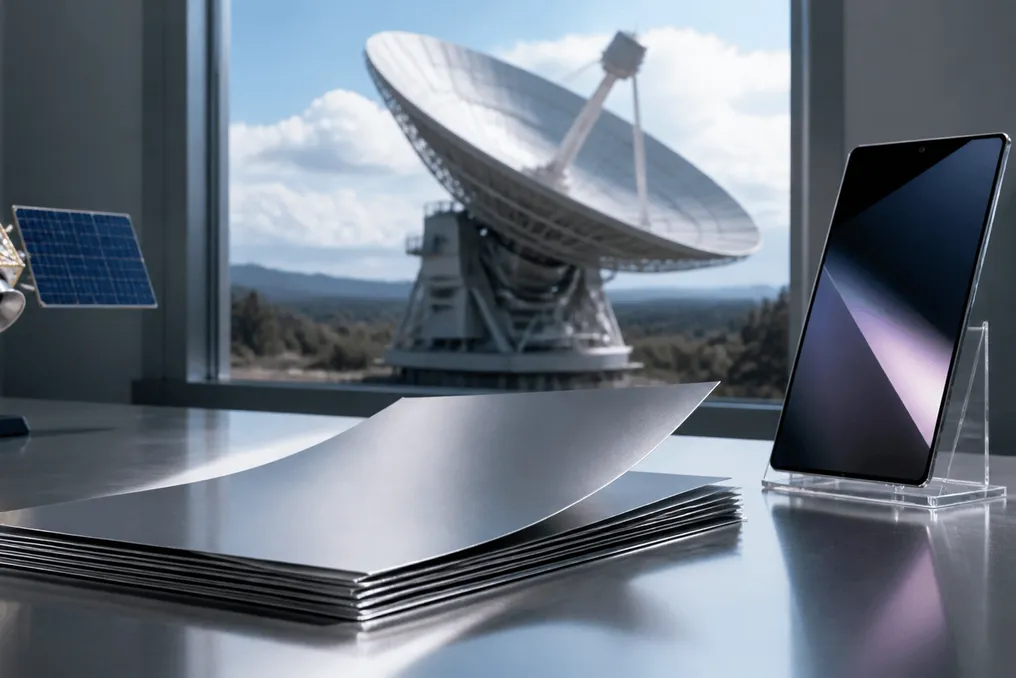
Most notable was the appearance of a new high-quality grade of steel, produced in sheets thinner than A4 paper. Previously, only a few foreign metallurgical plants held a monopoly on thickness and surface quality. Within the same announcement, an upgrade to the Five-hundred-meter Aperture Spherical Telescope (FAST), China's flagship radio telescope located in Guizhou, was presented. Operators reported that this upgrade significantly enhances the antenna's ability to capture weak cosmic signals—a capability previously available to fewer than three radio observatories worldwide.
Two-component experimental satellites carrying AI-based payloads were launched from the Dunfeng commercial space innovation center test site. These spacecraft are designed to perform most data filtering, recognition, and output in orbit, transmitting actionable responses instead of raw images. China is among the first countries to place a satellite-to-satellite computing cluster in orbit and demonstrate that orbital computing can be more extensive than just a single-satellite demonstration.
Other elements included in the broadcast feature a domestic replacement for a niche semiconductor material previously imported; a new generation of large AMOLED display panels; a low-cost, high-density sodium-ion battery cell; a network of high-temperature superconducting cables; and progress in the development of a fourth-generation reactor.
The totality of these announcements indicates an industrial policy that consistently accumulates small victories across multiple sectors simultaneously, rather than betting solely on a few flagship industries. This pattern is as significant as the individual products themselves.