Olhar Digital's Cinema and Streaming newsletter, aimed at subscribers of the Olhar Digital Club, discusses the redemption of House of the Dragon and the box office records of the new Spider-Man film.
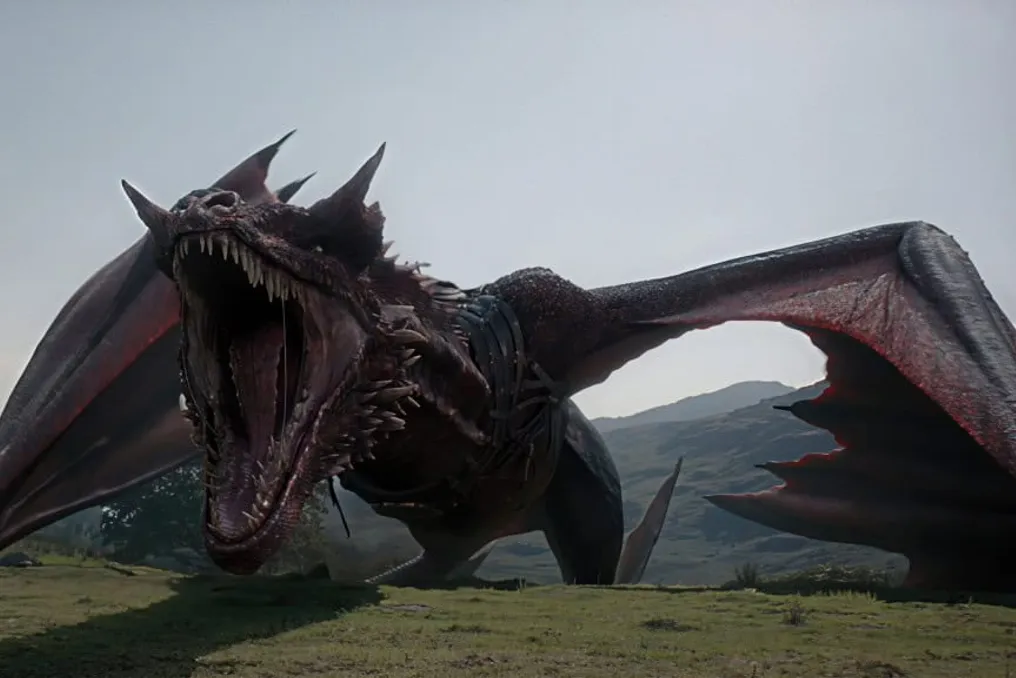
Even though the second season of House of the Dragon generated dissatisfaction, it is recommended to watch the end of the third season, scheduled for the 9th, as the series has shown a change of direction. This shift transcends the elements of fire and dragons.
In cinema, the latest Spider-Man film achieved tremendous success, breaking revenue records. The movie presents a humanized view of Peter Parker, a solitary individual facing major transformations, while also establishing the elements for the future of the Marvel Universe on the big screen.
When the second season ended, much of the discussion focused on the pacing, with the feeling that the series had dedicated eight episodes to preparing a war that was slow to begin. However, with only one chapter remaining in the third year, the debate changed drastically. The initial perception was that the production had found balance again, as if the second season had only ended at the beginning of the third.
One of the main reasons is that the plot finally fulfills what it promised from the beginning of the conflict between the Targaryen family factions. However, the change is not just in increasing visual battles; what has changed is the way they occur. The fights have become direct consequences of the characters' political and personal decisions, a point frequently highlighted by critics: the conflict stopped being merely anticipated and started being felt.
Curiously, the dragons, which have always been the focus of promotional campaigns, are not the main reason for the praise. Variety points out that it is the people who give value to House of the Dragon, classifying the dragons as mere 'CGI flying lizards' that complement the spectacle. Critics emphasize the return to the franchise's basics, valuing scenes of negotiation, fragile alliances, betrayals, and private conversations as much as action sequences.
This evolution is noticeable in the protagonists. Emma D’Arcy seems to be in her best performance as Rhaenyra Targaryen, overcoming previous hesitation and dealing with increasingly difficult choices while maintaining her moral complexity. Her interaction with Alicent Hightower (Olivia Cooke) is seen by many as the emotional core of the series, as both remain connected by a common history, making every choice more painful.
Matt Smith also gains prominence as Daemon. After spending part of the second season away from the central group, he regains relevance by confronting Rhaenyra and his own ambitions. Furthermore, the series makes room to strengthen secondary and new characters, such as Ormund Hightower (James Norton), considered one of the best additions of the season. Westeros finally seems to be bigger than the dispute among some members of the Targaryen family.
There was no total consensus. The Hollywood Reporter, for example, continues to point out known flaws, such as the excess of characters and moments where the visual aspect outweighs what is necessary. The publication itself mentioned that its favorite episodes are those that reduce the scale and prioritize more intimate and insightful dialogues. Criticism has not disappeared, but rather redirected its focus.
The greatest virtue of the third season may be understanding what made Game of Thrones work, instead of just meeting criticism by increasing battles or adding more dragons. The war is impressive, but it is the characters that make it interesting. The final test remains: turning this recovery into a memorable final episode.
Meanwhile, Peter Parker (Tom Holland) lives a period of isolation at work. After a spell cast by Doctor Strange (Benedict Cumberbatch) at the end of No Way Home (2021), which made everyone forget Peter and his secret identity, the young man spends four years being more Spider than Parker, without a support network. He observes, through social media, his old friend Ned Leeds (Jacob Batalon) and ex-girlfriend MJ (Zendaya) realizing the dreams they planned together.
This weight marks the beginning of A New Day. During the narrative, Parker realizes that isolation is not the answer and decides to seek reconnection with those he loves, even if his memories have been erased. The film's message is that maturing does not mean suffering alone, a relevant theme in times of loneliness and depression. However, the script stumbles in simplifying this approach through narrative conveniences.
Spider-Man: A New Day strives to reestablish, visually and thematically, the hero at the street level after a long journey through the multiverse. Destin Daniel Cretton's direction (Shang-Chi and the Legend of the Ten Rings) focuses the camera on the protagonist, reviving the first-person perspective (GoPro style) popularized by Marc Webb in The Amazing Spider-Man, and pays homage to the Insomniac games with inspired choreographies.
In parallel, the film explores Parker's mind without using narration, which is considered a success. Intimacy arises in the exploration of everyday dilemmas, such as anxiety about body changes or the symbolic surrender to a free fall after seeing MJ with another boyfriend. The merit of the execution lies in the rhythm, which accelerates in actions and slows down in dialogues, without polluting the drama with inappropriate humor or artificial fan service. This recalls the Netflix era of the Daredevil series.
The central conflict relies on the figure of Jean Grey (Sadie Sink), whose outburst after Damage Control experiments functions as a reflection of Peter's psychological deterioration. By witnessing the mutant succumb to trauma and the burden of imposed solitude, the film connects its discussion on mental health. The threat becomes the risk of carrying burdens without support. Thus, the direction uses Jean's pain to drive the hero toward balance. Only after resolving crucial internal issues does the script allow Peter to help the mutant, which is another success of the plot. Upon finding peace with what happened, Jean reciprocates, saving Peter.
However, the script wavers in executing this narrative turn. Peter's decision to seek out Ned and MJ represents authentic maturation, but the story opts for convenience over a rigorous ending. The gradual recovery of friends' memories, facilitated by Jean's telepathic impact on those affected by Doctor Strange's spell, acts as a deus ex machina. Instead of requiring Peter to rebuild his bonds, the plot relies on magical artifices to restore the status quo, weakening the protagonist's maturation.
In summary, Spider-Man: A New Day offers one of the most human and mature portraits of Peter Parker in the MCU to date. The film succeeds in the tone of urban chronicle, the sincere approach to grief, and the dynamic (surprisingly comical) between Holland and Jon Bernthal, who plays Frank Castle (The Punisher). However, it stumbles in the script's hesitation to sustain its most difficult choices, resorting to Marvel universe shortcuts to organize the Avengers' next steps, scheduled for December 17th. Despite this, it is a chapter that returns emotional density to the hero associated with the Sam Raimi era (Tobey Maguire) and sustained by Webb (Andrew Garfield), before the MCU once again demands Holland's presence in a global and multiversal story.
Although it remains focused on an urban narrative contained in New York, Spider-Man: A New Day plays a strategic role in setting the stage for Avengers: Doctor Doom. The main driver of this expansion is the official introduction of Jean Grey as a native mutant of Earth-616. With the confirmation of the X-Men's presence in the next franchise event, the mutant's arc creates the link to integrate the team into the multiversal conflict against Victor Von Doom (Robert Downey Jr.).
The hook for this new dimension comes in the post-credits scene. In it, the tracking app created by Ned Leeds locates Spider-Man outside of Earth, deep in space. The most likely theory is the Post-Incursion Battleworld Theory. If the destruction of the multiverse and the collapse of realities are confirmed, the missing terrestrial signal suggests that Earth-616 may have been destroyed or merged with colonies of cosmic fragments under the dominion of Doctor Doom, throwing the hero directly into the epicenter of chaos.
}} , {