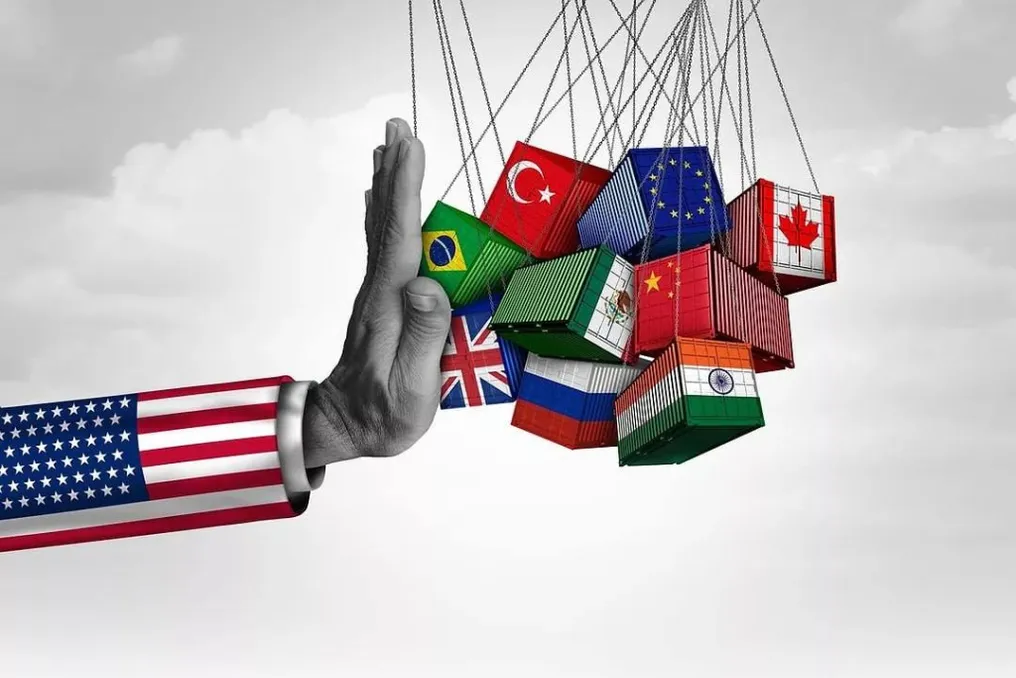
New measures introduced in connection with imports from abroad, which are allegedly a threat to the national security of the United States, target polysilicon—raw material necessary for manufacturing solar panels and used in semiconductor production.
The White House stated that the goal of these measures is to reduce dependence on foreign suppliers of strategic materials, strengthen America's production capacity, and ensure the supply of industries related to energy and advanced technologies.
This measure was included in an executive order published by the White House, based on an investigation by the Department of Commerce under Section 232 of the Trade Expansion Act of 1962. The document concludes that the import of polysilicon and its derivatives 'threatens to harm U.S. national security' and mandates the introduction of restrictions to support domestic production.
The new restrictions, covering polysilicon, ingots, silicon wafers, solar cells, and photovoltaic modules, take effect on December 4. The order requires the Department of Commerce and the Department of Homeland Security to monitor the application of these measures and assess the need for further adjustments to protect American industry.
Although China is not explicitly mentioned in this order, the decision comes against the backdrop of the Asian country dominating global polysilicon production and a significant part of the solar panel supply chain. Despite the announced restrictions, major Chinese solar equipment and material producers reacted with a sharp rise in Shanghai and Hong Kong stock markets.
Polysilicon producers such as Xinte Energy (+9.4%), Tongwei (+6.74%), and GCL (+6.72%) led the rise, followed by major photovoltaic component manufacturers, including Xinyi Solar (+6.47%), Jinko Solar (+2.53%), and Longi Green Energy (+2.2%). Investor calm reflects the companies' stance, which considers the impact of the measures insignificant. Independent sources at Trina Solar told the news agency EFE that polysilicon constitutes only one element of their production chain, and direct sales to the American market are residual and often conducted through third parties.
In parallel, industry giants such as Longi Green Energy are restructuring operations in the U.S. and adjusting supply chains to comply with local requirements, aiming to circumvent trade tensions, as well as the problem of overproduction and fierce competition in the domestic Chinese market.
The U.S. government recently reported the reimbursement of $100 billion ($86.816 billion euros) in tariffs collected under the International Emergency Economic Powers Act (IEEPA), which were deemed illegal by the Supreme Court. The customs surcharges were announced by President Donald Trump in April 2025 under the name 'Day of Liberation,' but in February of this year, the country's highest court ruled them illegal, determining that the White House exceeded its authority by citing IEEPA to impose tariffs. Since then, the Trump Administration has sought alternative ways to continue using punitive customs duties in foreign relations and, in response to the Supreme Court's ruling, introduced a global 10% tariff, effective temporarily for 150 days. After this period expired, at the end of July, the U.S. government announced the imposition of additional tariffs on 60 trading partners, justifying it as punishment for countries that have not banned the import of products manufactured through forced labor.