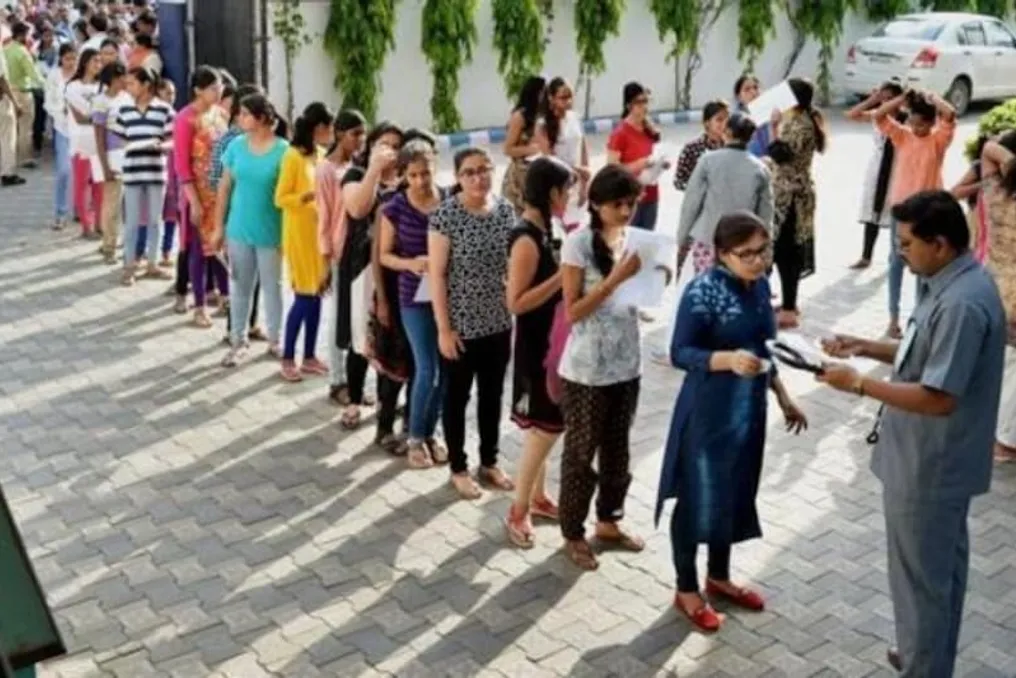
Delhi University (DU) has attracted public attention not only because two of its colleges are admitting students without using CUET, but also because this poses a serious question to the entire centralized admission system managed by the National Testing Agency (NTA) and UGC. The DU administration provided a special exemption for filling vacant undergraduate (UG) seats in its two women's colleges—Aditi Mahavidyalaya (Bawana) and Bahini Nivedita College (Najafgarh)—based on 12th-grade certificate scores, using an offline process.
While the 'Common University Entrance Test' (CUET) was positioned as the sole lifeline for admission into central universities across the country, even after all counseling rounds were completed, up to 40% of seats remained unfilled in these colleges. Consequently, DU was forced to violate its own established rules.
The main admission process at DU is based on the Central Seat Allocation System (CSAS) and CUET scores. However, the situation in Bawana and Najafgarh colleges highlighted practical shortcomings of the centralized examination. Many girls from rural areas residing in Bawana, Najafgarh, Narela, and surrounding areas score high marks in 12th grade (from 85% to 95%), but they drop out of the national screening due to the complexity of CUET online forms, issues with result normalization, and the remoteness of testing centers.
Furthermore, Aditi Mahavidyalaya and Bahini Nivedita College are located in remote rural areas. The distance to the nearest metro station is 12–15 kilometers, there is no direct bus connectivity, and there are no campus hostels. These factors cause students who were allotted seats via CUET from other states to decline attending these institutions. Thus, the CUET requirement effectively blocked the path for local rural students who could have easily studied in these colleges near home using their 12th-grade scores. As a result, neither local girls received education nor did the colleges fill their seats.
After the university granted 'special assistance' only to these two colleges, teachers' unions raised questions about political bias and transparency. The Indian National Teachers' Congress (INTEC) sent a letter to the custodian asking why this benevolent measure is extended only to two women's colleges if the only way to fill vacant seats is through the 12th-grade ranking. Dozens of vacant seats also remain annually in other off-campus and evening colleges of DU (such as Swami Shraddhanand and Satyawati Evening). If the CUET model fails to meet the needs of local off-campus colleges, a unified, transparent, and long-term policy must be developed for all.
Educationists and media analysts agree that in a diverse country like India, it is impossible to apply the same measure to every college and every student. To ensure the survival of external and off-campus colleges in the near future, a certain quota must be established for both CUET scores and 12th-grade certificate scores. If local students find it difficult to gain admission to colleges near home, especially those from rural and lower middle-class backgrounds, the dropout rate among girls will sharply increase. The centralized system ignores local problems and infrastructural deficiencies. Introducing flexibility in the admission process has become a necessity, not an option.
Professor Hansraj Suman, chairman of the Forum for Academic Rights to Social Justice, believes that DU's decision is not merely a temporary 'crutch' to fill seats in two colleges, but the university's first official acknowledgment of the practical failures of CUET. He warns that if the pattern, rules, and the centralized system of this national entrance exam are not revised in time, countless off-campus colleges across the country will suffer from empty classrooms and political paralysis.